Who was Manabu Mabe?
Manabu Mabe (born Kumamoto, Japan, 14 September 1924; died São Paulo, 22 September 1997) was a Japanese-Brazilian painter, self-taught, who became known for gestural abstraction built from large stains of color. He emigrated to Brazil with his family in 1934 to work on a coffee farm, painted his first abstract work in 1955, and in 1959–1960 won prizes at the São Paulo, Paris and Venice biennials.
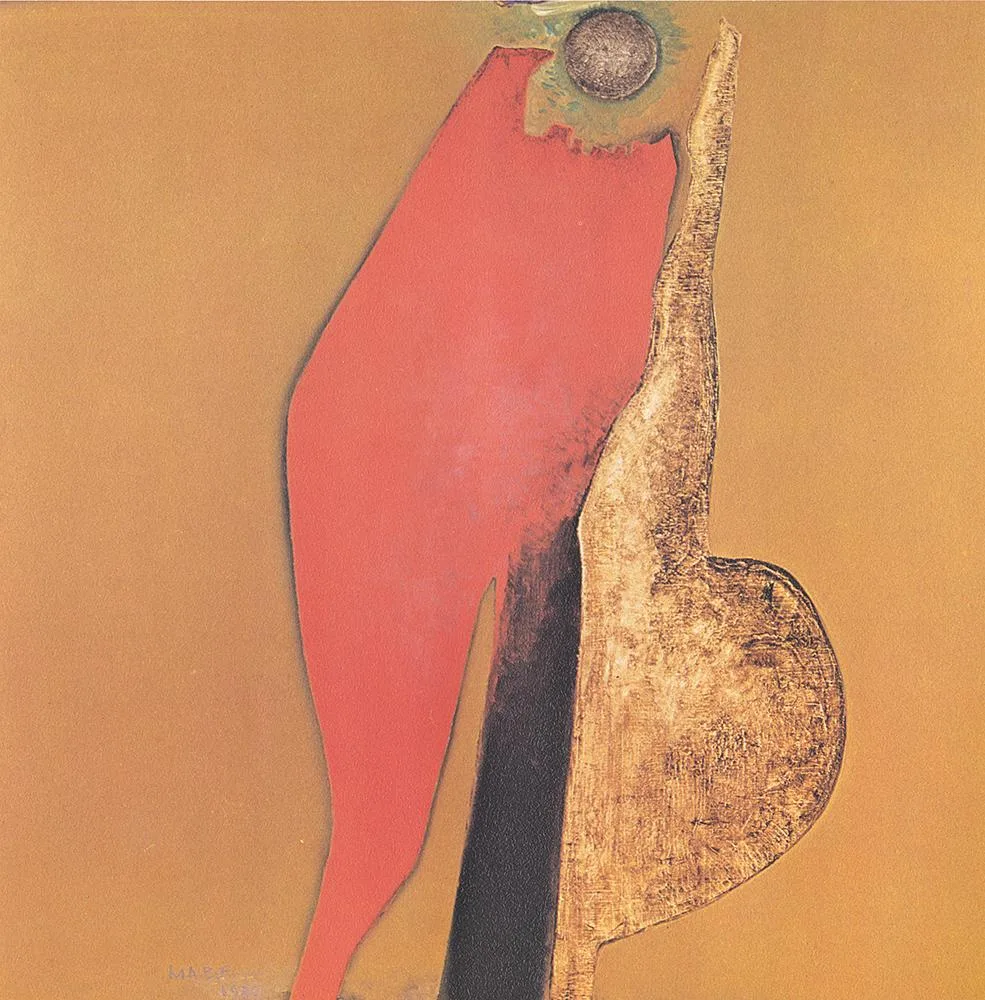
From Kumamoto to a coffee farm in São Paulo state
According to the Itaú Cultural Encyclopedia, Manabu Mabe was born in Kumamoto, in the south of Japan, on 14 September 1924. In 1934 his family left Kobe for Brazil to work in coffee cultivation in the interior of the state of São Paulo. The Art Museum of the Americas (Organization of American States) adds that the family settled on a coffee plantation and later bought land near Guaimbé.
He did not begin as an art student. Itaú Cultural records that, interested in painting, he researched it on his own from Japanese magazines and art books. In 1941, in the town of Lins, he drew with crayon and watercolor only on Sundays and rainy days, when he could not work in the fields. He bought his first oil paints in 1945, and learned to thin them and prepare a canvas from the painter and photographer Teisuke Kumasaka.
Self-taught, then abstract: 1947 to 1957
In 1947 a trip to São Paulo brought him to the painter Tomoo Handa; the following year he studied with Yoshiya Takaoka, who taught him technical and theoretical principles, and he took part in the Grupo Seibi, a group of Japanese-Brazilian artists. His early landscapes and still lifes were conservative and moved gradually closer to Impressionism and Fauvism, per Itaú Cultural.
The turning point he himself pointed to was the first São Paulo Bienal in 1951, where he saw works by painters of the School of Paris; the encyclopedia says that, in his own account, the experience changed his way of thinking about painting. In the early 1950s his canvases showed geometrized forms and figures outlined in thick black lines, and then, gradually, abstraction. Itaú Cultural dates his first abstract work, Vibração-Momentânea, to 1955. In 1957 he sold his coffee farm in Lins and moved to São Paulo to paint full time.
1959 and 1960: the prizes
The encyclopedia lays out the recognition in sequence. In 1959 he received the Prêmio Leirner de Arte Contemporânea for two abstract paintings made in 1958, Grito and Vitorioso. That same year, at the 5th São Paulo Bienal, with Composição móvel, Pedaço de luz and Espaço branco, he received the prize for Best National Painter. He was also awarded at the first Biennale des Jeunes in Paris, and Time magazine ran an article titled “The year of Manabu Mabe”. In 1960 he was awarded at the 30th Venice Biennale.
The Art Museum of the Americas names two of these prizes: the Braun Editions Award in Paris and, in Venice, the Fiat Prize. It also records a retrospective at the Museu de Arte de São Paulo in 1986. Itaú Cultural describes him, after 1959, as one of the most prominent artists of Brazilian informal abstraction.
What his painting looks like, and how it connects to informalism
Itaú Cultural characterizes his paintings above all by gesture, by highly expressive stains and by careful use of color. Of the 1959 Bienal canvases it says the large chromatic stains were made in quick, wide gestures that balance spontaneity and restraint, with references to traditional Japanese calligraphy. In his early abstraction he explores impasto, texture and line; after an eight-month trip to Europe in the mid-1960s, the entry says, he moves closer to certain aspects of tachisme.
The link to informalism is the part of his biography that museums state most directly. Itaú Cultural places him within Brazilian informal abstraction, and the Art Museum of the Americas notes that his paintings were often associated with European art informel and with the Catalan painter Antoni Tàpies. In Agonia (1963), the same museum says, he pooled and sculpted paint with a long knife to build different textures. His titles tend to evoke emotions or natural phenomena, and from the 1970s, Itaú Cultural adds, human figures and animal forms appear in his canvases, only hinted at, at large scale. For the wider context, see what informalism was in Brazilian art.
Where his work is held
Museum records can be checked for individual works. The Art Museum of the Americas in Washington lists Agonia (Agony), 1963, oil on canvas, in its collection. The Lowe Art Museum at the University of Miami records Singelo (Simplicity), 1980, oil on canvas, 179.4 × 199.4 cm at the sight edges (museum record). Itaú Cultural lists 64 paintings in its encyclopedia and links to the Instituto Manabu Mabe. It also records that in the 1980s he painted a panel for the Pan American Union in Washington and a stage curtain for the Provincial Theatre in Kumamoto. Displays change, so confirm with each institution before planning a visit.
From the studio
From the studio
I will not set my work beside Mabe's; what I can do is name one procedural overlap. Both the Itaú Cultural entry and the museum record describe a painter attentive to texture, from impasto in his early abstraction to paint pooled and sculpted with a knife. My own surfaces are built by layering and removing: pigment applied, scraped back and applied again. Patina Field (Terra & Ether, 2026, acrylic on canvas, 100 × 100 cm) is a square canvas made that way, in slate blue, iron brown and ochre.
The difference is as clear as the overlap. His reference points were gesture and Japanese calligraphy; mine is architecture and weathered walls, and I do not claim a lineage from him. This is a body of work painted in 2025–2026 in Brasília, with no exhibition history, and each painting is sold directly from the studio, signed and catalogued with its technical record.
Frequently asked
Who was Manabu Mabe?
Manabu Mabe was a Japanese-Brazilian painter, born in Kumamoto, Japan, on 14 September 1924 and died in São Paulo on 22 September 1997. His family emigrated to Brazil in 1934 to work in coffee farming. Largely self-taught, he moved to São Paulo in 1957 to paint full time and became known for gestural abstraction built from large, expressive stains of color.
What is his painting style?
Itaú Cultural characterizes his work above all by gesture, expressive stains of color and careful handling of color. His 1959 Bienal canvases are described as large chromatic stains made in quick, wide gestures, with references to Japanese calligraphy. Early abstract work explores impasto, texture and line, and from the mid-1960s he moves closer to aspects of tachisme. His titles often evoke emotions or natural phenomena.
What prizes did he win?
According to the Itaú Cultural Encyclopedia, he received the Prêmio Leirner de Arte Contemporânea for two paintings made in 1958, the Best National Painter prize at the 5th São Paulo Bienal in 1959, an award at the first Biennale des Jeunes in Paris in 1959, and an award at the 30th Venice Biennale in 1960. The Art Museum of the Americas names the Paris and Venice awards as the Braun Editions Award and the Fiat Prize.
How is he linked to informalism?
Itaú Cultural describes him as one of the most prominent artists of Brazilian informal abstraction after his 1959 recognition. The Art Museum of the Americas adds that his paintings were often associated with European art informel and with the Catalan painter Antoni Tàpies. Itaú Cultural points to gesture, stains of color and texture as the core of his painting, and the Art Museum of the Americas to his handling of paint as matter.
Where can I see his work?
Several institutions hold or document it. The Art Museum of the Americas in Washington lists Agonia (1963) in its collection, the Lowe Art Museum at the University of Miami records Singelo (1980), and the Itaú Cultural Encyclopedia documents 64 paintings and links to the Instituto Manabu Mabe. Museum displays change, so check with each institution before a visit.
Ask the studio directly
Alyne replies personally, in English or Portuguese, with details on any work, its materials and shipping to your country.
Sources
- Enciclopédia Itaú Cultural — 2026-10-15
- Art Museum of the Americas, Organization of American States — 2026-10-15
- Lowe Art Museum, University of Miami — 2026-10-15
- Enciclopédia Itaú Cultural — 2026-10-15
- Perfeito Studio (src/data/obras.json) — 2026-10-15
Published on