Who was Tomie Ohtake?
Tomie Ohtake (born Kyoto, 21 November 1913; died São Paulo, February 2015) was a Japanese-born painter who became one of Brazil's central abstract artists. She reached Brazil in 1936, began painting at almost forty, and took Brazilian citizenship in 1968. She kept painting until the age of 101.
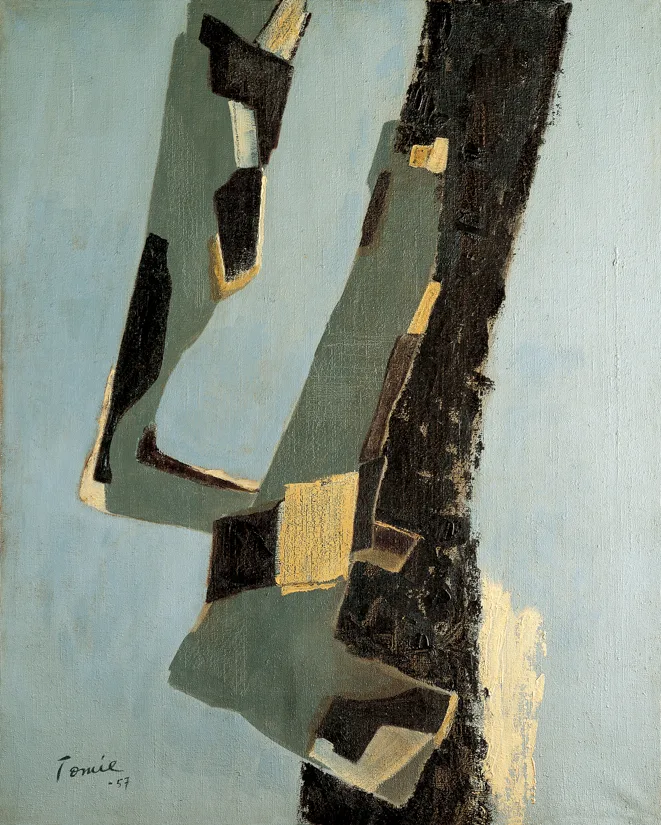
From Kyoto to São Paulo
Tomie Ohtake was born in Kyoto, Japan, on 21 November 1913. In 1936 she travelled to Brazil to visit one of her five brothers. The outbreak of the Pacific War prevented her return, and she stayed in São Paulo, where she married and raised two sons, Ricardo and Ruy Ohtake (Ruy became an architect). According to the Instituto Tomie Ohtake, she first returned to Japan in 1951, fifteen years after leaving.
She became a Brazilian citizen in 1968. The Metropolitan Museum of Art lists her as “Brazilian (born Japan)”, with life dates of 1913–2015. So the short answer to the question of nationality is both, in sequence: Japanese by birth, Brazilian by choice of residence and, from 1968, by law.
A painter who started late
She did not train as an artist in youth. The Instituto states that she began to paint at almost forty, encouraged by the Japanese artist Keiya Sugano, and dates her first work shown in its chronology to 1952. By 1953, the same chronology records, her paintings were moving from figures towards shapes and fields of colour arranged almost on a geometric grid.
Recognition followed within a few years. In 1957 she showed at the Museu de Arte Moderna de São Paulo and took part in the VI Salão Nacional de Arte Moderna in Rio de Janeiro. In 1960 she exhibited again at the MAM under the curator Mário Pedrosa and received the Isenção do Júri prize at the Rio salon, which exempted her from the selection jury in later editions.
How her painting changed
Her work is best read as a sequence of phases rather than one fixed manner. The Instituto describes a change around 1962: the gestural strokes and scraped marks of her Blind Paintings (Pinturas Cegas) gave way to more clearly bounded areas of colour. She prepared these canvases by tearing coloured paper and composing small collages, and the paintings grew from those studies.
In the 1970s, the same source notes, line began to define clear limits between forms, colours and planes, with curves becoming a compositional guide. In the early 1980s she worked on square canvases in which circular forms sit inside the square. From the 1990s, according to the Instituto, gestural marks spread across the whole picture space, over uniform colour planes, with transparency and depth, and in 2012 a series of blue paintings in which the brushstroke itself becomes the form.
Beyond the canvas: public work and recognition
The Instituto counts more than thirty public works by Ohtake in Brazilian cities, among them a 55-metre painted mural on the Ladeira da Memória in São Paulo (1984), works along Avenida 23 de Maio (1988), and panels at the Consolação metro station. In 2012 she was invited by the Mori Museum in Tokyo to make a public work for its garden.
The same institution credits her with participation in twenty international biennials, more than 120 solo exhibitions and 28 prizes. She kept painting until her death in February 2015, aged 101. The Instituto reports roughly thirty paintings made between her 100th and 101st years.
Where her work can be seen
The Instituto Tomie Ohtake in São Paulo carries her name and documents her career. Outside Brazil, institutional collections hold her work: the Metropolitan Museum of Art in New York lists an untitled acrylic on canvas from 1988 (accession 2017.287, 150 × 150 cm), and Tate lists Untitled (from the series Blind Paintings), 1962. Check each institution before travelling, since displays change.
From the studio
From the studio
I read Ohtake as a painter of process more than of manner, and that is the point where a studio conversation can honestly touch her. In 1962 her surfaces turned into clearly bounded areas of colour. In my own work the layers go the other way: pigment applied, scraped back and applied again until the surface keeps a record of wear. Patina Field (Terra & Ether, 2026, acrylic on canvas, 100 × 100 cm) is a square canvas built that way, in slate blue, iron brown and ochre.
I mention the overlap only as a shared interest in how paint accumulates, not as a lineage. I am at the beginning of a body of work painted in 2025–2026 in Brasília, with no exhibition history, and nothing here claims a place beside the artists on this page. Each work is sold directly from the studio, signed, with a certificate and a record of how it was made.
Frequently asked
Who was Tomie Ohtake?
Tomie Ohtake was a Japanese-born painter who lived most of her life in São Paulo. Born in Kyoto on 21 November 1913, she arrived in Brazil in 1936, began painting at almost forty and became a Brazilian citizen in 1968. The Instituto Tomie Ohtake counts more than thirty public works by her. She worked until her death in February 2015, aged 101.
Was Tomie Ohtake Japanese or Brazilian?
Both, in different senses. She was born in Kyoto, Japan, and arrived in Brazil in 1936 to visit a brother. She could not return when the Pacific War began, and she stayed. She became a Brazilian citizen in 1968, and the Metropolitan Museum of Art lists her as Brazilian, born in Japan. Her biography is usually told as a Japanese-Brazilian one.
When did she start painting?
According to the Instituto Tomie Ohtake, she began to paint when she was almost forty, encouraged by the Japanese artist Keiya Sugano. Its chronology shows a first oil on canvas dated 1952 and, by 1953, works moving from figures towards shapes and fields of colour. An exhibition at the Museu de Arte Moderna de São Paulo followed in 1957.
What is her style?
Her painting is abstract, but it changed over decades rather than staying in one manner. The Instituto describes gestural Blind Paintings, then clearly bounded areas of colour from 1962, clear line and curves in the 1970s, circles within square canvases in the early 1980s, and from the 1990s gestural marks over uniform colour planes, with transparency and depth. She also made large public works.
Where can I see her work?
The Instituto Tomie Ohtake in São Paulo carries her name and documents her career, and many of her public works stand in Brazilian cities, including a mural on the Ladeira da Memória and panels at the Consolação metro station. Abroad, the Metropolitan Museum of Art and Tate list works in their collections. Displays change, so check each institution before a visit.
Ask the studio directly
Alyne replies personally, in English or Portuguese, with details on any work, its materials and shipping to your country.
Sources
- Instituto Tomie Ohtake — 2026-10-15
- Instituto Tomie Ohtake — 2026-10-15
- The Metropolitan Museum of Art (Open Access API; record page https://www.metmuseum.org/art/collection/search/746743) — 2026-10-15
- Tate — 2026-10-15
- Instituto Tomie Ohtake — 2026-10-15
Published on