What is a series in art? Why painters work in series, and how to read one
A series in art is a group of works an artist makes around one subject, method or palette, meant to be seen together. Each painting stands on its own; next to the others, it shows what the artist kept and what she changed. Monet painted the facade of Rouen Cathedral twenty-eight times in the 1890s.


What a series is, and what serial art is
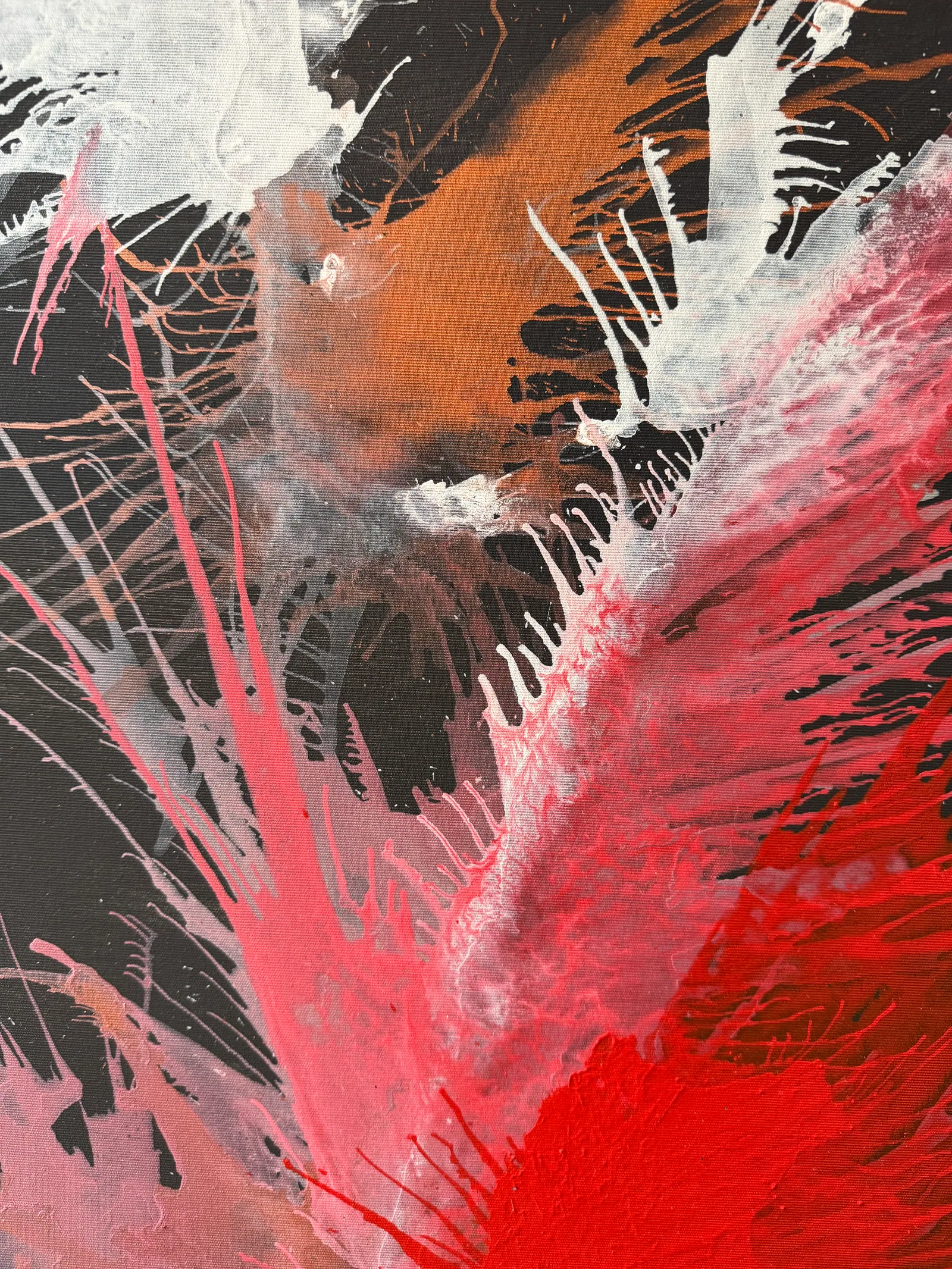
Genesis of Flame was painted in 2025 in acrylic and metallic pigment on a 120 × 200 cm canvas, with high-gloss and matte finishes side by side. Its catalogue number, AP-HOC-2025-001, opens with the letters of its series, Heart of Chaos. That code is the simplest way to see what a series does: it places one painting inside a group that shares a palette and a way of building the surface.
The word has a broad and a narrow use. In the broad use, a series is any group of works an artist develops around a shared motif or method and intends to be read together. Tate's glossary defines a narrower term, serial art: art that follows a strict set of rules to determine a composition or a sequence of compositions. Tate links it to minimalism and conceptual art in the 1960s, with Sol LeWitt, Andy Warhol and Josef Albers among its examples. Most painters who say they work in series mean the broad sense.
Two series museums document well
Claude Monet worked on the west facade of Rouen Cathedral between February and April 1892 and again in the same months of 1893. The Getty's catalogue essay counts twenty-eight canvases and, drawing on his letters, notes that on some days he moved between more than a dozen canvases as the light changed. In May 1895 his dealer, Durand-Ruel, showed twenty of them together in Paris. The motif stayed fixed so that hour and weather could become the subject.
Josef Albers began Homage to the Square in 1950, at 62. The Modern Art Museum of Fort Worth records more than a thousand paintings and prints in four formats, each built from three or four nested squares. Here the structure stays fixed and the colour changes, which is closer to Tate's serial art.
Series and body of work
On this site, body of work means everything an artist has made over a period, and a series is one line of research inside it. Alyne Perfeito is a Brazilian visual artist, trained as an architect, based in Brasília. Her current body of work was painted in 2025 and 2026 and is organised in concurrent series: Heart of Chaos, Matter & Silence, Luminous Rebirth, Black & Gold, Terra & Ether and Water & Bloom.
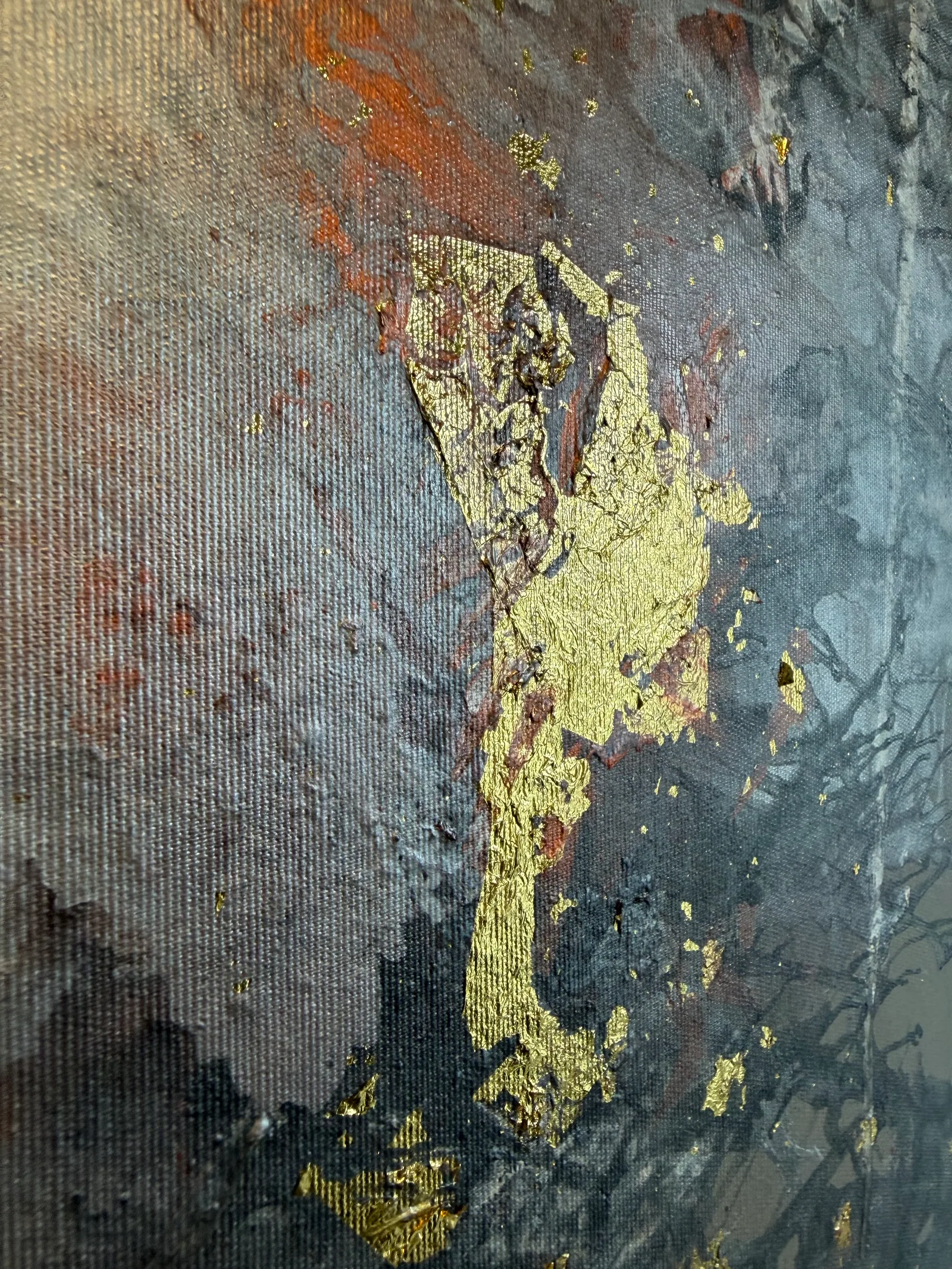
Each series has its own materials. Matter & Silence works with sculpted texture, as in Echo of Silence (50 × 70 cm, 2025). Black & Gold uses texture paste and imitation gold leaf (metallic leaf) on dark grounds, in Golden Passage and Celestial Plan. Water & Bloom is painted on paper: framed watercolour and acrylic, such as Golden Frond at 45 × 45 cm. Terra & Ether works in earth tones on canvas, and Luminous Rebirth in acrylic colour on canvas.
Reading Heart of Chaos
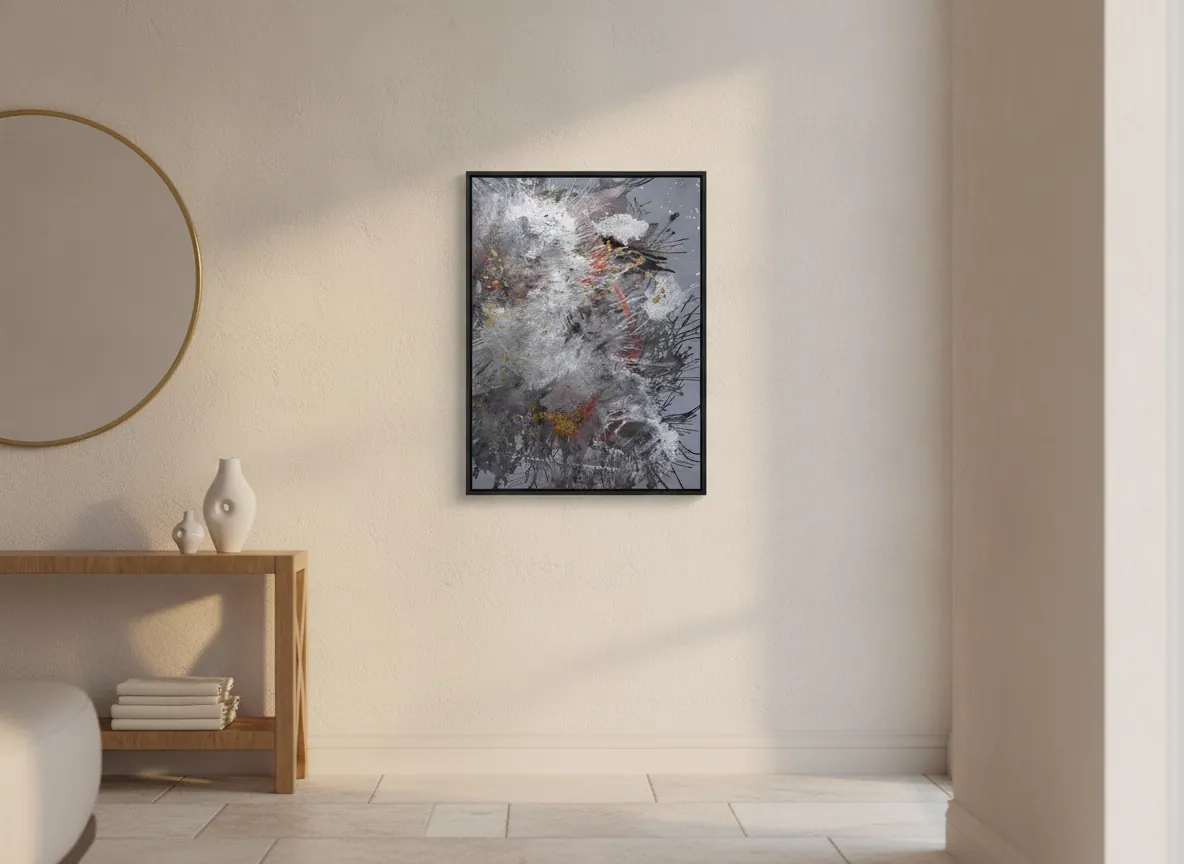
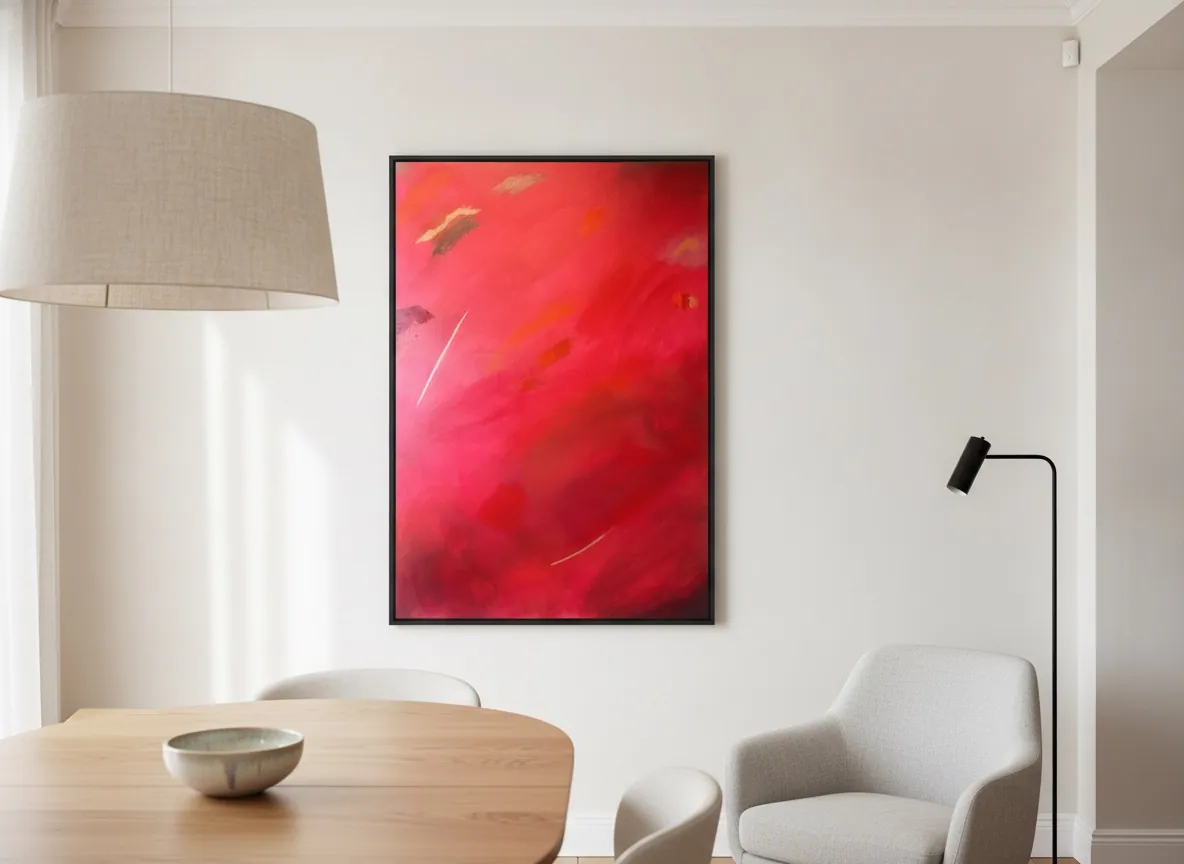
Read a series by asking what repeats and what moves. In Heart of Chaos, most canvases hold a centre of energy that spreads to the edges, and red and white recur, usually against black. Genesis of Flame (2025) has a red nucleus on a black ground with silver, copper and rose fragments. Origin of Light (2025, 60 × 80 cm) shifts to greys, with white and scarlet and fragments of imitation gold leaf (metallic leaf), sealed with a spray sealant. Fire of Devotion (2026, 100 × 150 cm, acrylic on canvas) leaves the black behind: a field of crimson and pink crossed by two thin white strokes. Electric Nocturne (2026, 80 × 170 cm) returns to a black field, crossed by thrown lines of fluorescent yellow, magenta, cobalt and orange.
The series spans two years, so you can see how its palette moved from 2025 to 2026.
One series, or a mix
Two works from the same series share a palette and a way of handling paint, so they hold together on facing walls or along a corridor. Origin of Light at 60 × 80 cm next to Genesis of Flame at 120 × 200 cm repeats red, white and dark ground at two scales.
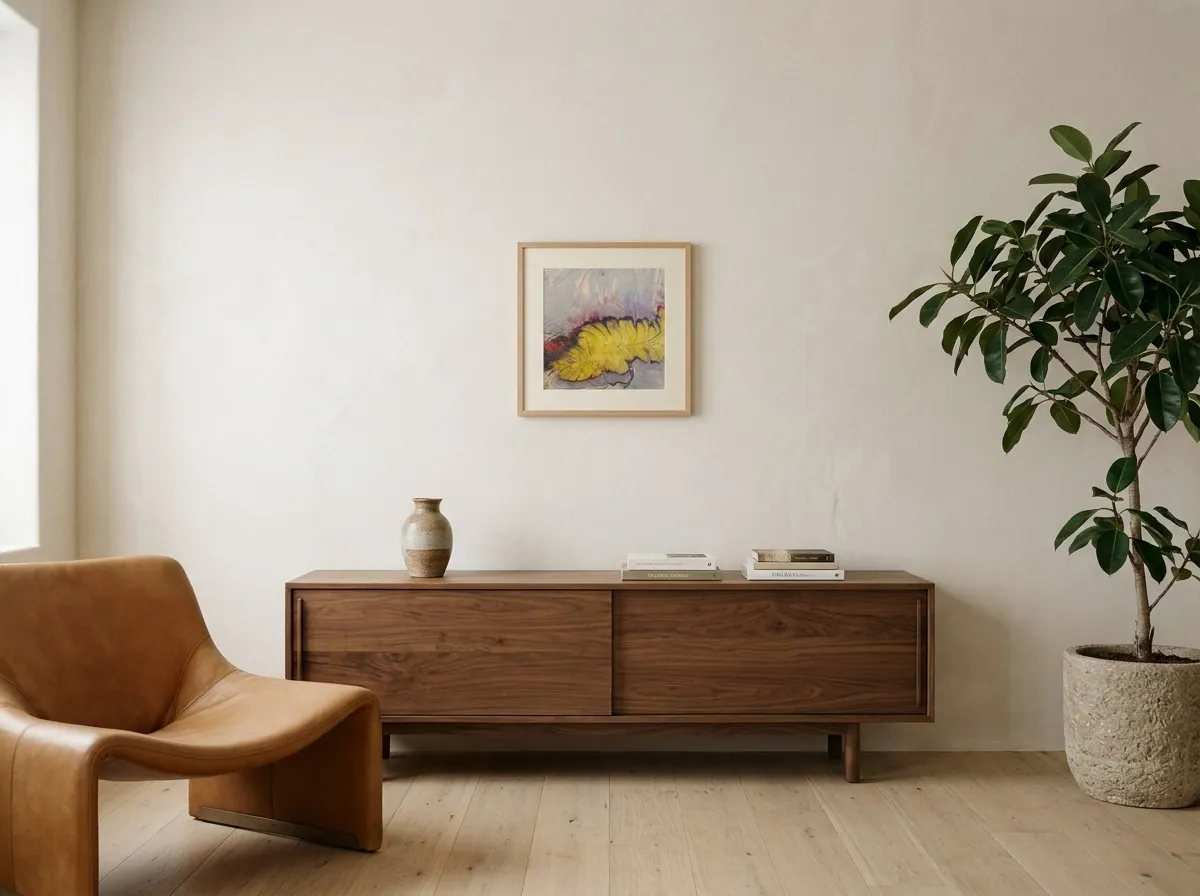
Mixing series works when one element carries across. A Water & Bloom work on paper, framed at 45 × 45 cm, can sit in a study near a large Terra & Ether canvas if the room already has their earth tones. Buy the work you want to live with. The studio makes no claim about how a series affects a work's future price.
For those acquiring a work
Mark the canvas size on the wall with tape and look at it from the sofa, from the table and from the doorway. A 120 × 200 cm canvas reads best from a few metres away, and a 60 × 80 cm one can be read from a hallway. Gloss finishes and metallic leaf catch side light, so check the wall at the hours you use the room. Genesis of Flame has no fixed top or bottom and can be hung either way up.
Genesis of Flame is R$ 8,800, Fire of Devotion R$ 5,700 and Origin of Light R$ 3,300; any conversion to another currency is approximate. Each work is unique, acquired directly from the artist, and comes with a signed Certificate of Authenticity carrying its Archive ID, a fiscal invoice or receipt, an Artwork Acquisition Agreement, an artist dossier and care guidance. Shipping is quoted per destination; see shipping and acquisition.
Available works
-
 Genesis of Flame
120 x 200 cm (47 x 79 in) · R$ 8.800
-
 Genesis of Flame
120 x 200 cm (47 x 79 in) · R$ 8.800
-
 Origin of Light
60 x 80 cm (23.6 x 31.5 in) · R$ 3.300
-
 Origin of Light
60 x 80 cm (23.6 x 31.5 in) · R$ 3.300
-
 Fire of Devotion
100 x 150 cm (39.4 x 59.1 in) · R$ 5.700
-
 Fire of Devotion
100 x 150 cm (39.4 x 59.1 in) · R$ 5.700
From the studio
From the studio
Every work here carries an Archive ID that names its series and its year: AP-HOC-2025-001 for Genesis of Flame, AP-HOC-2026-003 for Fire of Devotion. To know which series a painting belongs to, read its certificate: the Archive ID names it. We keep the series open across years, so Heart of Chaos has canvases from 2025 and from 2026, and detail photographs of any of them can be sent on request.
Frequently asked
What is a series in art?
A series is a group of works an artist makes around one subject, method or palette and intends to be seen together. Each work is complete on its own. Seen with the others, it shows what stayed constant and what changed, such as the light on Monet's Rouen Cathedral facades or the colours inside Albers's nested squares.
Why do abstract painters work in series?
A series lets a painter keep some decisions fixed, such as palette, format or material, and test one variable at a time. Albers kept the nested-square structure for Homage to the Square, begun in 1950, and changed the colour. In Heart of Chaos, red and white recur while the surface treatment and the amount of black change from canvas to canvas.
Is every work in a series similar?
No. Works share a thread but can differ a great deal. In Heart of Chaos, Genesis of Flame has a red nucleus on black with metallic pigment, while Fire of Devotion is a crimson and pink field in acrylic with almost no black. Sizes also vary, from 60 × 80 cm to 120 × 200 cm.
Can an artist work on several series at once?
Yes. Alyne Perfeito's 2025 to 2026 body of work runs in concurrent series, each with its own materials: Heart of Chaos, Matter & Silence, Luminous Rebirth, Black & Gold, Terra & Ether and Water & Bloom. Monet also painted grainstacks and poplars in 1890 and 1891, just before the cathedral.
Does buying one work from a series matter?
One work is a complete painting, and its certificate records the series it belongs to. Choosing within a series helps if you want two or more works that share a palette. The studio does not make any claim about price or future value linked to a series; choose the work you want on your wall.
See a series side by side
Ask the studio for detail photographs of Heart of Chaos works and a shipping quote to your address.
Sources
- Tate — 2026-11-18
- J. Paul Getty Museum (Scott C. Allan) — 2026-11-18
- Musée des Beaux-Arts de Rouen — 2026-11-18
- Modern Art Museum of Fort Worth — 2026-11-18
- Perfeito Studio — 2026-11-18
- Perfeito Studio — 2026-11-18
- Perfeito Studio (src/data/obras.json and studio-facts.json) — 2026-11-18
Published on
Edited and reviewed by: Alyne Perfeito, architect and visual artist · CAU A1023098
Alyne Perfeito is a trained architect and visual artist with a studio in Brasília, Brazil. She edits and reviews the Journal from her painting practice. See Alyne's works →