Can a clinic, office or shop display a painting it bought without the artist's permission?
Yes, in the United States. Under 17 U.S.C. 109(c), the owner of a lawfully made copy, original canvas included, may display it publicly without the copyright owner's authority to viewers present where it hangs. Photographing it for your website, printing it on brochures or streaming it to another branch is reproduction or transmission, and 109(c) does not cover that.

Works cited in this text
-
-
-
-


What 17 U.S.C. 109(c) lets the owner do
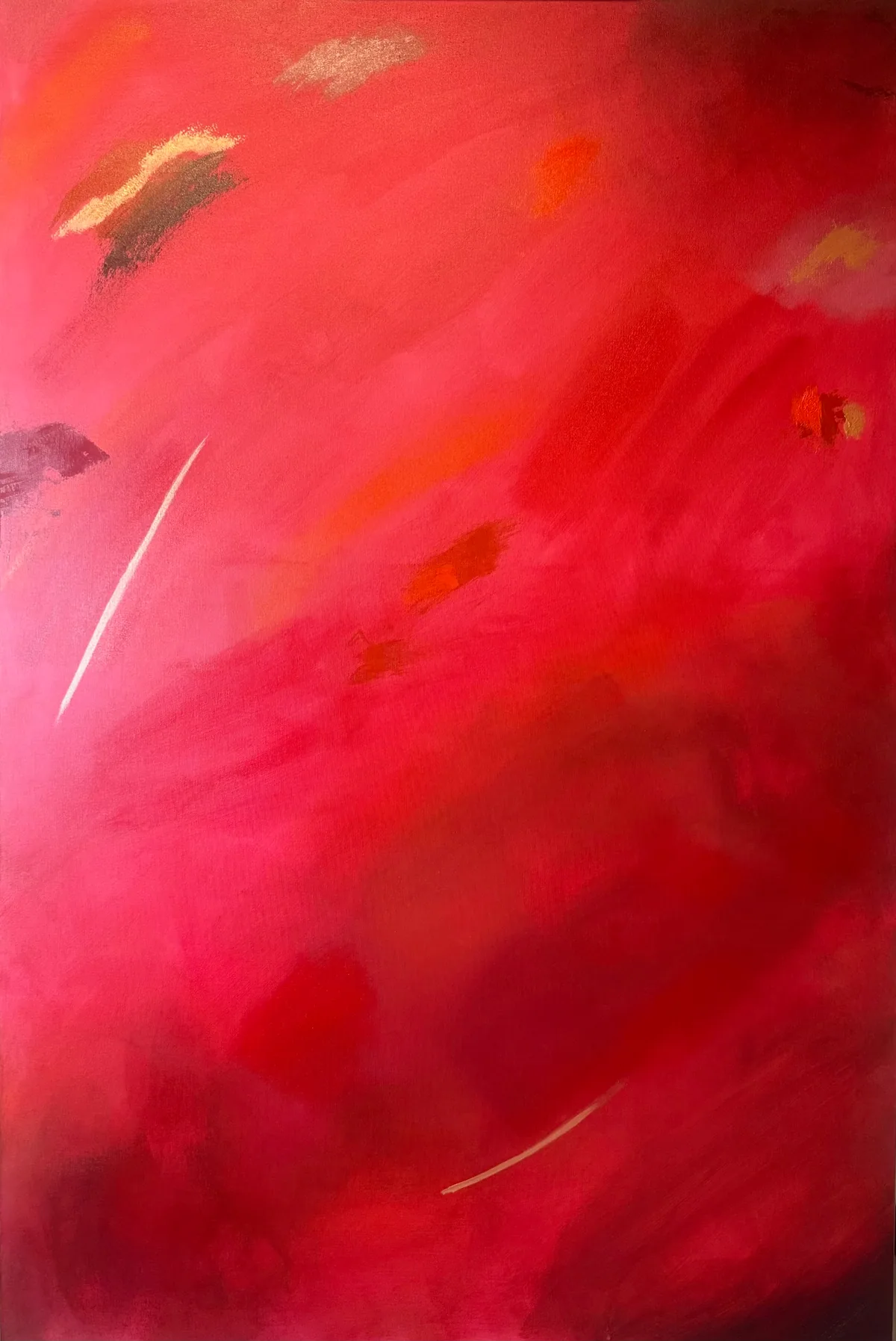
Across the red field of Fire of Devotion, a pale gold-coloured stroke and a black, dry-brushed one run on the diagonal, with a single thin light line drawn through both. The canvas is acrylic, 100 × 150 cm, painted in 2026 and catalogued as AP-HOC-2026-003. A dentist who wants it behind the front desk usually asks whether patients looking at it every day needs a licence.

Section 106(5) of the Copyright Act gives the copyright owner of a pictorial work the exclusive right to display it publicly. Section 101 defines displaying a work publicly as showing it at a place open to the public, or where a substantial number of people outside a family and its social acquaintances gather. A waiting room, a shop floor and a restaurant all fit that wording.
Section 109(c) is the exception written for owners. Notwithstanding 106(5), the owner of a particular copy lawfully made under the Act, or anyone that owner authorizes, may display that copy publicly without the copyright owner's authority, directly or by projecting no more than one image at a time, to viewers present at the place where the copy is located. Section 101 says the term copies includes the material object in which the work is first fixed, so a bought original falls under it.
Owning the canvas and owning the copyright
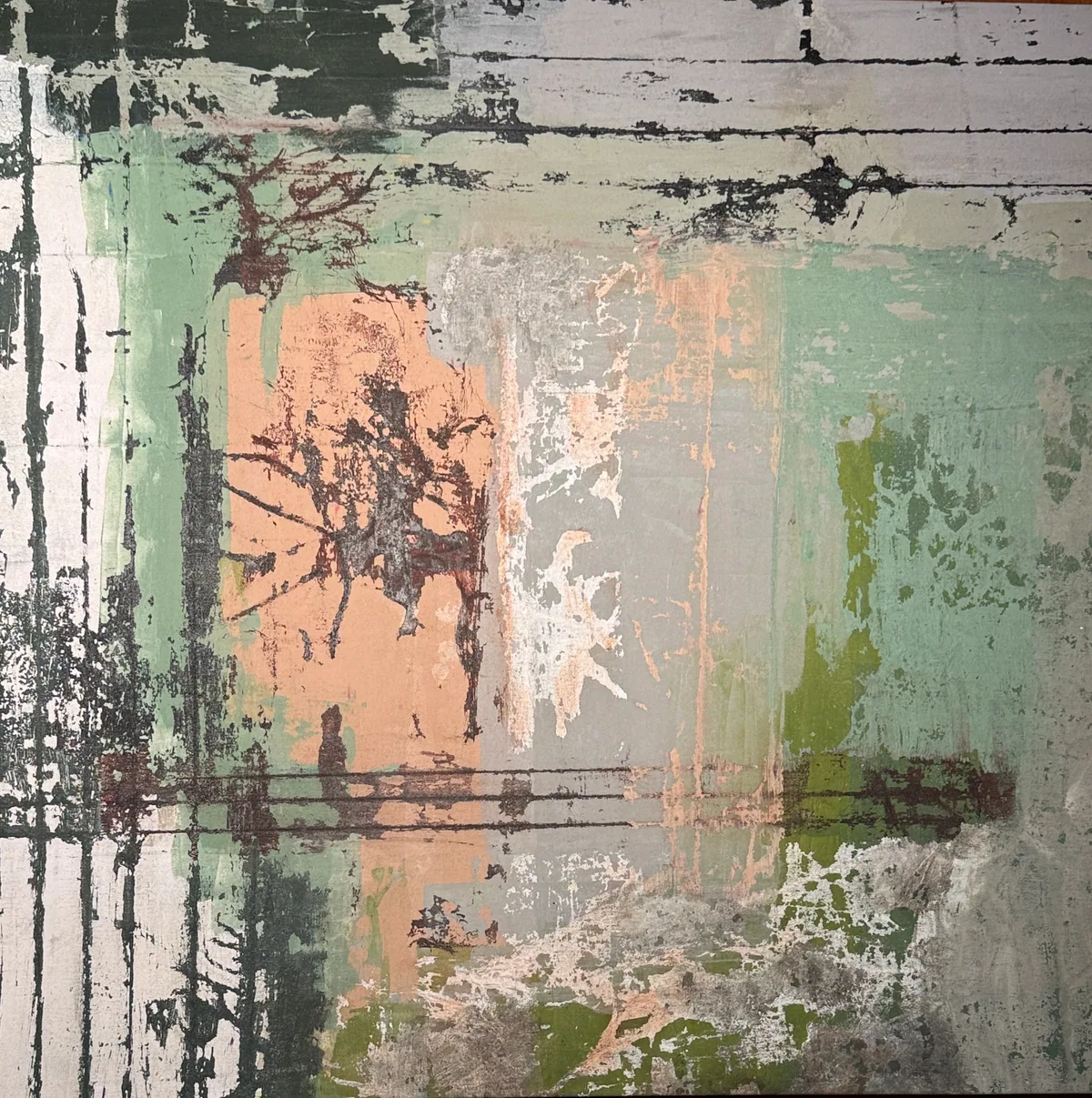
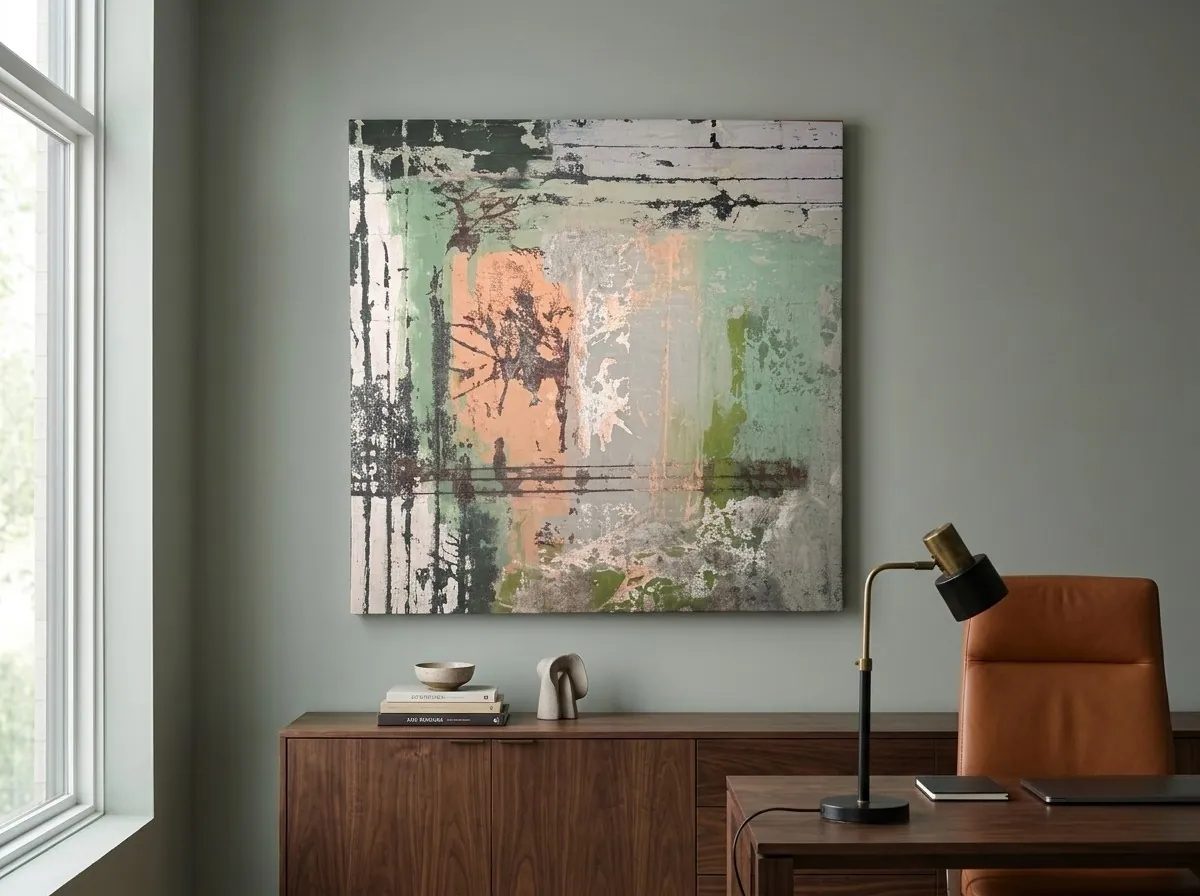
Section 202 keeps the two apart. Ownership of a copyright is distinct from ownership of the material object, and transferring the object, the original included, does not of itself convey any rights in the work. When a law firm buys Verdigris Window (acrylic on canvas, 100 × 100 cm, 2026), it owns the painting. The artist keeps the copyright unless a written agreement says otherwise.
The display privilege follows ownership. Section 109(d) says the privileges in 109(a) and (c) do not extend, unless the copyright owner authorizes it, to anyone who has possession of the copy by rental, lease, loan or otherwise without acquiring ownership. An office that leases its art or borrows a canvas from a partner should read the lease or loan terms for what they permit.
Artists also hold moral rights in some works, which limit what an owner may do to the object itself. Our guide on whether you can alter or destroy a painting you own covers that part of the law.
Screens, the company website and printed material
The projection clause is narrow. A single image at a time, shown to people in the place where the painting is, fits 109(c). The second half of the section 101 definition treats sending a display to the public in separate places, at the same or different times, as a public display too. A feed to every branch or a post on social media goes past the room where the canvas hangs, so 109(c) no longer answers it.
A photograph of the painting on your homepage, in an advertisement, on a gift card or as a print in the treatment rooms is a copy of the work. Reproducing the work in copies is a separate exclusive right of the copyright owner under 106(1), and 109(c) does not touch it. Neither does 106(2), the right to prepare derivative works, which matters if a designer wants to crop the painting into a logo or a wallpaper.
Whether a particular use is allowed without permission depends on its facts. Read what your purchase documents say about image use, ask the artist for the use you have in mind, and take anything unusual to a copyright lawyer. This page explains the federal text and is not legal advice.
For collectors considering an acquisition
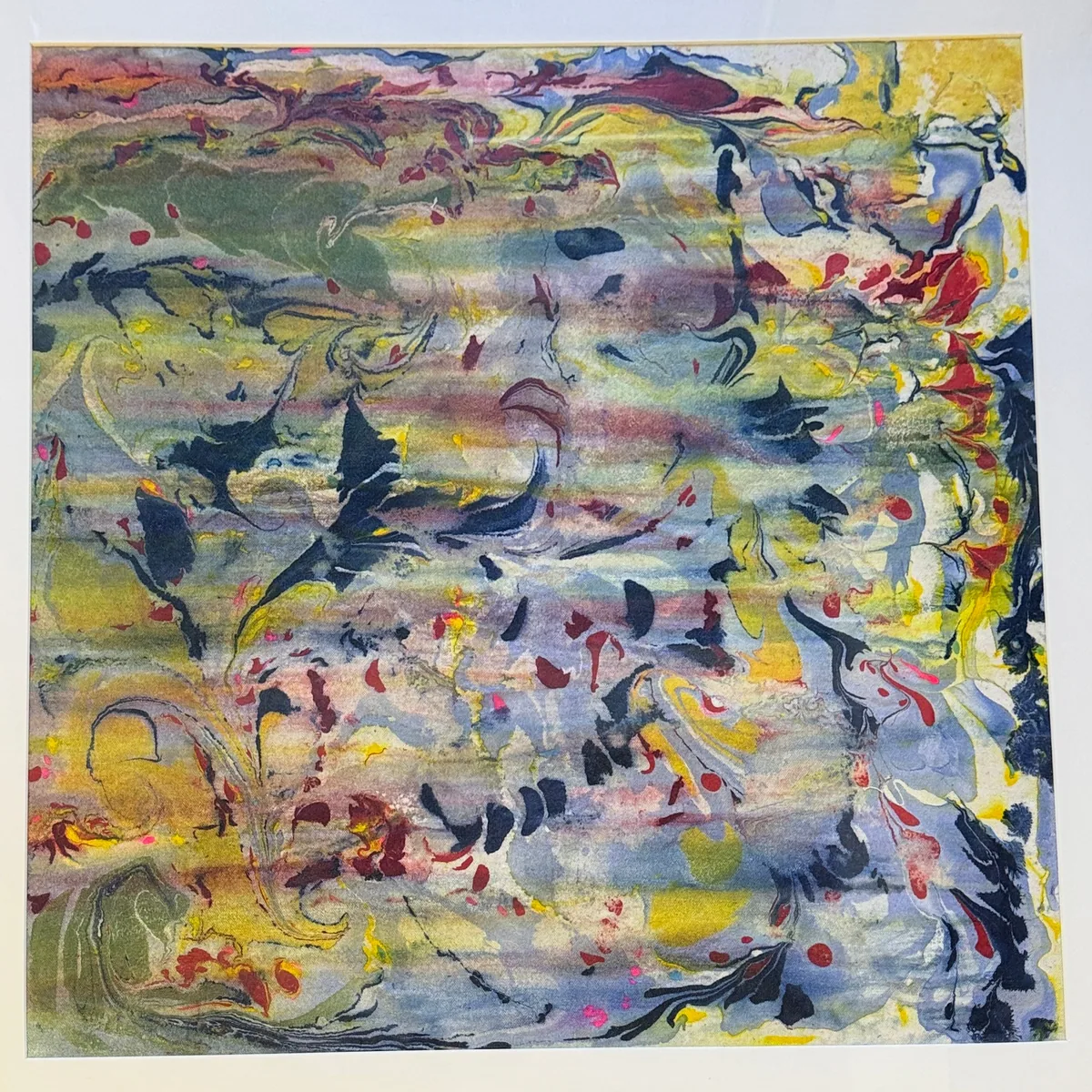
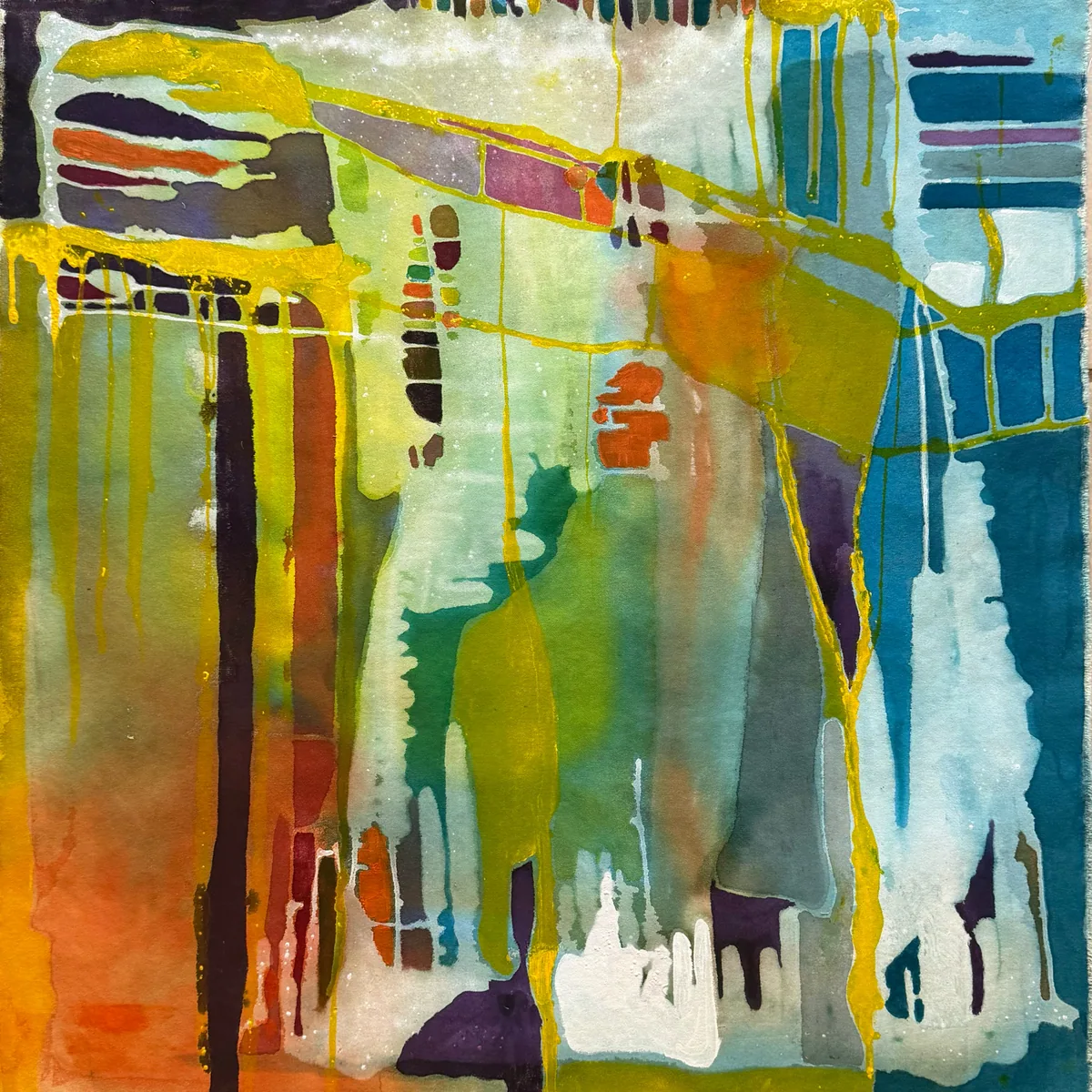
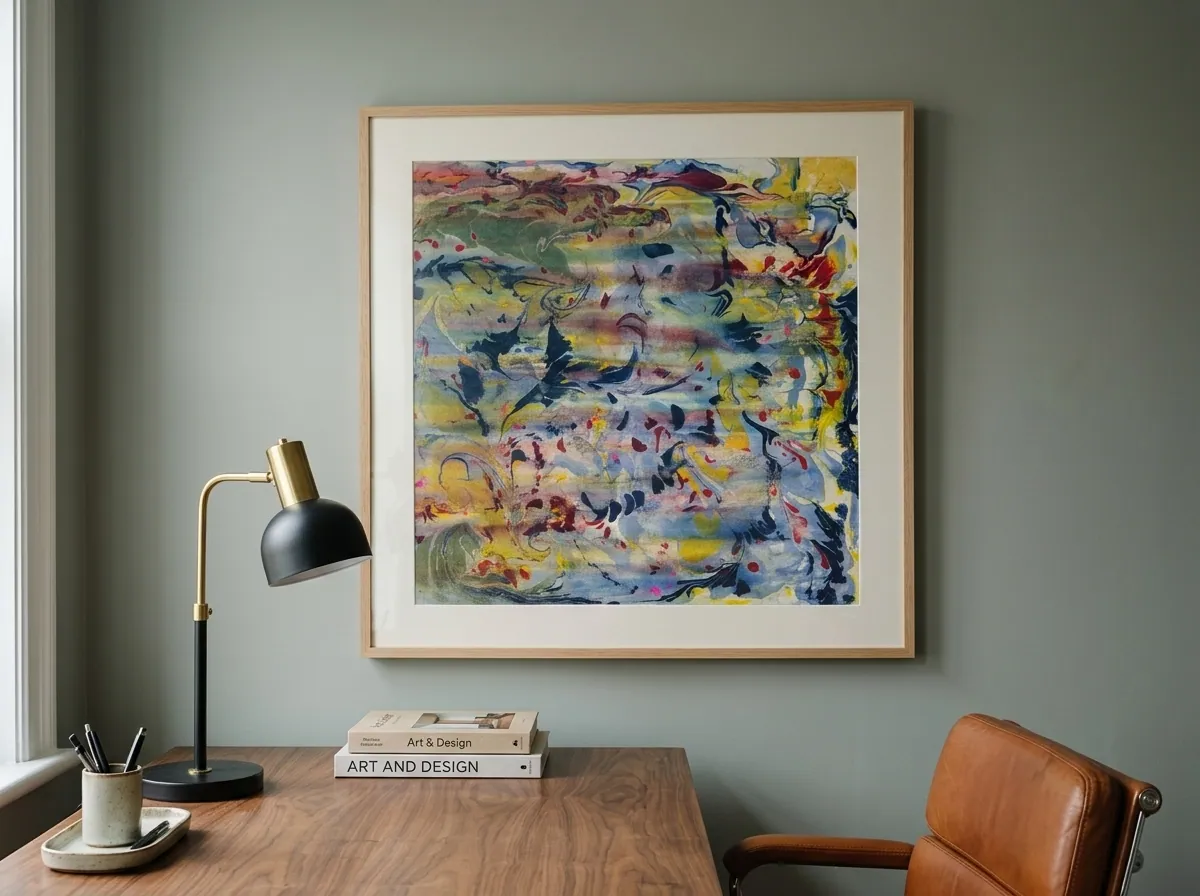
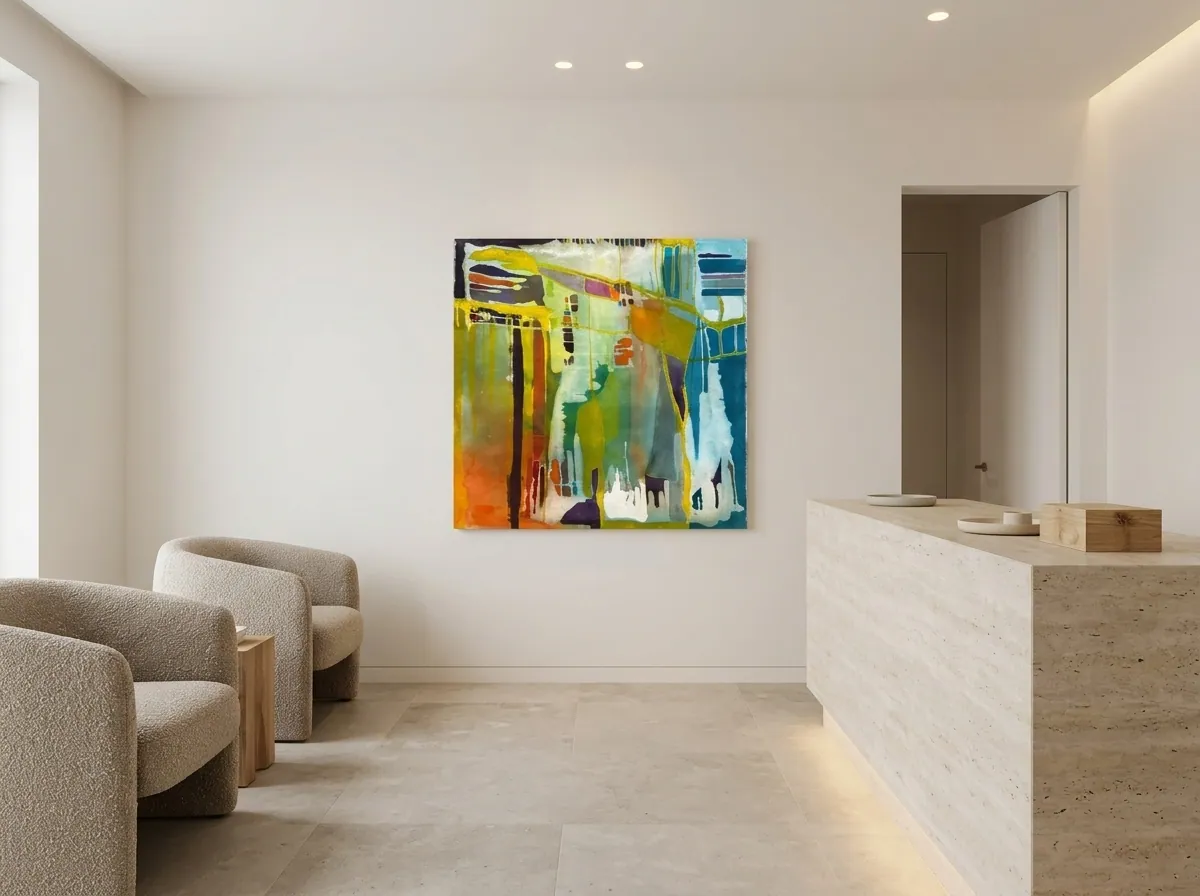
Fire of Devotion (R$ 5,700) is 100 × 150 cm and vertical, tall enough to fill the wall behind a reception desk from counter height. Verdigris Window (R$ 5,200) and Prism Garden (R$ 5,500) are 100 × 100 cm squares, sized for a waiting-room wall above a row of chairs. Petal Current (R$ 3,300) is watercolour and acrylic on paper, framed, 73 × 73 cm including the frame, and suits a consulting room or a corridor. Mark the outline on the wall with painter's tape, check it at the hours the room is busiest, and stand where a waiting client sits. Prices are in Brazilian reais; any conversion is approximate.
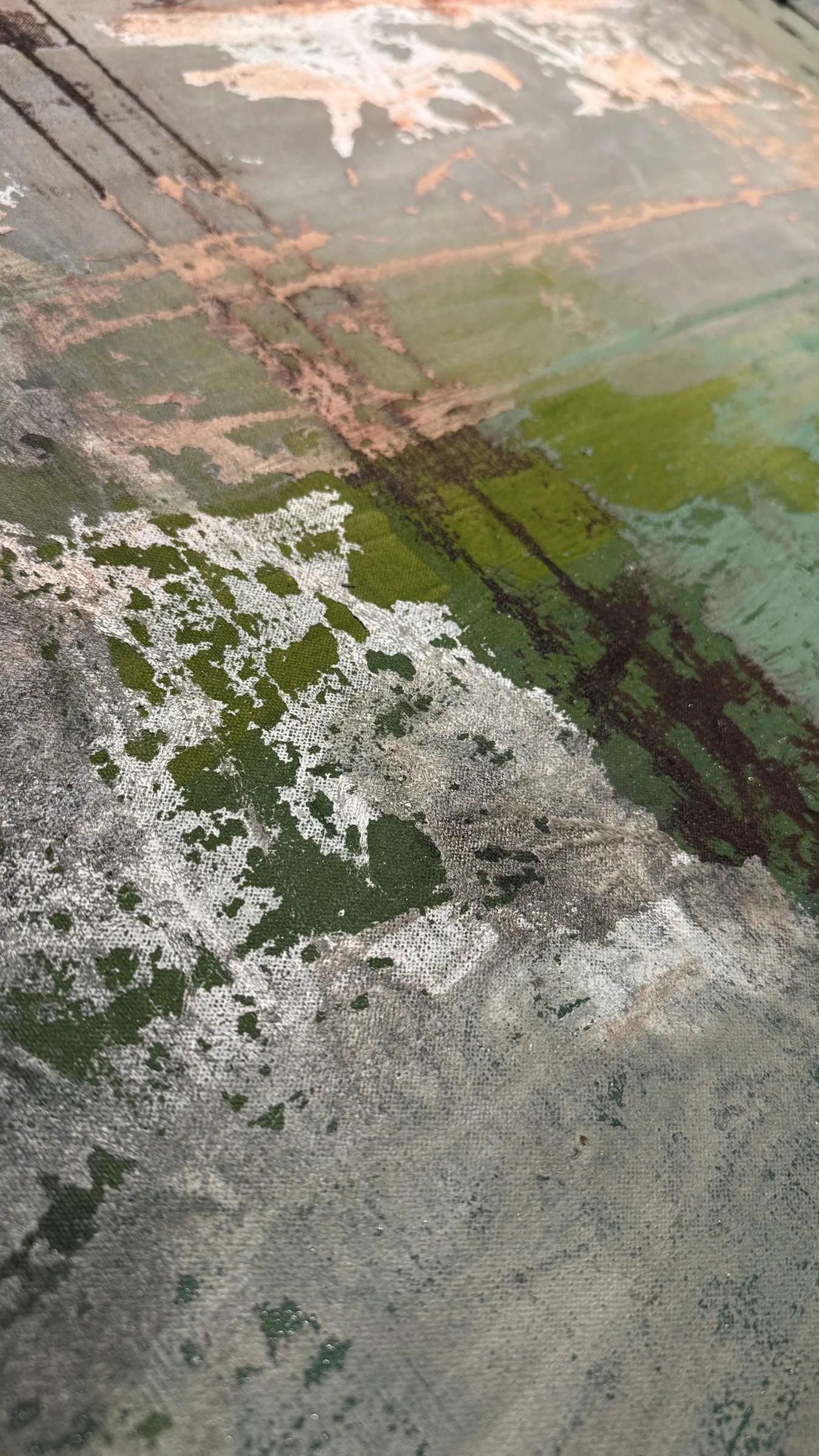
Every acquisition is made directly with the artist and includes the original painting, a signed Certificate of Authenticity with the Archive ID (see certificate of authenticity), a fiscal invoice or official receipt, an Artwork Acquisition Agreement covering transfer of ownership, copyright terms and image rights, an artist dossier and care instructions (see acquisition). If the business plans to photograph the work for its website or printed material, ask the studio about that use before signing. The studio ships within Brazil and abroad. International shipping is quoted on request and paid by the buyer, as are import duties and taxes in the destination country; professional packaging is included and transit insurance is available (see shipping). The other available works are in the gallery.
Available works
-
 Fire of Devotion
100 x 150 cm (39.4 x 59.1 in) · R$ 5.700
-
 Fire of Devotion
100 x 150 cm (39.4 x 59.1 in) · R$ 5.700
-
 Verdigris Window
100 x 100 cm (39.4 x 39.4 in) · R$ 5.200
-
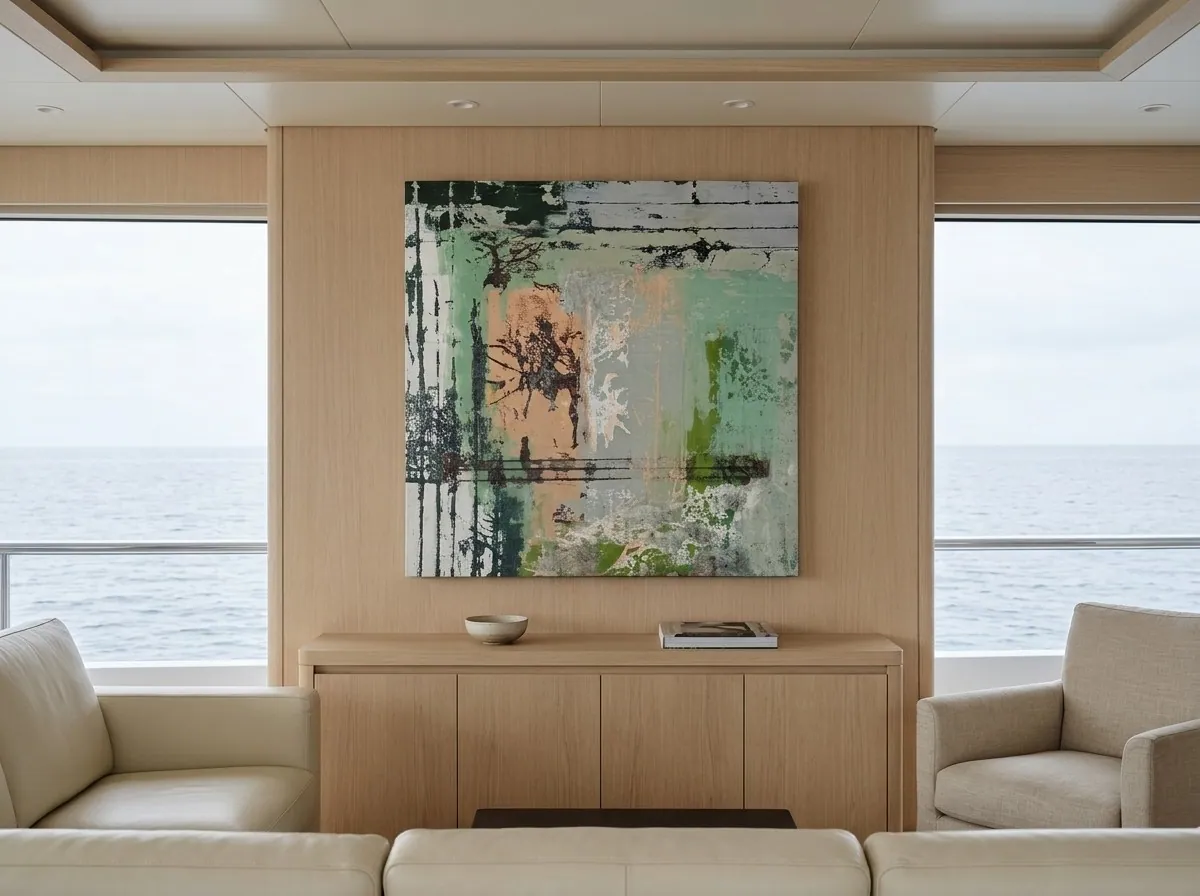 Verdigris Window
100 x 100 cm (39.4 x 39.4 in) · R$ 5.200
-
 Petal Current
73 x 73 cm (28.7 x 28.7 in) · R$ 3.300
-
 Petal Current
73 x 73 cm (28.7 x 28.7 in) · R$ 3.300
From the studio
From the studio
Fire of Devotion (AP-HOC-2026-003), Verdigris Window (AP-TAE-2026-012), Petal Current (AP-WAB-2026-003) and Prism Garden (AP-LMR-2026-006) are unique works, with no editions or reproductions. Alyne Perfeito is a Brazilian visual artist and trained architect based in Brasília. A clinic or office that wants the painting on its website as well as on its wall can put that request in writing before the agreement is signed, and the answer stays with the rest of the paperwork.
Frequently asked
Does a business need permission to display a painting it owns?
Not under US federal law, if the painting was lawfully made and the business owns it. 17 U.S.C. 109(c) lets the owner display it publicly, without the copyright owner's authority, to viewers present at the place where it is located.
Can I put a photo of the painting on my company website?
A photo is a reproduction, and reproducing the work is a separate right of the copyright owner under 17 U.S.C. 106(1). Section 109(c) covers display only. Check what your purchase agreement says about image use, ask the artist, and see a copyright lawyer for anything unusual.
Does the display right cover projecting the image on a screen?
Section 109(c) allows projection of no more than one image at a time to viewers present at the place where the painting is. Sending the image to other locations or to the public online is outside that wording.
What does the acquisition agreement change?
Under 17 U.S.C. 202, buying the painting does not by itself transfer copyright. The Perfeito Studio Artwork Acquisition Agreement covers transfer of ownership, copyright terms and image rights, so the agreement is where any permitted image use is written down.
What if the business leases the painting?
17 U.S.C. 109(d) says the display privilege does not extend to someone who holds the painting by rental, lease or loan without owning it, unless the copyright owner authorizes it. Read the lease terms.
Ask about a painting for your reception
Write to the studio with the wall size and how you plan to use images of the work, and we will reply with what the agreement covers.
Sources
- Legal Information Institute, Cornell Law School — 2026-11-24
- Legal Information Institute, Cornell Law School — 2026-11-24
- Legal Information Institute, Cornell Law School — 2026-11-24
- Legal Information Institute, Cornell Law School — 2026-11-24
- Perfeito Studio — 2026-11-24
- Perfeito Studio — 2026-11-24
Published on
Edited and reviewed by: Alyne Perfeito, architect and visual artist · CAU A1023098
Alyne Perfeito is a trained architect and visual artist with a studio in Brasília, Brazil. She edits and reviews the Journal from her painting practice. See Alyne's works →