How should a watercolour be attached inside its frame? Hinges, tape and what to check when it arrives
With hinges. The Canadian Conservation Institute (CCI) calls hinging the best way to attach a work on paper to its mat: usually two small hinges of conservation-quality Japanese paper and wheat starch paste. It warns that commercial tapes eventually stain and damage paper, and that a window mat keeps the image off the glass.


What the conservation note recommends
The reference here is CCI Notes 11/5, Matting Works on Paper, written by Sherry Guild for the Canadian Conservation Institute. It describes hinging as the best way to attach a work on paper to its mat. A hinge holds the sheet at the top and lets the paper move a little as the climate in the room changes.
The note asks for Japanese paper of conservation quality and points out that some Japanese papers contain a large share of wood pulp, which makes them unsuitable. For the adhesive it is direct: wheat starch paste is the best paste to use for hinging. It names the T-hinge as the strongest and most versatile hinge for standard matting.
How many hinges and how strong
According to the CCI, most works on paper need two hinges, and larger sheets may need more. The note sets a limit on strength as well: hinges should not be heavier or stronger than the work itself, yet must provide adequate support.
If the work ever has to come out of its mat, hinges make that simple and straightforward, the note says. The note adds that paper is extremely sensitive to contamination by poor-quality materials, so it recommends conservation-quality matboard, papers and adhesives throughout, with white or buff 4-ply board as the general choice.
Why tape is the problem
Gummed and pressure-sensitive tapes are convenient, and the CCI grants that. It also says commercial tapes are often made of inappropriate materials and have poor ageing properties. With time they cause staining and damage, and they can be hard to remove.
The same note explains the role of the window mat, the board with an opening cut around the image. It creates an air space that keeps the image from touching the glazing directly. A watercolour pressed flat against glass has no such gap. Choosing between glass and acrylic for that front layer is covered in glass or acrylic glazing for a framed watercolour.
What to check when it arrives
Look at the front first. Check that the sheet sits flat inside the mat opening and does not touch the glass, and look along the edges for any visible strip of tape or a stain near it. Then look at the back of the frame for damage from transit.
Leave the frame closed and hand the job to someone who handles paper every day. If you want to know how a particular work is mounted, ask the studio before you buy, and take any doubt about an older frame to a picture framer who works with works on paper or to a paper conservator.
For those acquiring a work
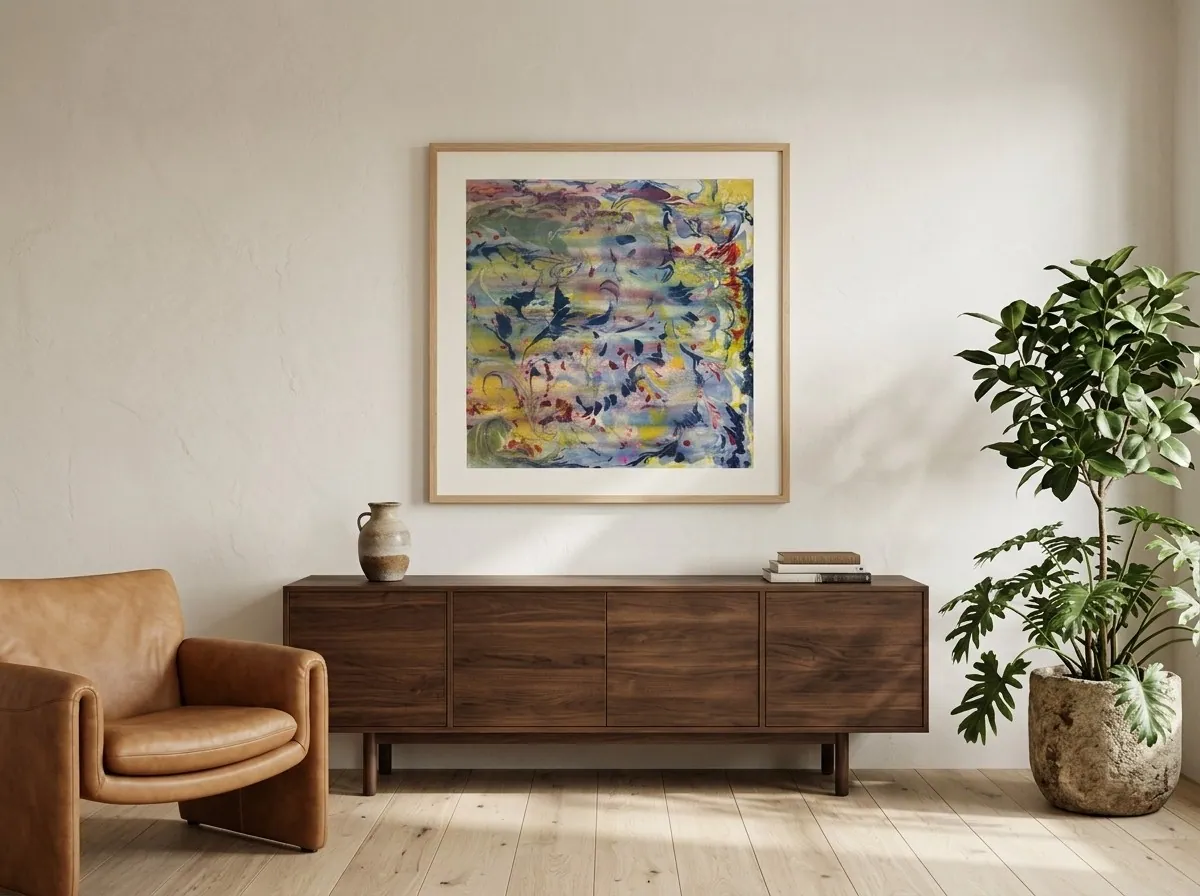
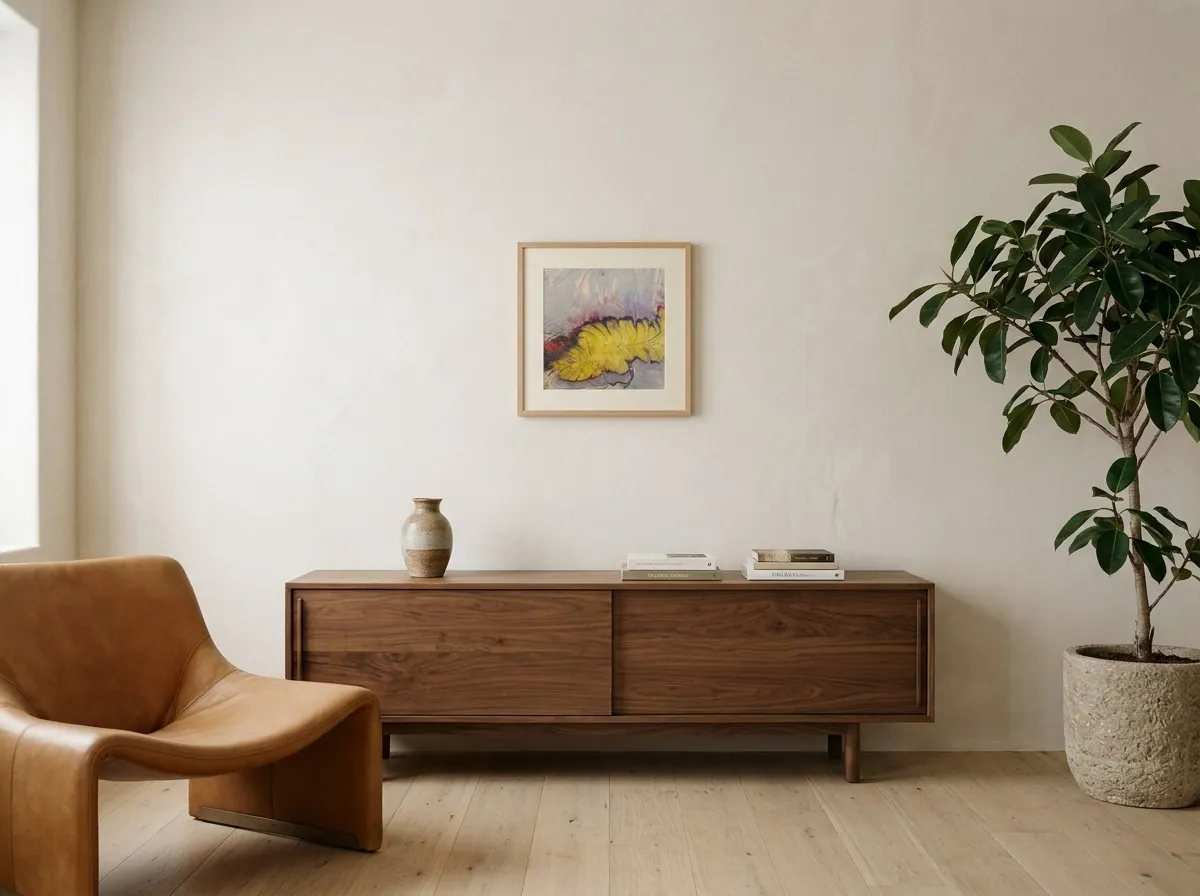
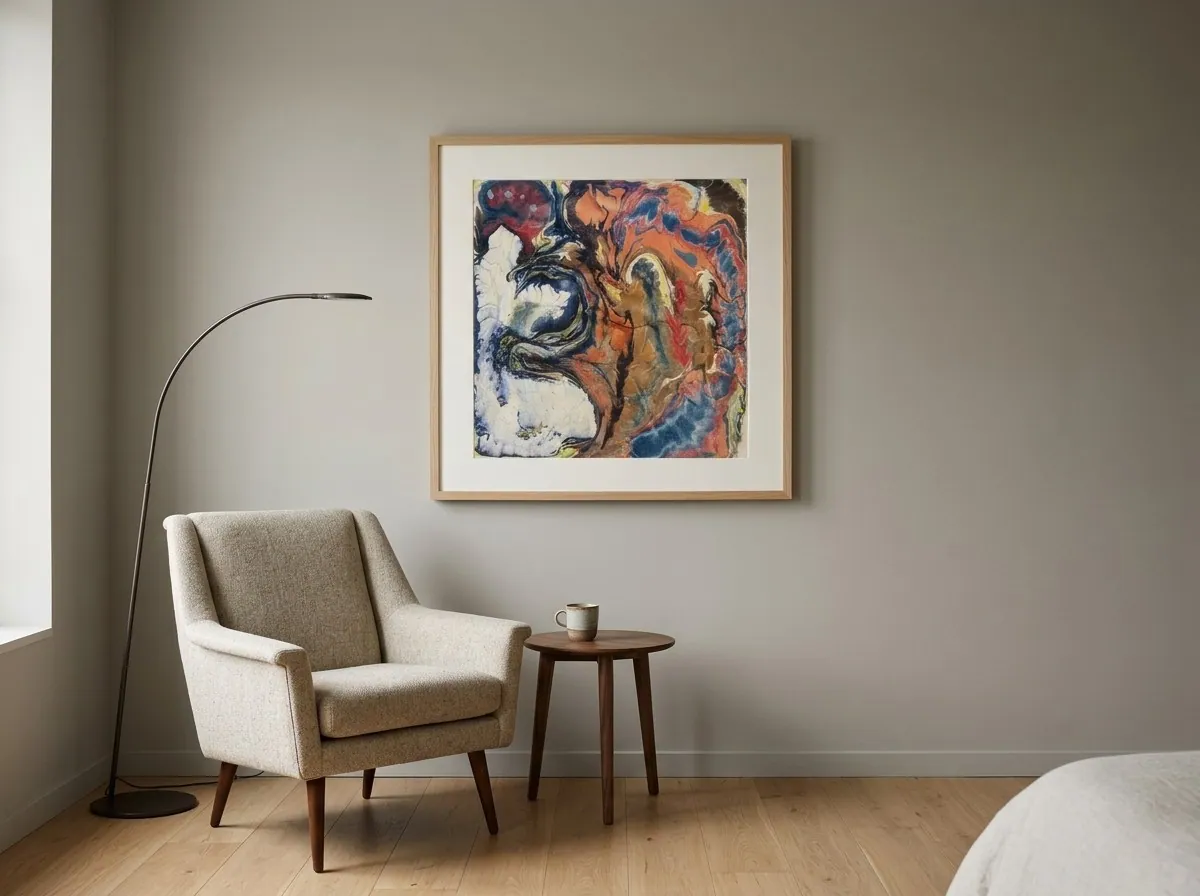
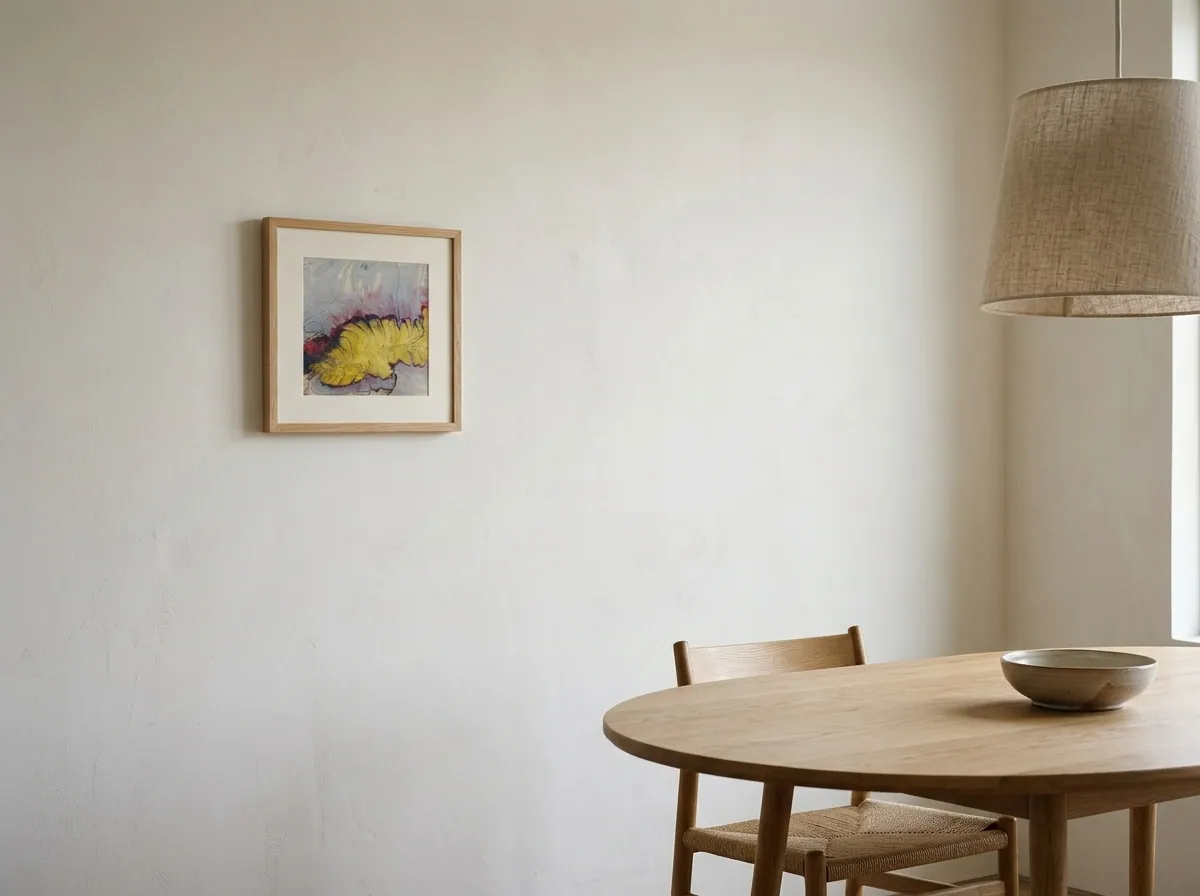
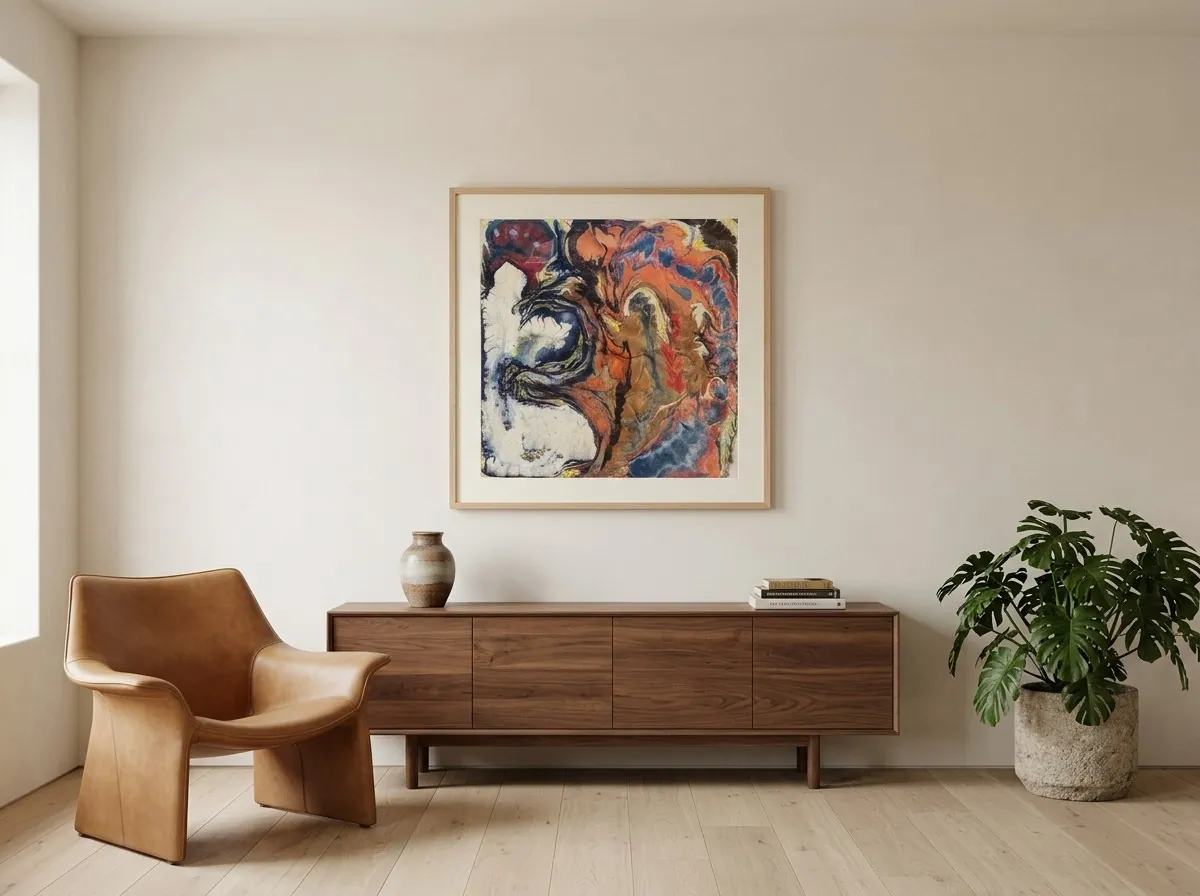
The Water & Bloom works are watercolour and acrylic on paper, sold framed, and their listed sizes include the frame. Golden Frond (AP-WAB-2026-001) measures 45 × 45 cm and costs R$ 2,400, a size for a narrow wall or above a console. Petal Current (AP-WAB-2026-003) and Ember Tide (AP-WAB-2026-004) measure 73 × 73 cm and cost R$ 3,300 each, enough to hold a sideboard wall. Mark the size on the wall with masking tape, keep the frame out of direct sun and note where you will see it from. Any conversion from BRL is approximate.
Every acquisition comes directly from the artist with a signed Certificate of Authenticity carrying the Archive ID, a fiscal invoice or receipt, an Artwork Acquisition Agreement, an artist dossier and conservation and care guidance. Shipping is quoted per destination and paid by the buyer; professional packaging is included and transit insurance is available. See shipping, acquisition and the gallery.
Available works
-
 Golden Frond
45 x 45 cm (17.7 x 17.7 in) · R$ 2.400
-
 Golden Frond
45 x 45 cm (17.7 x 17.7 in) · R$ 2.400
-
 Petal Current
73 x 73 cm (28.7 x 28.7 in) · R$ 3.300
-
 Petal Current
73 x 73 cm (28.7 x 28.7 in) · R$ 3.300
-
 Ember Tide
73 x 73 cm (28.7 x 28.7 in) · R$ 3.300
-
 Ember Tide
73 x 73 cm (28.7 x 28.7 in) · R$ 3.300
From the studio
From the studio
Alyne Perfeito is a Brazilian visual artist, trained as an architect, based in Brasília. Water & Bloom is her series of framed works in watercolour and acrylic on paper. Write to the studio with the work you have in mind and ask how that sheet is held inside its frame.
Frequently asked
What should hold a watercolour inside a frame?
The Canadian Conservation Institute recommends hinges, usually two, made of conservation-quality Japanese paper and wheat starch paste, attaching the sheet to its mat. It names the T-hinge as the strongest and most versatile for standard matting.
Why is masking tape bad for a watercolour?
The CCI says commercial tapes are often made of inappropriate materials and age poorly, and that over time they cause staining and damage and can be hard to remove.
Why should the paper not touch the glass?
A window mat creates an air space that protects the image from direct contact with the glazing, according to CCI Notes 11/5.
Can I open the frame to check?
It is safer to leave it closed and ask a picture framer who works with works on paper or a paper conservator. For a work you are considering, ask the studio how it is mounted.
Ask how the sheet is mounted
Write to the studio about Golden Frond, Petal Current or Ember Tide, the wall you have in mind and a shipping quote to your address.
Sources
- Canadian Conservation Institute, Government of Canada — 2026-11-27
- Perfeito Studio — 2026-11-27
- Perfeito Studio — 2026-11-27
- Perfeito Studio (src/data/obras.json and studio-facts.json) — 2026-11-27
Published on
Edited and reviewed by: Alyne Perfeito, architect and visual artist · CAU A1023098
Alyne Perfeito is a trained architect and visual artist with a studio in Brasília, Brazil. She edits and reviews the Journal from her painting practice. See Alyne's works →