How to dust and clean a textured painting safely
The safest way to keep a textured painting clean is to not wipe it at all. The Canadian Conservation Institute says never to use dry or moist cloths, stiff brushes or feather dusters on a painting, and Museums Galleries Scotland advises against cleaning the surface even for dust. Prevent dust instead, and consult a conservator if the surface looks dirty.
What conservation bodies say about dusting
The guidance is more cautious than most people expect. The Canadian Conservation Institute (CCI), part of the Government of Canada, states in its note on cleaning paintings that even dusting the surface of a painting carries risks, including the risk of removing paint. Museums Galleries Scotland, the Scottish museum-sector development body, goes further and advises never to clean the surface of a painting, even to remove dust, because it can remove paint and varnish.
Neither institution offers a home dusting routine. Where a painting has come to look dusty, the institutional answer is to assess before acting and to leave any treatment to a conservation professional.
What to avoid
CCI is specific: never use dry or moist dust cloths, stiff bristle brushes or feather dusters to dust the surface of a painting. Its stated reasons are that threads from dust cloths may catch on areas of raised paint (impasto), that brushes and feather dusters can scratch the paint or varnish, and that moisture may cause subsequent loss of paint. CCI also says never to attempt to use commercial paint cleaners or picture restoring preparations on paintings.
A microfiber cloth is a dust cloth, and CCI warns that brushes can scratch, so nothing in these two sources supports home brushing or wiping. Museums Galleries Scotland also advises against dusting frames, particularly with cloths, since dust contains abrasive particles that scratch fragile gilded surfaces.
On a textured work the question is not whether a tool is soft, but whether anything at all should be dragged across raised paint. The institutional sources say no, and recommend asking a conservator instead.
Prevention: position, light and ambient dust
Because the surface is the risky part to touch, prevention does most of the work. CCI recommends protective glazing with an air gap and keeping the painting away from air intakes, and Museums Galleries Scotland adds that a painting should not hang above a heat source such as a fireplace, radiator or air-conditioning outlet, because rising warm air carries dirt to the surface.
Museums Galleries Scotland recommends monitoring works with a magnifying glass, which lets you keep watch without touching. In the atelier's practice, a raking light from the side is a simple way to see how much dust has settled on relief, again without contact.
When to stop and consult a conservator
Stop the moment you see anything more than dust, such as paint flaking or lifting. Museums Galleries Scotland advises carrying a flaking painting horizontally, moving it to flat storage, and contacting a conservator to secure the paint. It also urges owners to resist the temptation to carry out basic procedures themselves, since even simple treatment can cause unforeseen damage.
The Smithsonian American Art Museum says it is very important to have trained professionals do conservation work and points owners to the American Institute for Conservation for finding one. Outside the United States, a local museum or a national conservators' association is a sensible place to ask for a referral.
From the studio
The atelier's view: look, don't touch
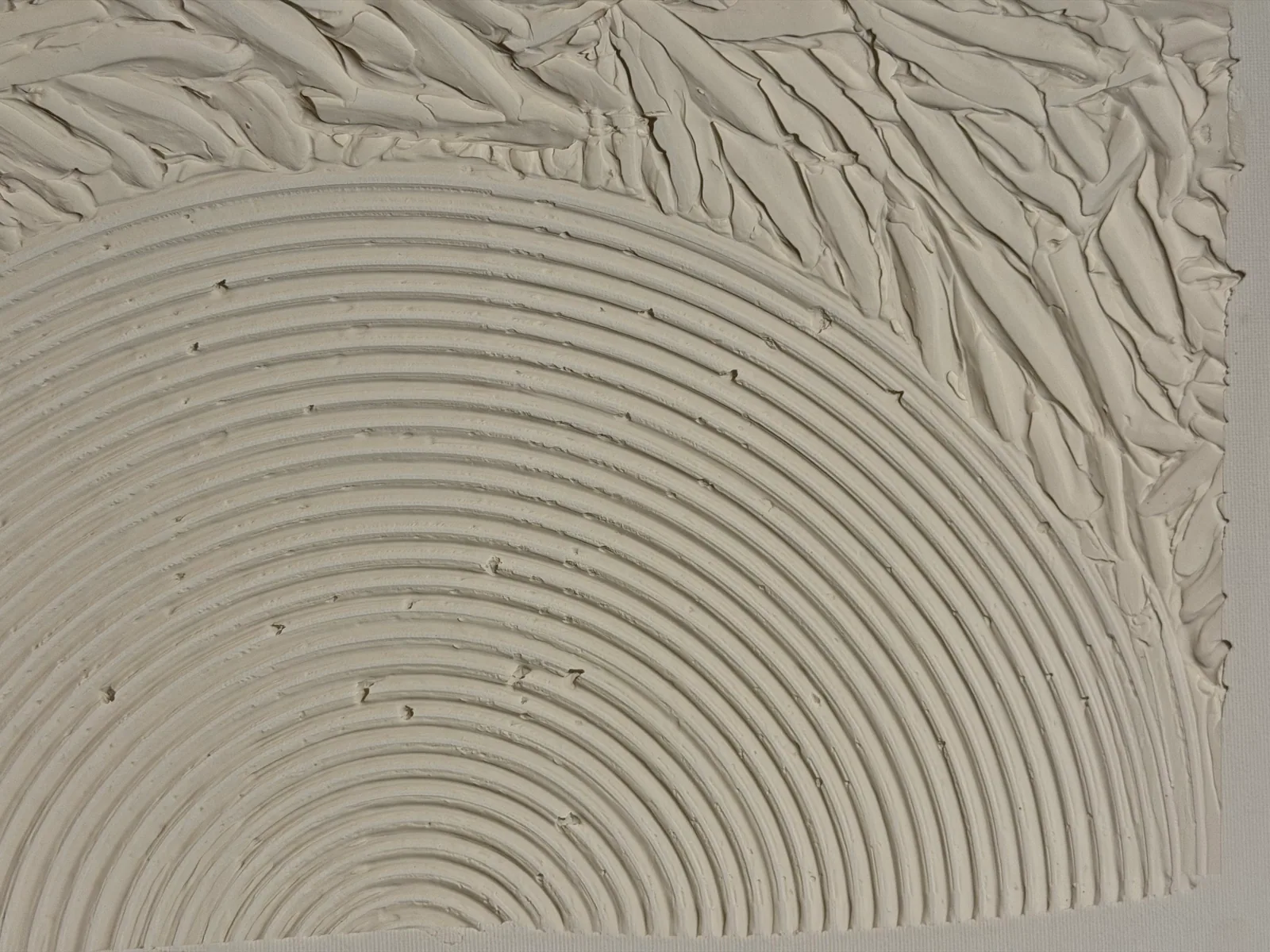
Echo of Silence is built from concentric reliefs and organic folds, the kind of sculpted-texture surface this page is about. In the experience of the atelier, ridges like these are where a cloth or brush is most likely to catch, which is why my advice leans toward a hanging plan rather than a cleaning plan.
Choose a wall away from radiators and vents, keep the work out of kitchen and doorway traffic, and look at the surface rather than touching it. If a piece ever looks dirty enough to bother you, the institutional sources point to a conservator, not to a household tool.
Frequently asked
Can you dust a textured painting?
The conservation sources cited here advise against dusting the surface yourself. The Canadian Conservation Institute notes that even dusting carries a risk of removing paint, and Museums Galleries Scotland advises never to clean the surface of a painting, even to remove dust. Prevention through location and glazing comes first. If the surface looks dirty, consult a conservator before touching anything.
Soft brush or microfiber cloth?
Neither is endorsed for owners by the institutional sources used here. The Canadian Conservation Institute warns against dry or moist dust cloths, because threads can catch on raised paint, and warns that brushes can scratch. Museums Galleries Scotland advises not to clean the surface at all. Ask a conservator.
Can I use water or cleaning sprays?
No. The Canadian Conservation Institute says moisture may cause subsequent loss of paint, and advises never to use commercial paint cleaners or picture restoring preparations on paintings. On a work with raised texture, the institutional sources recommend no household liquid.
How often should a textured painting be cleaned?
The institutional sources give no cleaning schedule, because they advise against routine surface cleaning. Museums Galleries Scotland recommends monitoring works with a magnifying glass. Preventing dust through placement and glazing is the recommended approach.
What if paint flakes off?
Stop touching the surface. Museums Galleries Scotland advises carrying a flaking painting horizontally, moving it to flat storage and contacting a conservator to secure the paint. Photographing the area is a sensible way to document it for the conservator.
Questions about a Perfeito Studio work
Write to the atelier about a specific piece, its surface or how it is made.
Sources
- Canadian Conservation Institute (Government of Canada), CCI Notes 10/1, Cleaning Paintings: Precautions — 2026-09-30
- Museums Galleries Scotland — 2026-09-30
- Smithsonian American Art Museum — 2026-09-30
Published on