Does New Zealand charge GST or duty on an original painting imported from Brazil?
Usually no customs duty, but GST can still apply. New Zealand's tariff lists paintings executed entirely by hand at a Free rate. Customs states that GST of 15% applies to imported items, but it collects nothing unless the item or shipment is worth over NZ$1000. Above that, GST is calculated on price plus freight, insurance and any duty.
Is an original painting duty-free in New Zealand?
New Zealand's Working Tariff Document places paintings under Chapter 97, "Works of art, collectors' pieces and antiques." Heading 97.01 covers "paintings, drawings and pastels, executed entirely by hand," other than hand-painted or hand-decorated manufactured articles. For paintings that are not over 100 years old, the line is 9701.91.00, and both the Normal Tariff and the Preferential Tariff columns read Free. Because the Normal column is already Free, the country of origin does not change the rate for this line.
The tariff itself is the authority here, and it is published by New Zealand Customs. Customs describes duty as depending on the type of goods, where they were made and where they were sent from, with the rate looked up in the Working Tariff Document. Which line a given item falls on is decided at entry, so the description of the work matters.
Is a print or reproduction treated differently?
The tariff separates the categories. Heading 97.01 is written for works executed entirely by hand. Chapter 97 has a separate heading, 97.02, for original engravings, prints and lithographs, and its Note 3 defines those as impressions produced directly from plates wholly executed by hand by the artist, excluding mechanical or photomechanical processes. Notes 2 and 4 add that mosaics and the sculpture heading 97.03 do not cover mass-produced reproductions or works of conventional craftsmanship of a commercial character, even if designed by artists.
Where a mass-produced printed reproduction of a painting is classified, and at what rate, is outside what this page can state from the sources read. The point for a buyer is narrower: an invoice that describes the item as an original, hand-executed work, with the artist, medium and dimensions, is the description the tariff heading is written around. Note 6 also says frames around paintings are classified with them when they are of a kind and value normal to the work.
What New Zealand does charge: GST, levies and the NZ$1000 line
Customs states that "GST of 15% applies to all imported items or gifts, including anything you bought online," and that it "does not collect duty or GST unless the value of your item/shipment is over NZ$1000." Customs also notes that the value is normally the price paid in New Zealand dollars, and that multiple orders arriving on the same day from the same supplier are treated as a single shipment, which can take the total over the threshold. When GST is collected at the border, Customs says it is calculated on the total of the price paid, international freight, postage and insurance, and any import duty. For an original painting that is duty-free, the base is therefore the price plus freight and insurance.
Customs says that for items costing more than NZ$1000 you also need to apply for a Customs Number, that goods requiring Customs clearance need an Import Entry completed within 20 days of arrival, and that it issues an invoice based on the Customs Value. Another Customs page words the Customs Number threshold as NZ$1000 or more. Customs and the Ministry for Primary Industries (MPI) also charge a goods levy, based on the value of the goods in NZ dollars and the mode of transport, which a broker or freight forwarder pays and may pass on. The NZ$1000 figure is in New Zealand dollars, so the exchange rate on the day, not the Brazilian real price, decides which side of the line a work falls on.
This text is informational and is not tax or customs advice; confirm with the customs authority or a broker.
Who declares the painting, and who is it for?
Customs says importers bringing in goods worth NZ$1000 or more must apply for a Customs Number, and that customs brokers can handle that application. For courier shipments, Customs says that once the importer has paid, the transport company is automatically notified that the goods can be delivered. In practice the declaration is handled by or for the person receiving the goods, often through a courier or broker.
Perfeito Studio ships internationally, quotes international shipping on request, and the buyer pays shipping and any import duties or taxes in the destination country. The studio provides a fiscal invoice or official receipt and a signed Certificate of Authenticity with the full technical record, which are the documents a broker would work from. For how a broker prepares an entry, see the customs broker guide; for neighbouring jurisdictions, see Canada and the United Kingdom.
Wooden crates and biosecurity
A separate agency applies to wood. MPI states that wood packaging arriving in New Zealand is inspected, looking for signs of pests and contaminants such as bark or soil, and for a legible ISPM 15 stamp, a treatment certificate endorsed by the exporting country's plant protection organisation, or a phytosanitary certificate. If packaging fails, MPI says the importer must arrange treatment, re-shipment or destruction at its own cost. This is independent of the tax question: a painting can be duty-free and still be held up by its packaging. How a crate is built for international transport is covered in how a crate is built for an international art shipment.
From the studio
What the paperwork for Echo of Silence says
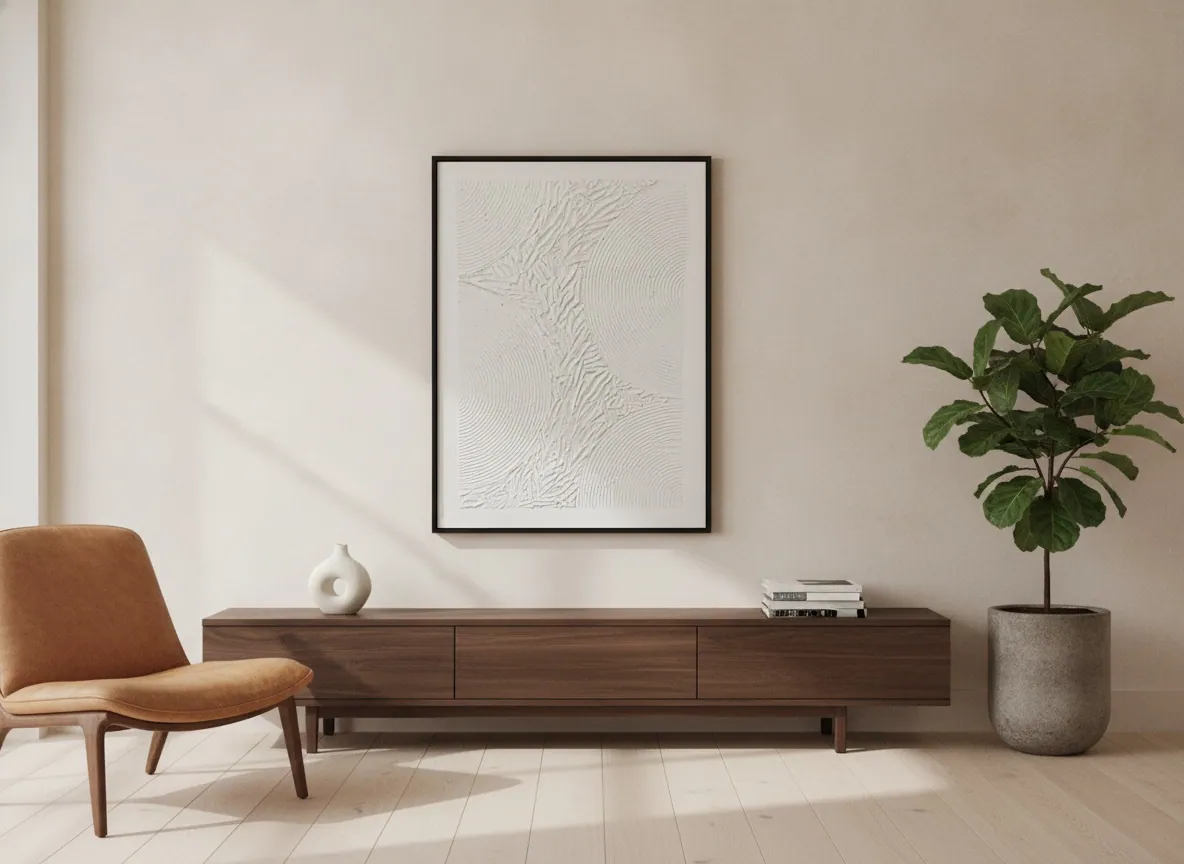
Echo of Silence, from the Matter & Silence series, is a 50 x 70 cm work in sculpted texture on canvas, dated 2025 and catalogued as AP-MAS-2025-002. It is a single, unique work by one named artist, and its medium and dimensions are recorded on the Certificate of Authenticity together with the Archive ID. Those are the particulars a tariff heading for hand-executed paintings is written around, though how a given work is classified is decided at entry.
A relief surface like this one is a reason for a broker to see the technical record before the work travels. See Echo of Silence or the full catalogue.
Frequently asked
Does New Zealand charge GST on an original painting imported from Brazil?
Customs states that GST of 15% applies to imported items, but that it does not collect duty or GST unless the item or shipment is worth more than NZ$1000. Above that figure, GST is calculated on the price paid plus international freight, postage, insurance and any duty. The painting's art status is not described as an exemption in the Customs pages read for this guide, so assume the standard rule and confirm the amount with a broker or courier.
Is an original painting treated differently from a print when it enters New Zealand?
The tariff treats them as different categories. Heading 97.01 covers paintings executed entirely by hand and lists a Free rate for the line 9701.91.00. Original prints have their own heading, 97.02, defined as impressions from plates wholly executed by hand by the artist. Mass-produced reproductions are not covered by those headings. The classification is made at entry, which is why the invoice description matters.
Who declares the painting to NZ Customs: the buyer, the seller or the carrier?
Customs says importers of goods worth NZ$1000 or more apply for a Customs Number, which a broker can do for them, and that once Customs charges are paid the transport company is notified that the goods can be delivered. So the declaration is usually made by or for the person receiving the goods, through a broker or courier. Under the studio's terms the buyer pays import duties and taxes in the destination country.
What documents usually accompany a painting entering New Zealand?
Customs bases its charges on the Customs Value, meaning the price of the item plus shipping and insurance, so an invoice is the central document. Perfeito Studio supplies a fiscal invoice or official receipt and a signed Certificate of Authenticity that records the medium, dimensions, year and Archive ID. A broker or courier may ask for other items, and what exactly is required should be confirmed with them.
Do I need a customs broker to receive a painting in New Zealand?
Customs does not describe a broker as mandatory. It says importers of goods worth NZ$1000 or more must apply for a Customs Number and that brokers can handle that application. Many buyers let the courier or a broker complete the entry instead. Fees for that service are set by the provider, not by the tariff, so ask for them before the work ships.
Considering a painting for New Zealand?
Ask about a specific work, its documents and an international shipping quote.
Sources
- New Zealand Customs Service — 2026-10-08
- New Zealand Customs Service, Working Tariff Document, Section XXI — 2026-10-08
- New Zealand Customs Service — 2026-10-08
- New Zealand Customs Service — 2026-10-08
- Ministry for Primary Industries (New Zealand) — 2026-10-08
Published on