Is a digitally signed certificate of authenticity as valid as one signed in ink?
For a sale in interstate or foreign commerce, yes as to form. The federal ESIGN Act (15 U.S.C. 7001(a)) says a signature, contract or other record may not be denied legal effect solely because it is electronic. The signature does not prove the painting is genuine. That depends on who issued the certificate and what it records.



What 15 U.S.C. 7001 says about e-signed records
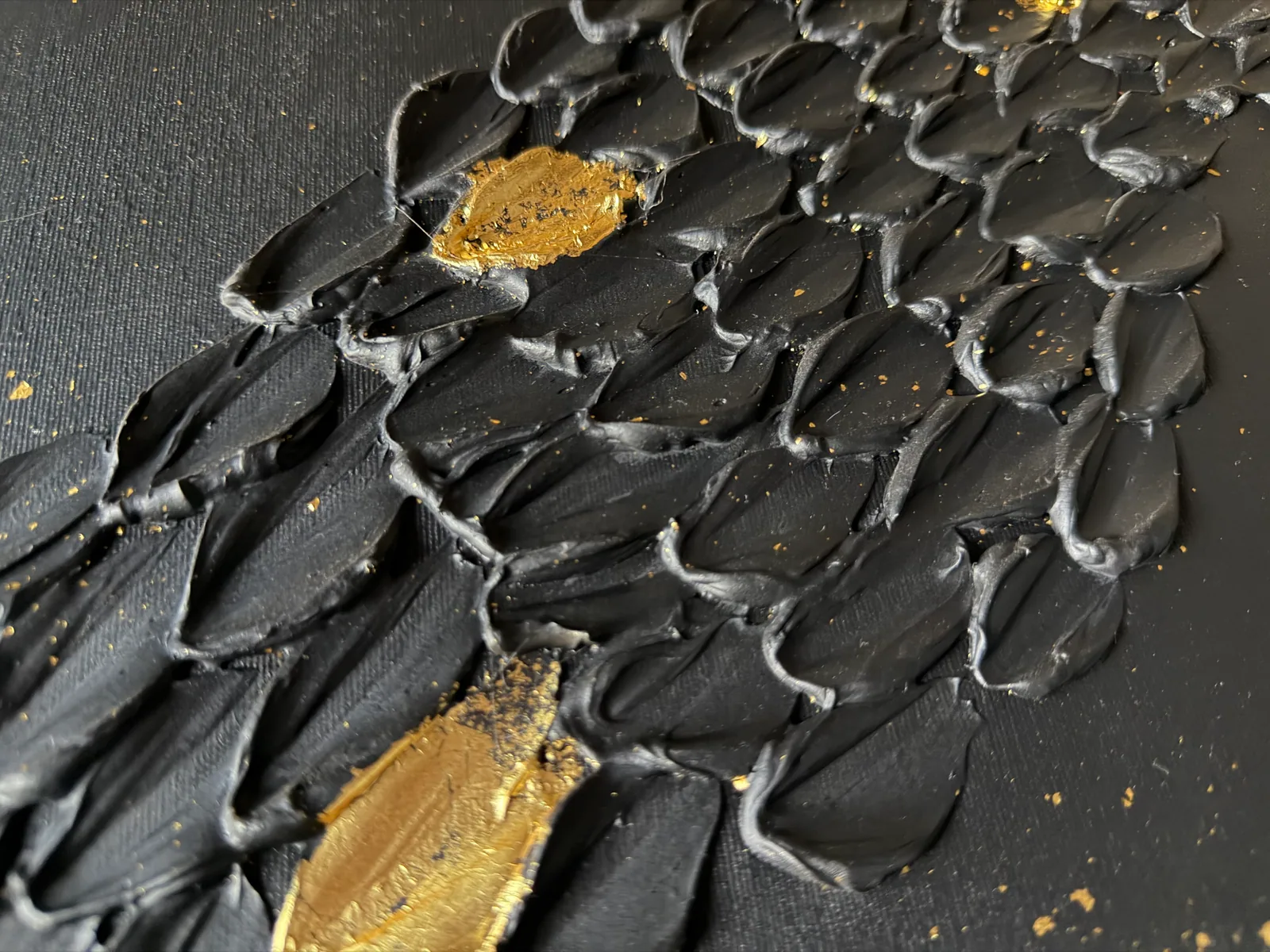
On Golden Passage, black texture paste stands up from the canvas in overlapping ridges, and patches of imitation gold leaf (metallic leaf) sit on a few of them. The work is 60 × 80 cm, from 2025, catalogued as AP-BNG-2025-001. A buyer in the US who receives the paperwork for a painting like this as a PDF usually asks one thing first: does a typed or drawn signature count?
Section 7001(a) of Title 15 answers for any transaction in or affecting interstate or foreign commerce. Paragraph (1) says a signature, contract or other record relating to the transaction may not be denied legal effect, validity or enforceability solely because it is in electronic form. Paragraph (2) says the same of a contract formed with an electronic signature or record.
So a certificate of authenticity and a sales agreement can travel as PDFs and keep the same legal footing as paper. Section 7001(b)(2) adds that nobody is required to accept electronic records or electronic signatures. If you want a document signed in ink, you can ask for it.
What counts as an electronic signature
Section 7006(5) defines an electronic signature as an electronic sound, symbol or process attached to or logically associated with a record and adopted by a person with the intent to sign it. A drawn signature in a PDF, a typed name with a box ticked to sign, or a signing platform's click all fit the wording when the intent to sign is there.
The same section, in paragraph (9), defines a record as information on a tangible medium or stored electronically and retrievable in perceivable form. A certificate saved as a PDF on your laptop is a record in that sense.
State law can add its own rules, and a sale with an unusual structure (a trust as buyer, a dispute already open, a seller abroad who wants another country's law in the contract) is a question for a lawyer. This page explains the federal text and is not legal advice.
The signature proves the form, the record proves the painting
ESIGN settles whether a record can be refused for being electronic. It says nothing about whether what the record states is true. A forged certificate on paper is still forged, and the same goes for a forged PDF.
What makes a certificate worth keeping is who issued it and what it lets you check. Ask for the artist's name, the title, the year, the medium, the dimensions and an image of the work, all on the document. A catalogue number tied to the artist's own records helps more than any seal. If the certificate points to a web page, open it and compare.
At Perfeito Studio the certificate is signed by the artist and carries the full technical record, the internal Archive ID and a QR code that opens the work's official page (see certificate of authenticity). The page says it is issued in physical form and, on request, as a PDF. Scan the code and check that the title, dimensions and Archive ID on the screen match the paper.

What to keep so the paper trail holds up
Section 7001(d) is written for records that a law requires someone to retain, and its three conditions make a sensible standard for any buyer. The electronic copy must accurately reflect the information in the record, stay accessible to everyone entitled to see it, and be kept in a form that can be accurately reproduced later.
For a painting, that means:
- the original PDF files of the certificate, the agreement and the invoice, unedited and with their file names kept;
- the confirmation email or completion record from the signing service, if one was used;
- a copy in a second place, such as a cloud folder and an external drive;
- a printed set filed with the insurance papers, with the Archive ID written on the folder.
Printing does not replace the file. It gives an heir, an insurer or a future buyer something to read without asking for your password. Our English guide on making an Object ID record for a painting shows how to add photographs and measurements to the same folder.
For collectors considering an acquisition
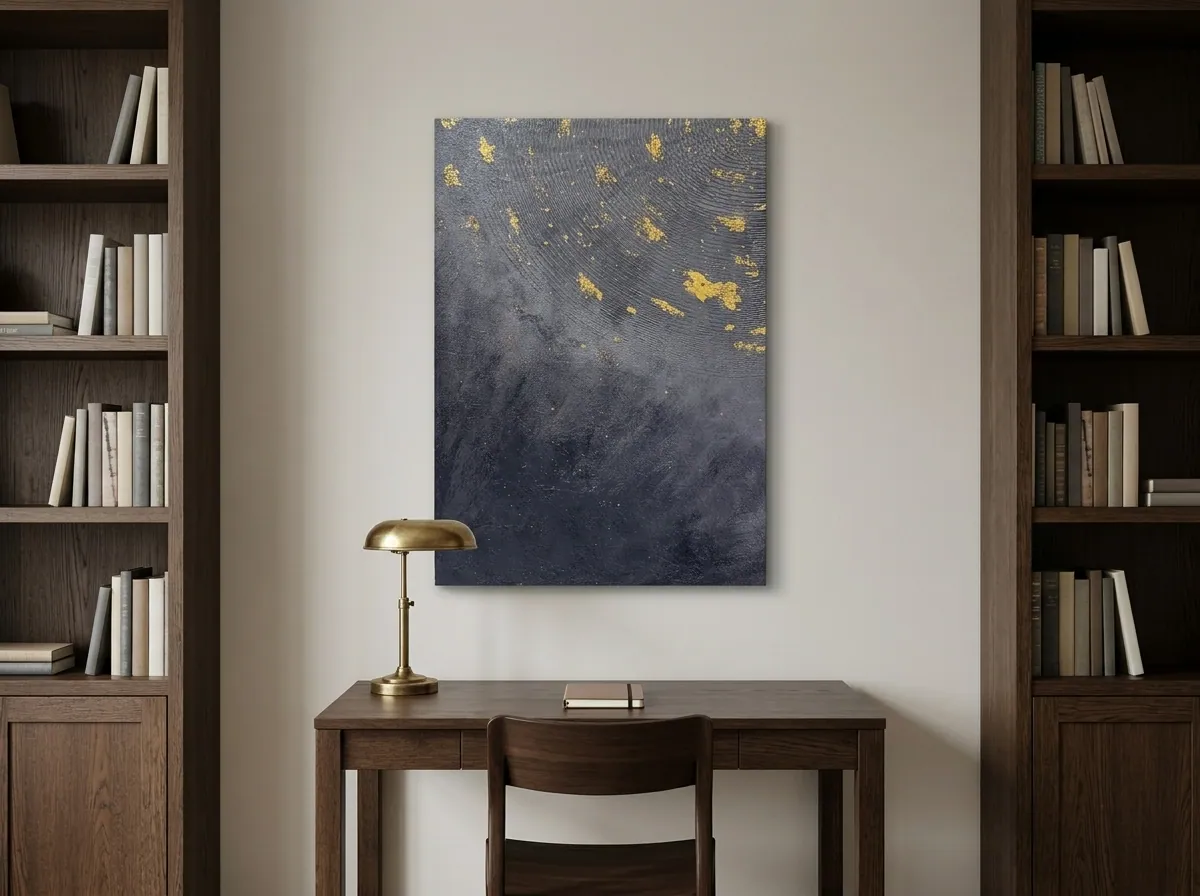
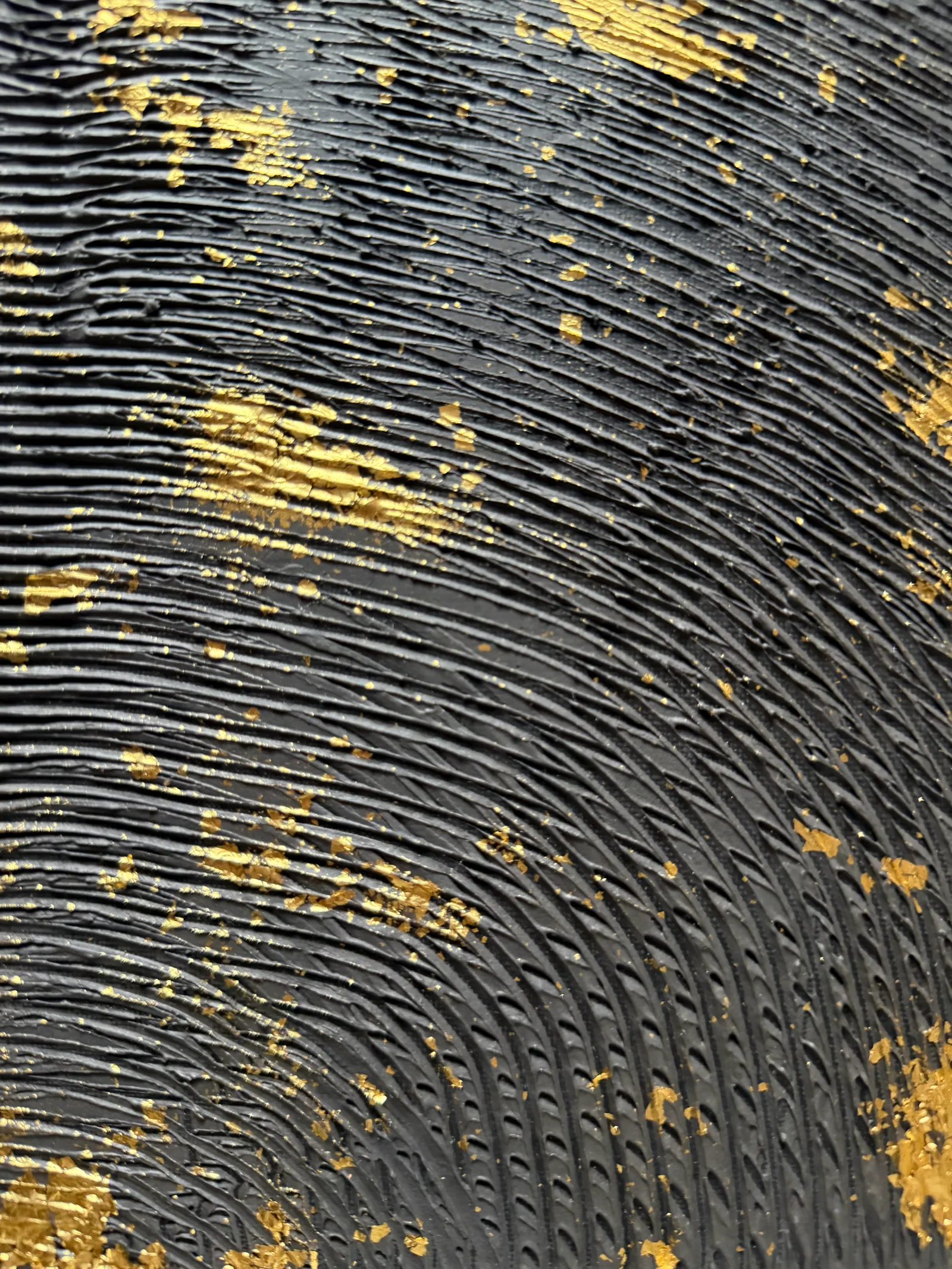
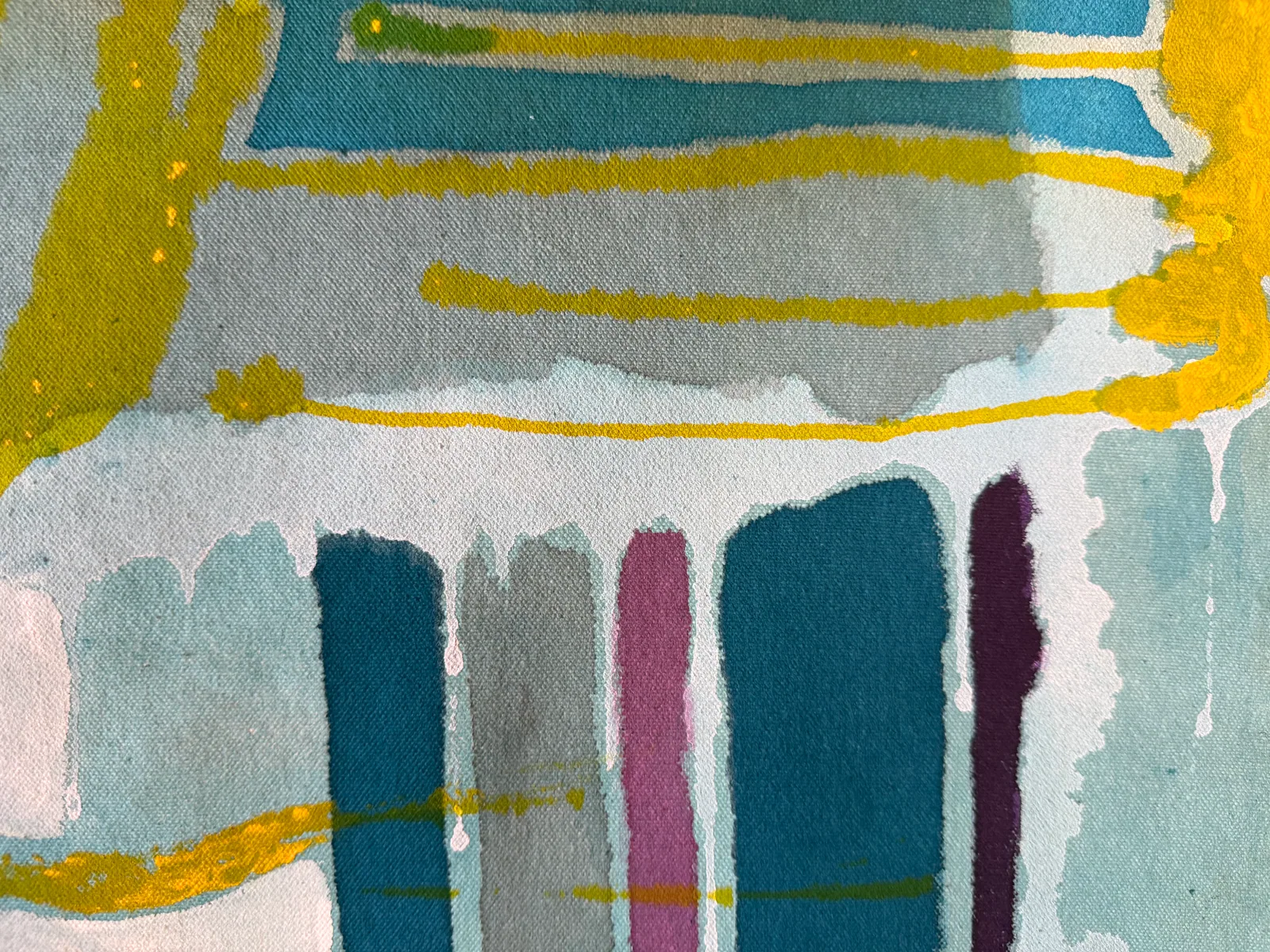
Celestial Plan (R$ 2,700) measures 50 × 70 cm and Golden Passage (R$ 3,500) measures 60 × 80 cm. Both are mixed media with texture paste and imitation gold leaf (metallic leaf) on canvas, and the leaf is sealed with a spray sealant. Over a desk or a narrow console, either one leaves wall on both sides. Prism Garden (R$ 5,500) is acrylic on canvas, 100 × 100 cm, and needs a sofa-length wall or a long sideboard below it. Mark the outline on the wall with painter's tape, look at it in morning and evening light, and step back until the whole rectangle fits in view. Prices are in Brazilian reais; any conversion is approximate.
Every acquisition is made directly with the artist and includes the original painting, a signed Certificate of Authenticity with the Archive ID, a fiscal invoice or official receipt, an Artwork Acquisition Agreement covering transfer of ownership, copyright and image use, an artist dossier and conservation guidance (see acquisition). The studio ships within Brazil and abroad. International shipping is quoted on request and paid by the buyer, as are import duties and taxes in the destination country. Professional packaging is included and transit insurance is available (see shipping). The other available works are in the gallery.
Available works
-
 Golden Passage
60 x 80 cm (23.6 x 31.5 in) · R$ 3.500
-
 Golden Passage
60 x 80 cm (23.6 x 31.5 in) · R$ 3.500
-
 Celestial Plan
50 x 70 cm (19.7 x 27.6 in) · R$ 2.700
-
 Celestial Plan
50 x 70 cm (19.7 x 27.6 in) · R$ 2.700
-
 Prism Garden
100 x 100 cm (39.4 x 39.4 in) · R$ 5.500
-
 Prism Garden
100 x 100 cm (39.4 x 39.4 in) · R$ 5.500
From the studio
From the studio
Golden Passage (AP-BNG-2025-001), Celestial Plan (AP-BNG-2025-002) and Prism Garden (AP-LMR-2026-006) are unique works, with no editions or reproductions. Alyne Perfeito is a Brazilian visual artist and trained architect based in Brasília. The Archive ID printed on each certificate is the same one on the work's page, so a collector in another country can check the record from a phone.
Frequently asked
Is an e-signed certificate of authenticity legally valid in the US?
As to form, yes for a transaction in or affecting interstate or foreign commerce: 15 U.S.C. 7001(a) says a signature or record may not be denied legal effect solely because it is electronic. Whether the certificate is trustworthy depends on who issued it and what it records.
Does the ESIGN Act cover a purchase from a foreign artist?
The statute's scope includes transactions in or affecting foreign commerce. Which country's law governs the contract as a whole is a separate question, often settled by a clause in the agreement. For a high-value purchase or a dispute, ask a lawyer.
Should I print the digital certificate?
Keep the original PDF unedited and backed up in two places, and file a printed copy with your insurance papers. The file is the record; the printout lets an heir or insurer read it without your devices.
What makes a certificate trustworthy beyond the signature?
A named issuer you can contact, the full technical record of the work, an image, and a catalogue number you can check against the artist's own page. Perfeito Studio certificates carry an Archive ID and a QR code that opens the work's official page.
Can I ask for a certificate signed in ink?
Yes. Section 7001(b)(2) says no one is required to agree to use or accept electronic records or electronic signatures. Perfeito Studio issues its certificate in physical form, signed by the artist, and as a PDF on request.
Ask for the paperwork before you decide
Write to the studio about a work. You can see what the certificate records and how the Archive ID is checked on the work's page.
Sources
- Legal Information Institute, Cornell Law School — 2026-11-24
- Legal Information Institute, Cornell Law School — 2026-11-24
- Perfeito Studio — 2026-11-24
- Perfeito Studio — 2026-11-24
- Perfeito Studio — 2026-11-24
- Perfeito Studio — 2026-11-24
Published on
Edited and reviewed by: Alyne Perfeito, architect and visual artist · CAU A1023098
Alyne Perfeito is a trained architect and visual artist with a studio in Brasília, Brazil. She edits and reviews the Journal from her painting practice. See Alyne's works →