Original paintings in a home with young children: where to hang them and how to protect the canvas
Hang the painting high enough that small hands cannot reach it, on a wall nobody leans on and away from busy corridors. Use two picture hooks instead of nails. Ask a framer or conservator about a backing board for the canvas, and if a child marks or dents the surface, leave cleaning and repair to a conservator.
Works cited in this text


Height first: out of reach, still easy to see
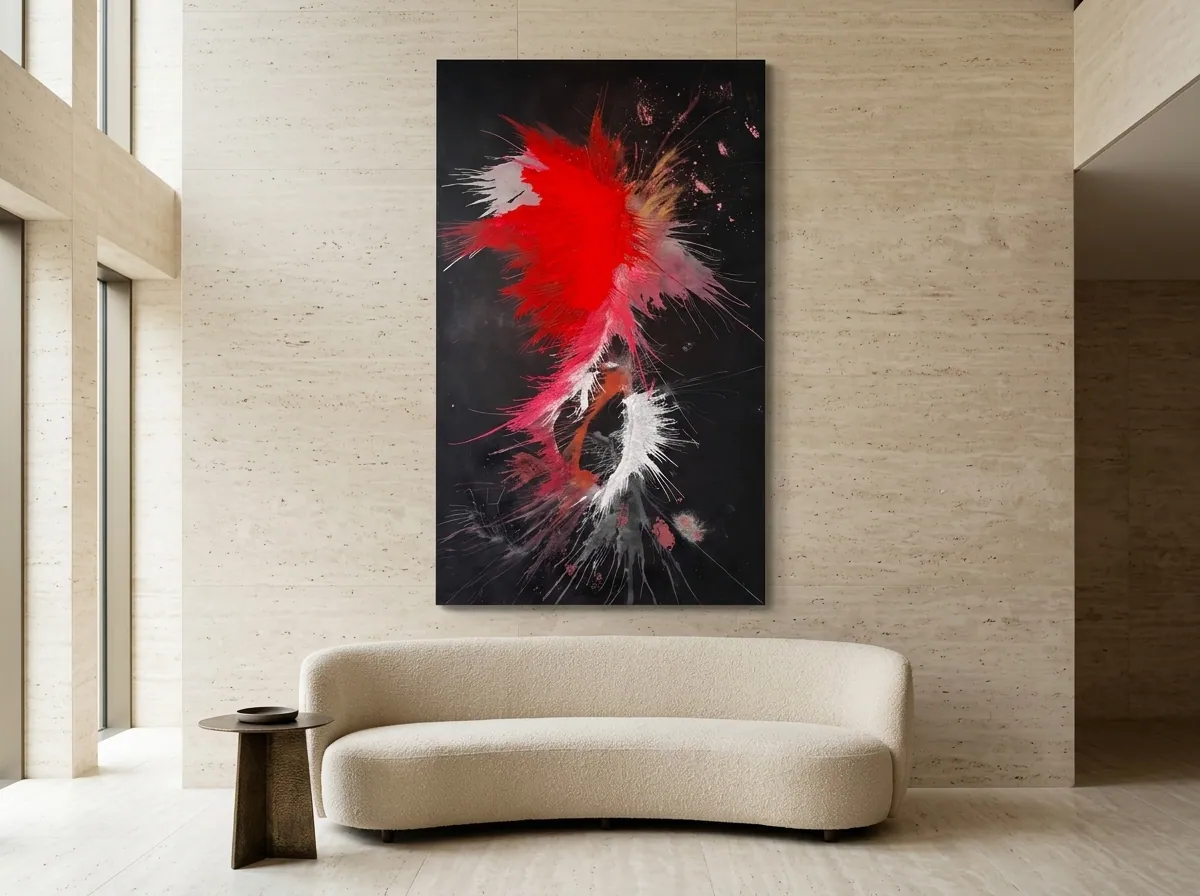
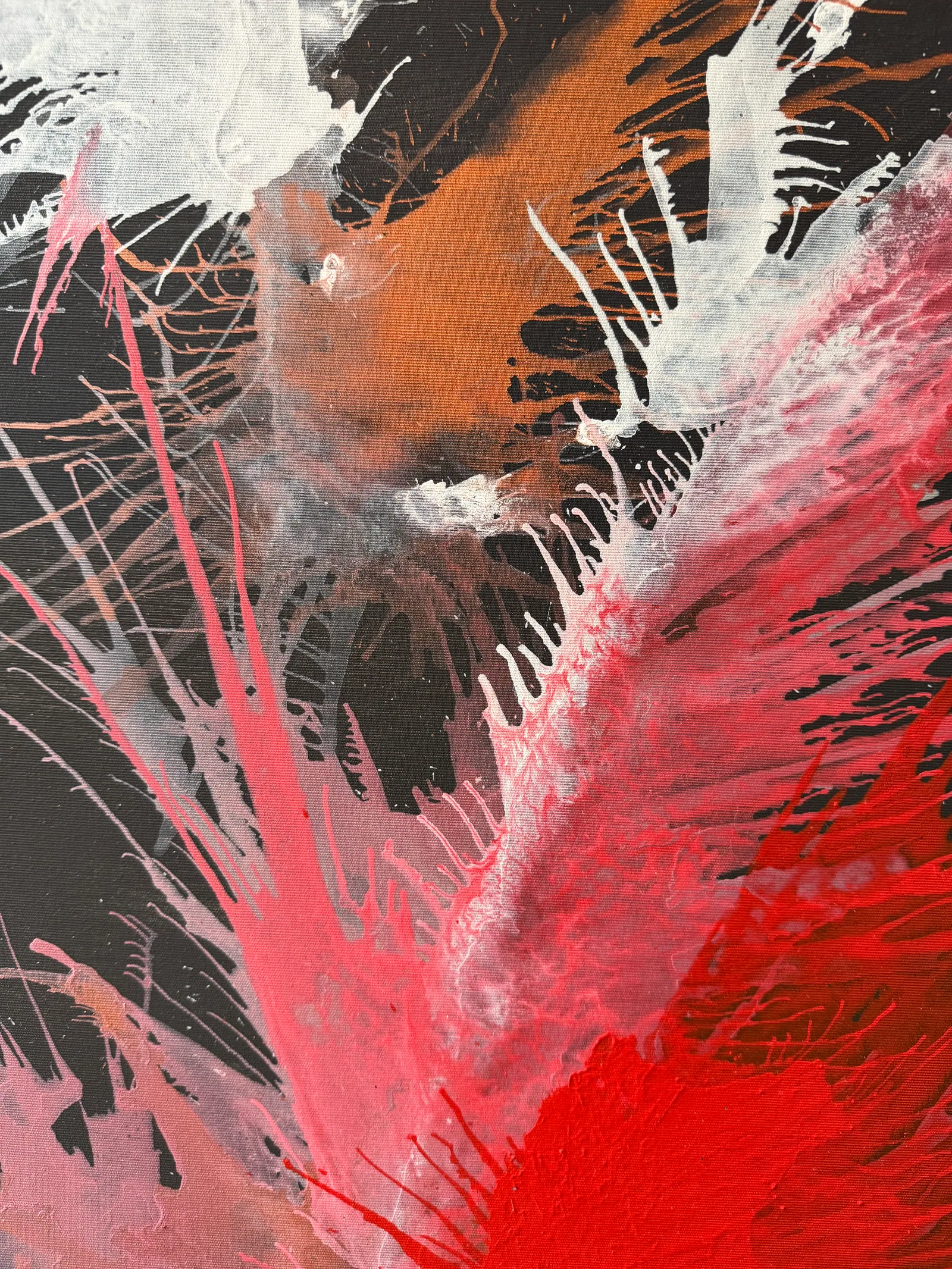
Genesis of Flame is acrylic, metallic pigment and two finishes, high-gloss and matte, on a 120 × 200 cm canvas. At that size the lower edge of the canvas comes close to the sofa unless you plan the height before drilling, and a sofa is where a toddler stands up and reaches.
The National Art Gallery of The Bahamas (NAGB) gives the rule in one line: paintings should be displayed high enough for people to view them comfortably, without being low enough for children or pets to touch. Measure your own child standing on the sofa cushions with an arm raised, then keep the bottom of the canvas above that point and recheck it as the child grows.
Pick the wall by what happens next to it
The Canadian Conservation Institute (CCI) asks owners to check whether a painting will be in harm's way before choosing where it goes. Its list of risks fits family life closely: busy hallways, walls that people touch or lean against, and splatter from food or drink. The same page warns that conditions change quickly near an open door or window, by heating and cooling vents and above a fireplace.
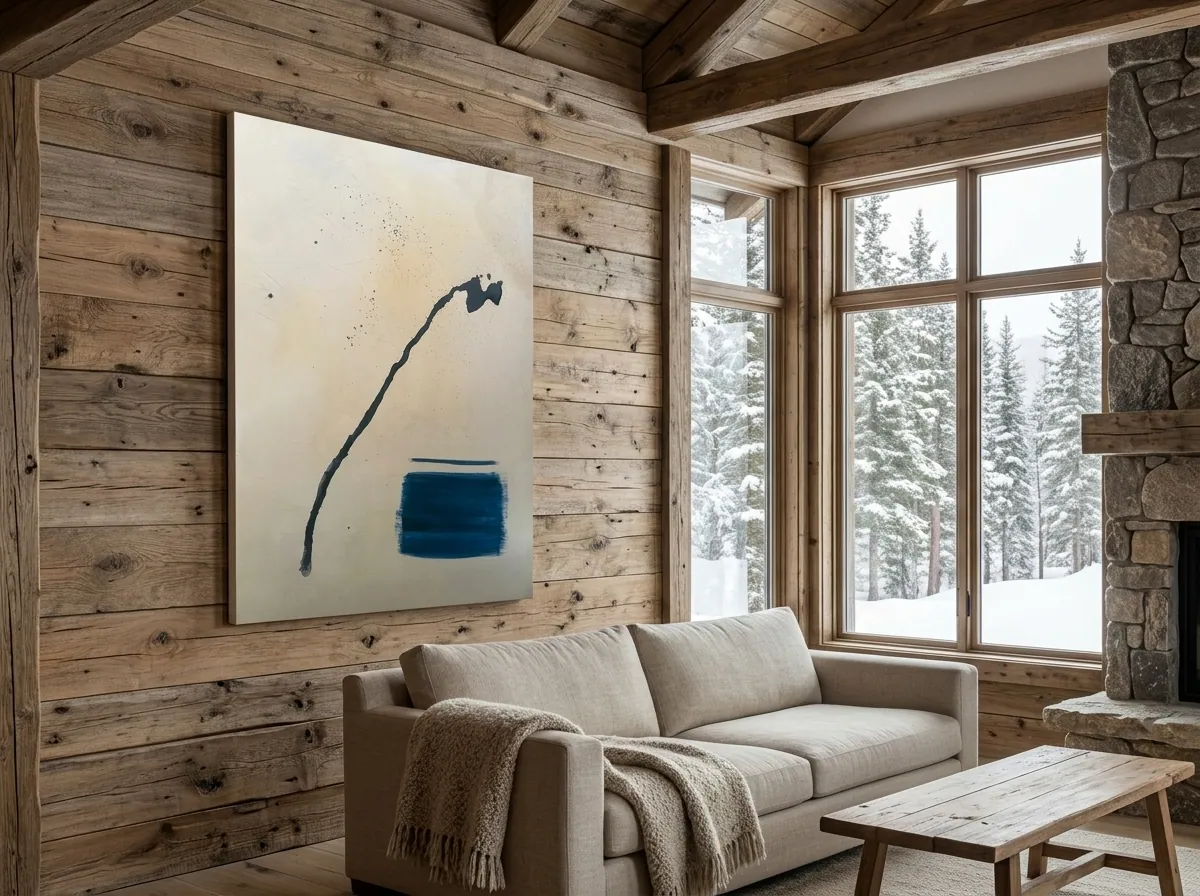
In practice that rules out the corridor to the children's rooms, the wall behind the dining table and the strip beside the front door. A living-room wall above a console or a deep sofa, where the furniture itself keeps a small body a step away, is usually a better candidate. Silent Interval, a 120 × 160 cm canvas with a textured ground, needs that kind of quiet wall.
Hooks, and the back of the canvas
A child who pulls on a frame or swings a toy at the wall tests the fixing more than the paint. CCI recommends two picture hooks in place of nails, sized for the weight of the painting. Ask the studio for the details of the specific work before you buy hardware.
The back of a canvas matters too. CCI and NAGB both say to avoid touching the paint surface or the back of the canvas, and CCI calls a rigid backing screwed to the stretcher a good first protection measure: it protects the canvas from pressure and reduces vibration. CCI also warns that a backing fitted the wrong way can damage the paint, so have a framer or conservator do it.

Relief surfaces invite hands
Echo of Silence is sculpted texture on a 50 × 70 cm canvas: concentric reliefs and organic folds in a single pale tone. Children want to run a finger along ridges like these, and adults do too. CCI says to keep hands clean so fingerprints and natural oils are not left on a painting's edges, and NAGB notes that pressure can encourage cracks.
CCI also points out that small impact damage, such as small cracks, can make an object more susceptible to force later. A dent from a ball or a toy car is worth a conservator's look even when it seems minor.

If a child marks or damages the painting
NAGB says owners should not try to clean paintings themselves and should leave that to professional art cleaners or conservators; light dusting with acid-free cloths is the limit. CCI says cleaning or repairing a painting is a job best left to a professional conservator, and that tears in a canvas should be dealt with relatively quickly. Skip the wet wipes and the stain remover. Photograph the mark, keep the room's furniture away from the work and call a conservator.
Golden Frond is watercolour and acrylic on paper, framed with a wide mat, 45 × 45 cm including the frame. Watercolour reacts to water, which is one more reason to keep sippy cups and wet hands away from it.

For those acquiring a work
Echo of Silence (50 × 70 cm, R$ 2,400) and Silent Interval (120 × 160 cm, R$ 7,900) belong to the Matter & Silence series. Genesis of Flame (120 × 200 cm, R$ 8,800) is from Heart of Chaos, and Golden Frond (45 × 45 cm with frame, R$ 2,400) from Water & Bloom. Each is unique, with no editions or reproductions. Any conversion from BRL is approximate.
Every acquisition comes directly from the artist with a signed Certificate of Authenticity carrying the Archive ID, a fiscal invoice or receipt, an Artwork Acquisition Agreement, an artist dossier and care and preservation instructions. Shipping is quoted per destination and paid by the buyer; professional packaging is included and transit insurance is available. See shipping.
Available works
-
 Echo of Silence
50 x 70 cm (19.7 x 27.6 in) · R$ 2.400
-
 Echo of Silence
50 x 70 cm (19.7 x 27.6 in) · R$ 2.400
-
 Genesis of Flame
120 x 200 cm (47 x 79 in) · R$ 8.800
-
 Genesis of Flame
120 x 200 cm (47 x 79 in) · R$ 8.800
-
 Golden Frond
45 x 45 cm (17.7 x 17.7 in) · R$ 2.400
-
 Golden Frond
45 x 45 cm (17.7 x 17.7 in) · R$ 2.400
From the studio
From the studio
Alyne Perfeito is a Brazilian visual artist, trained as an architect, based in Brasília. The four works on this page ask for different care around children: sculpted relief on Echo of Silence, a textured ground on Silent Interval, gloss and matte acrylic over a large field on Genesis of Flame, and watercolour on paper behind a mat on Golden Frond. Keep the certificate and the artist dossier with the work, since they record medium, dimensions, year and Archive ID. A conservator can use them to identify the work.
Frequently asked
How high should a painting hang to stay out of a toddler's reach?
The National Art Gallery of The Bahamas says paintings should hang high enough for comfortable viewing, without being low enough for children or pets to touch. Measure your child's reach, including standing on the sofa, and keep the bottom edge of the canvas above it.
Can a textured painting take being touched?
It is best not to. The Canadian Conservation Institute and the NAGB both say to avoid touching the paint surface or the back of the canvas, CCI notes that fingers leave oils, and NAGB says pressure can encourage cracks. Raised relief such as Echo of Silence is easy to press against, so hang it out of reach.
Is a framed work on paper safer around children?
A frame does not make paper safe to touch, and watercolour reacts to water. Hang it out of reach like a canvas. Ask the studio how a specific Water & Bloom work is framed; CCI notes that if glazing is used, it should not touch the paint surface.
What should I do if my child marks the canvas?
Do not clean it yourself. The NAGB says cleaning should be left to professional art cleaners or conservators, and CCI says cleaning and repair are best left to a professional conservator and that tears should be dealt with relatively quickly. Photograph the damage and contact a conservator.
Plan the wall before the work arrives
Send the studio a photo of the wall and the furniture below it, and ask for the details of the work you have in mind.
Sources
- National Art Gallery of The Bahamas — 2026-11-20
- Canadian Conservation Institute, Basic care of paintings — 2026-11-20
- Canadian Conservation Institute, Agent of deterioration: physical forces — 2026-11-20
- Perfeito Studio — 2026-11-20
- Perfeito Studio — 2026-11-20
- Perfeito Studio (src/data/obras.json and studio-facts.json) — 2026-11-20
Published on
Edited and reviewed by: Alyne Perfeito, architect and visual artist · CAU A1023098
Alyne Perfeito is a trained architect and visual artist with a studio in Brasília, Brazil. She edits and reviews the Journal from her painting practice. See Alyne's works →