A painting for a formal drawing room: does it have to be oil?
No. A formal drawing room does not require oil paint; what it asks of a picture is scale, restraint and a stable surface. The Alyne Perfeito paintings discussed here are acrylic or mixed media on canvas, not oil, and each technique line says so. The medium changes the surface of the work, not how formal it is.
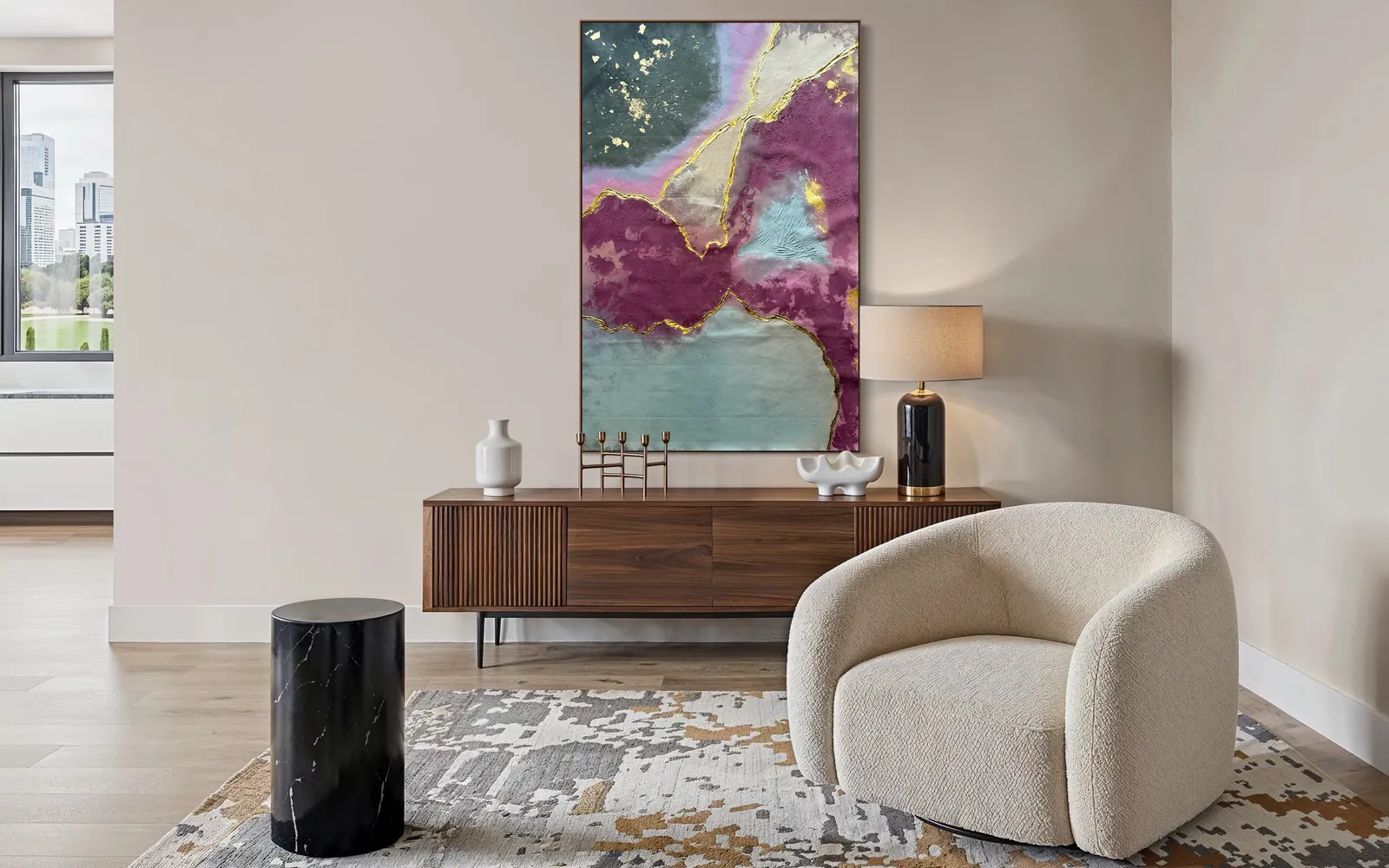
What these paintings are made of: acrylic and mixed media, not oil
On Patina Field, the pigment is applied, scraped back and applied again until the surface reports wear rather than gesture. It is a 100 x 100 cm painting from 2026, and its medium line reads simply: acrylic on canvas. Amber Strata (150 x 100 cm, 2026) is mixed media with acrylic on canvas. Quartz Seam (98 x 152 cm, 2026) is mixed media with acrylic and imitation gold leaf (metallic leaf) on canvas. None of them is an oil painting, and a page about drawing rooms should say so before anything else.
That is also the answer to the question in the title. A drawing room is a room for receiving guests, and a painting for it is judged on what it does on the wall: its proportion to the furniture beneath it, the temperature of its colour against the room, the way the surface holds light. The medium is one of the things that shapes that surface, but it is not a credential the wall asks to see.

Works cited in this text


What oil and acrylic do on a wall
Tate describes oil paint as pigment suspended in a drying oil that forms a tough, coloured film on exposure to air, and notes that its slow drying lets an artist develop a painting gradually and blend colours subtly. Acrylic, by Tate's account, is a water-based, fast-drying paint widely used by artists since the 1960s, which uses a synthetic resin to bind the pigment and can be used thinly or thickly depending on how much water is added.
For someone choosing a work, the practical differences are in what the finished surface can look like. Slow-drying oil suits soft, continuous transitions. Fast-drying acrylic suits what Alyne Perfeito's series show: bounded fields of colour, scraped passages, built-up relief and, where the technique line lists it, metallic leaf laid between layers. If you want the long version of the comparison, the Journal has a separate page on how oil and acrylic differ in drying, curing and colour stability.
Reading a formal room: scale, axis and restraint
Formal rooms tend to be organised on an axis: a fireplace, a credenza, a pair of armchairs, a run of panelled wall. The painting joins that order rather than competing with it. A useful first step is to measure the piece of furniture beneath the wall; a work noticeably narrower than the credenza or mantel below it usually reads as small, while one that roughly matches its width reads as part of the arrangement.
Three works from the studio show three ways of doing this. Quartz Seam is vertical, 98 x 152 cm, and suits a narrow wall above a credenza. Amber Strata is horizontal, 150 x 100 cm, and suits a wider wall above a sideboard or a dining table. Patina Field is square, 100 x 100 cm, and, in the words of its own description, settles a room rather than animating it. Above a working fireplace the question is no longer only one of proportion; the Journal covers that separately in can you hang a painting above a working fireplace.

Imitation gold leaf in a formal setting
Some formal rooms call for a dark, quiet field rather than a pale one. Golden Passage (60 x 80 cm, 2025, Black & Gold) is mixed media, texture paste and imitation gold leaf (metallic leaf) on canvas: a black ground crossed by a diagonal flow of sculpted forms, with fragments of leaf appearing sparingly. The leaf is imitation, not real gold, and it is sealed with a spray sealant. In Quartz Seam the same leaf is laid along thin seams between fields of colour.
Metallic leaf catches light and changes with the angle of the lamp or the window, so the position of the wall relative to the light source matters more than the frame. See the photographs of each work, and ask the studio for further detail images, before deciding.
For whoever is acquiring: scale, light, documents and shipping
Scale. Use the dimensions on each work's page, not the visualisations, to plan the wall. Mark the outline on the wall with tape before deciding, and leave the credenza, mantel or console width in view.
Light. Textured and leaf passages respond to raking light from a window or a picture light; a flat, even ceiling light shows the colour but flattens the relief.
Documents. Every acquisition is direct from the artist and includes the original, unique painting; a signed Certificate of Authenticity with the full technical record and the internal Archive ID; a fiscal invoice or official receipt; an Artwork Acquisition Agreement covering transfer of ownership, copyright and image use; an artist dossier; and conservation and care guidance.
Shipping. The studio ships within Brazil and internationally. Freight is quoted per destination and paid by the buyer, as are any import duties or taxes in the destination country. Professional packaging is included and transit insurance is available. Details are on the shipping page.
From the studio
A note from the studio
Alyne Perfeito trained as an architect, and the useful way to read a wall is the way a plan is read: where the axis falls, what the furniture beneath it measures, where the light comes from. Quartz Seam, Amber Strata and Patina Field belong to the Terra & Ether series, which works with mineral colour, layered pigment and surfaces that record wear. For a formal room, that series suits walls that can hold one slow colour, without needing to be oil to do it.
Frequently asked
What painting suits a formal drawing room?
A painting whose scale matches the furniture beneath it and whose palette is restrained. Measure the credenza, mantel or console first. A vertical work such as Quartz Seam suits a narrow wall; a horizontal one such as Amber Strata suits a wider wall above a sideboard. Colour should respond to the room's wood, textile and wall tone rather than compete with them.
Does a drawing room need an oil painting?
No. Oil and acrylic differ in how they dry and in the surface they produce, but neither is required by the room. The paintings on this page are acrylic or mixed media on canvas, and each technique line on the work's page states the medium.
Can an abstract painting work in a traditional drawing room?
Yes, when it is chosen by proportion and palette rather than by subject. An abstract work with earth or mineral tones, such as Patina Field or Amber Strata, can sit beside wood furniture and pale walls without competing with them.
How large should the painting above a drawing room fireplace be?
Start from the width of the mantel and the height of the wall above it. A work roughly matching the mantel width tends to read as part of the arrangement. A working fireplace also brings heat and soot, which is a separate question covered in the Journal page on hanging a painting above a working fireplace.
Acrylic or oil: how do they differ on the wall?
Tate describes oil paint as slow-drying, forming a tough film and blending softly. It describes acrylic as water-based and fast-drying, used thinly or thickly. In practice acrylic suits bounded fields, scraped passages and built-up relief, as in the Terra & Ether series.
Is the gold in these paintings real?
No. Where a technique line lists gold leaf, it is imitation gold leaf (metallic leaf), not real gold. The leaf is sealed with a spray sealant.
Considering a painting for a formal room?
Send the wall width and the furniture beneath it, and the studio will reply with the works that fit, with detail photographs on request.
Published on