What is an archive ID for an artwork and why collectors ask for it
An archive ID is a unique reference number a studio assigns to one specific artwork and keeps in its catalogue. It is not a price, an edition number or a guarantee of authorship on its own. Collectors ask for it because it ties the certificate, the invoice and the photographs to one identifiable painting.
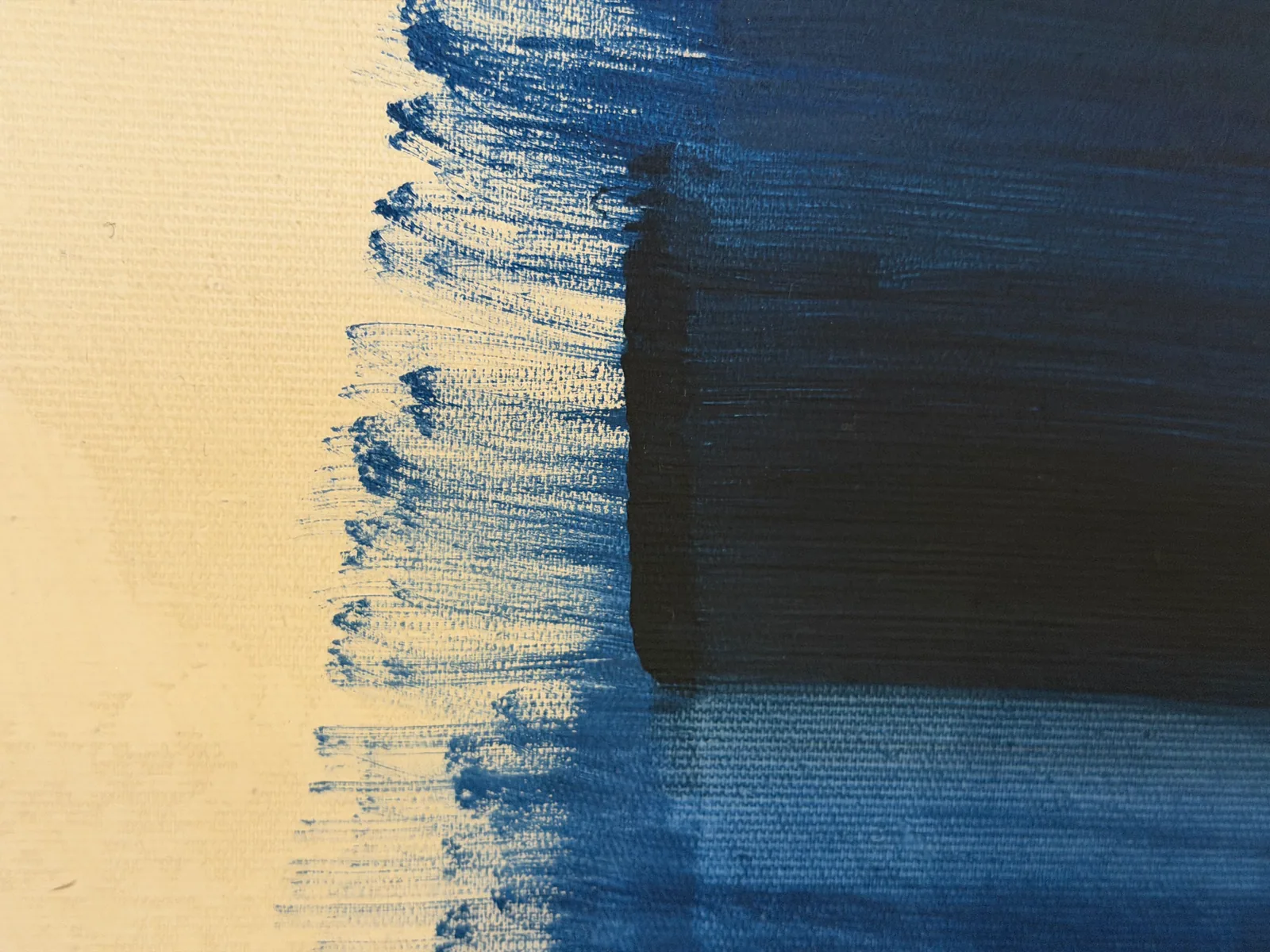
What an archive ID actually is
An archive ID (also called an inventory number, catalogue number or unique ID) is a reference that points to one object in a studio's own records. Nothing about it is standardised across the art world: each studio or collection chooses its own format. What matters is that it is unique, assigned once, and never reused for another work.
The Joan Mitchell Foundation, which publishes guidance on managing an artist's inventory, advises creating a record for each work first, because that is what generates its unique ID, and then using that ID on labels, packaging and condition reports. It also advises that no work should leave the studio without being linked to that record.
At Perfeito Studio the format is AP-SERIES-YEAR-NNN. The block AP is the studio prefix, the three-letter block marks the series, then comes the year and a sequence number. Silent Interval, a 120 × 160 cm mixed-media work from the Matter & Silence series completed in 2026, is catalogued as AP-MAS-2026-003. The number says where the work sits in the archive; it says nothing about size, price or quality.
Why collectors ask for it
Titles are weak identifiers: a title can recur across works, and a description such as “large abstract in warm tones” fits many canvases. A number removes the ambiguity, and that helps in four practical situations:
- Matching paperwork to the object. The certificate, invoice and acquisition agreement can all quote the same number, so a reader years later can confirm they describe the same painting.
- Insurance and inventory. One insurance-broker guide (MyArtBroker) recommends that collectors keep photographs, certificates of authenticity and provenance documentation, plus a catalogue noting artist, title, dimensions and medium for each piece. A unique reference makes each line of that catalogue unambiguous.
- Resale, gifting and inheritance. Whoever receives the work next can ask the studio about one specific record rather than describe the painting from memory.
- Loss or theft. ICOM's Object ID standard lists nine categories for describing a cultural object, including materials and techniques, measurements, inscriptions and markings, distinguishing features, title, date and maker. The aim is consistent descriptions that help identify an object and check it against theft databases. A catalogue number is not one of those nine categories, but it is a handy label for the record that holds them.
What an archive ID does not do
The number identifies; it does not authenticate. Anyone can write a number on a piece of paper. What gives it weight is the record behind it, kept by the maker, and the documents that quote it. For that reason it is best read as a key to a file, not as proof in itself. For what a certificate should contain, see the guide to certificates of authenticity.
It also is not an edition number. In prints, a pair such as 12/50 places a copy inside a limited run. An archive ID on a unique painting simply names that single work.
And it says nothing about value. It is not a promise of resale price or appreciation.
How it works at Perfeito Studio
Every work is registered with an internal Archive ID, documented in detail photographically, signed, and issued with a Certificate of Authenticity at acquisition. The certificate is signed by hand and carries the title, year, medium, dimensions, image, the Archive ID and the artist's signature, together with a QR code that links to the work's official page on perfeitostudio.com. That page also states the Archive ID, so a buyer can compare the number on the certificate with the number published online.
The same number can then be used when filing the documents, listing the work with an insurer, or writing to the studio about that painting. For the wider paper trail, see provenance for a cross-border buyer and the guide to cataloguing your own collection.
From the studio
From the studio
The sequence number counts within each series and does not restart each year, so Silent Interval, finished in 2026, is AP-MAS-2026-003: the third work registered in Matter & Silence, with the year recording when it was completed. I trained as an architect, and a plan sheet always carries its own reference so nobody confuses one drawing with another; a canvas of 120 × 160 cm deserves the same clarity. If you are weighing a purchase, ask for the number and the document that quotes it, and check that both match the work's page.
Frequently asked
What is an archive ID?
It is a unique reference number that a studio, artist or collection assigns to one specific artwork and records in its catalogue. It is not standardised: each studio chooses its own format. At Perfeito Studio it follows the pattern AP, series code, year, sequence, for example AP-MAS-2026-003 for Silent Interval.
Where is it written?
At Perfeito Studio, the Archive ID appears on the work's official page on perfeitostudio.com and in the signed Certificate of Authenticity, which also carries a QR code linking to that page. Other studios place such numbers on labels, packaging or condition reports, so ask the seller where yours is recorded.
Does it replace a certificate of authenticity?
No. The number identifies a work; the certificate is the signed document that states what the work is, who made it and when. At Perfeito Studio the Archive ID is one field inside the certificate, alongside title, year, medium, dimensions, image and signature.
How is it used in resale or insurance?
It gives every document one shared reference. An insurance-broker guide advises keeping photographs, certificates and provenance records for each piece, and a unique number makes it easy to match them. A later owner can also quote it when asking the studio about that specific painting. It does not set or predict a price.
How do I verify it?
Compare the number on the certificate with the number shown on the work's official page, which the certificate's QR code opens. If they match, the paper and the page describe the same painting. For anything further, such as a copy of the record, write to the studio directly.
Want to see how the numbering works on a real work?
Message the studio on WhatsApp and ask for the Archive ID and an example certificate for any work you are considering.
Sources
- Joan Mitchell Foundation — 2026-10-06
- ICOM — 2026-10-06
- MyArtBroker — 2026-10-06
Published on