What to do if a painting gets wet: the first hours after a leak
Take the painting off the wall, out of its frame and glazing, and leave the canvas on its stretcher. Lay it face up and level, raised on blocks so air reaches the back, out of direct sun, with no hair dryer. If paint is flaking or the frame won't come off, set it aside face up and call a conservator.


The first ten minutes
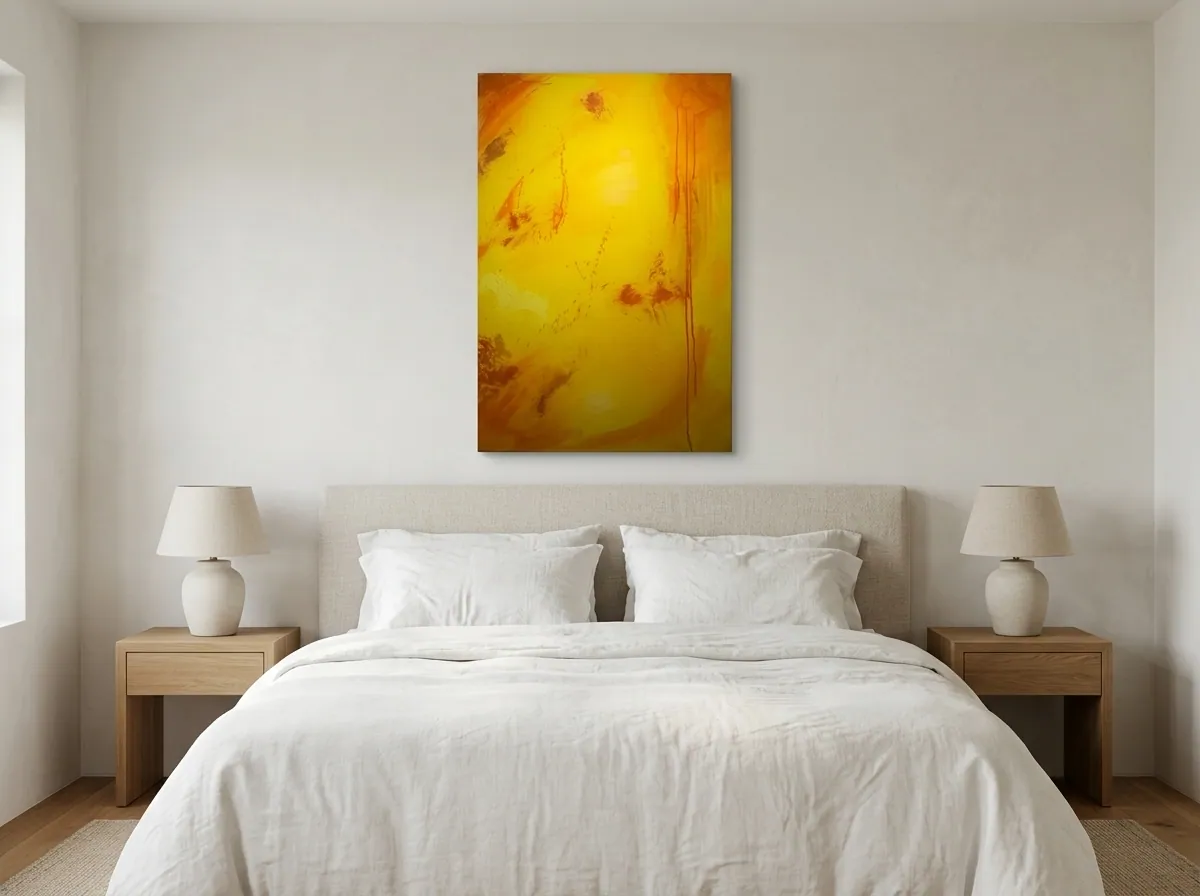
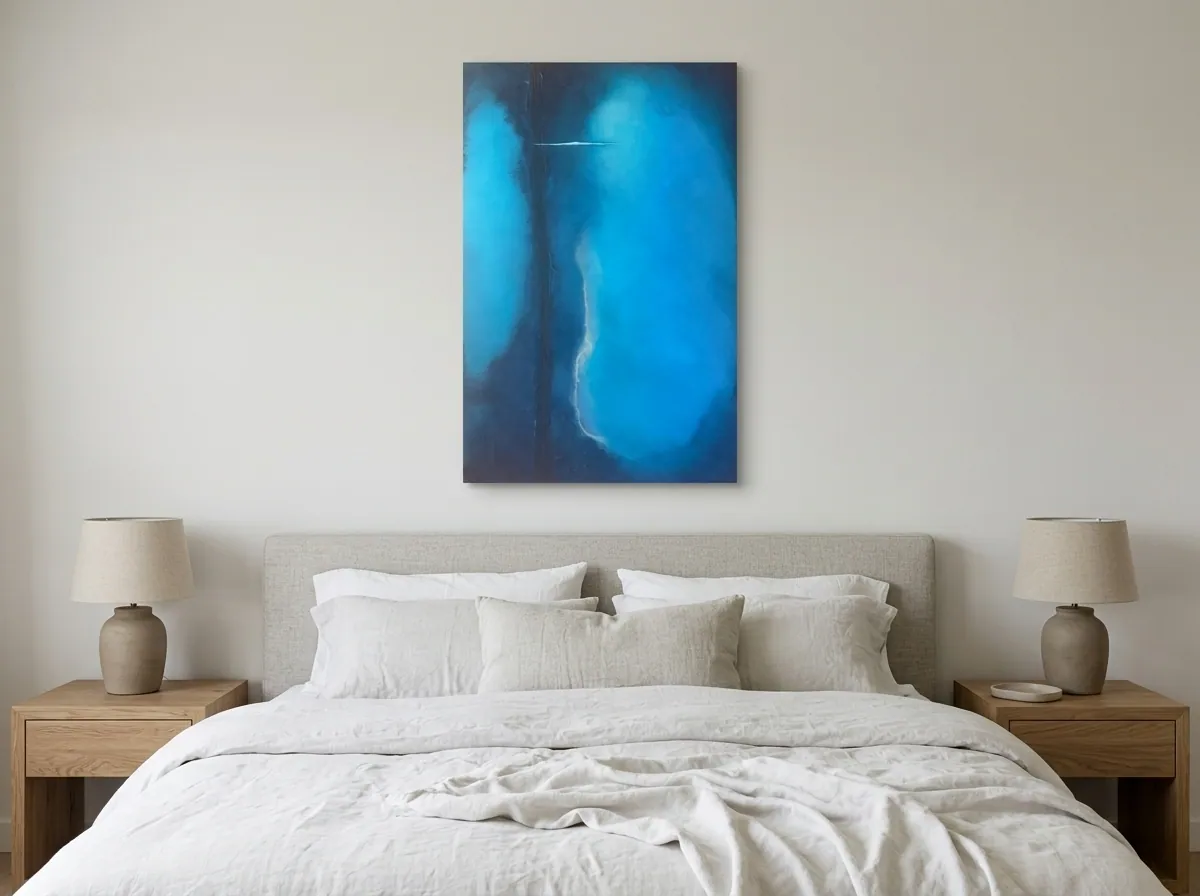
Veil of Light is mixed media on a 70 × 110 cm canvas, with sculpted texture and acrylic. A raised ridge runs down the centre, and in places the paint stands off the weave. Water that runs down a wall meets those edges first, so look at them before you touch anything else.
Stop the source of water if you can, and move the painting to a dry room. The American Institute for Conservation (AIC) reminds owners that water-damaged objects may carry mould and other pollutants that can be toxic, so wear gloves if the water came from a flood or a drain. Take photographs of the front and back before you start, for your own records and for any insurer.
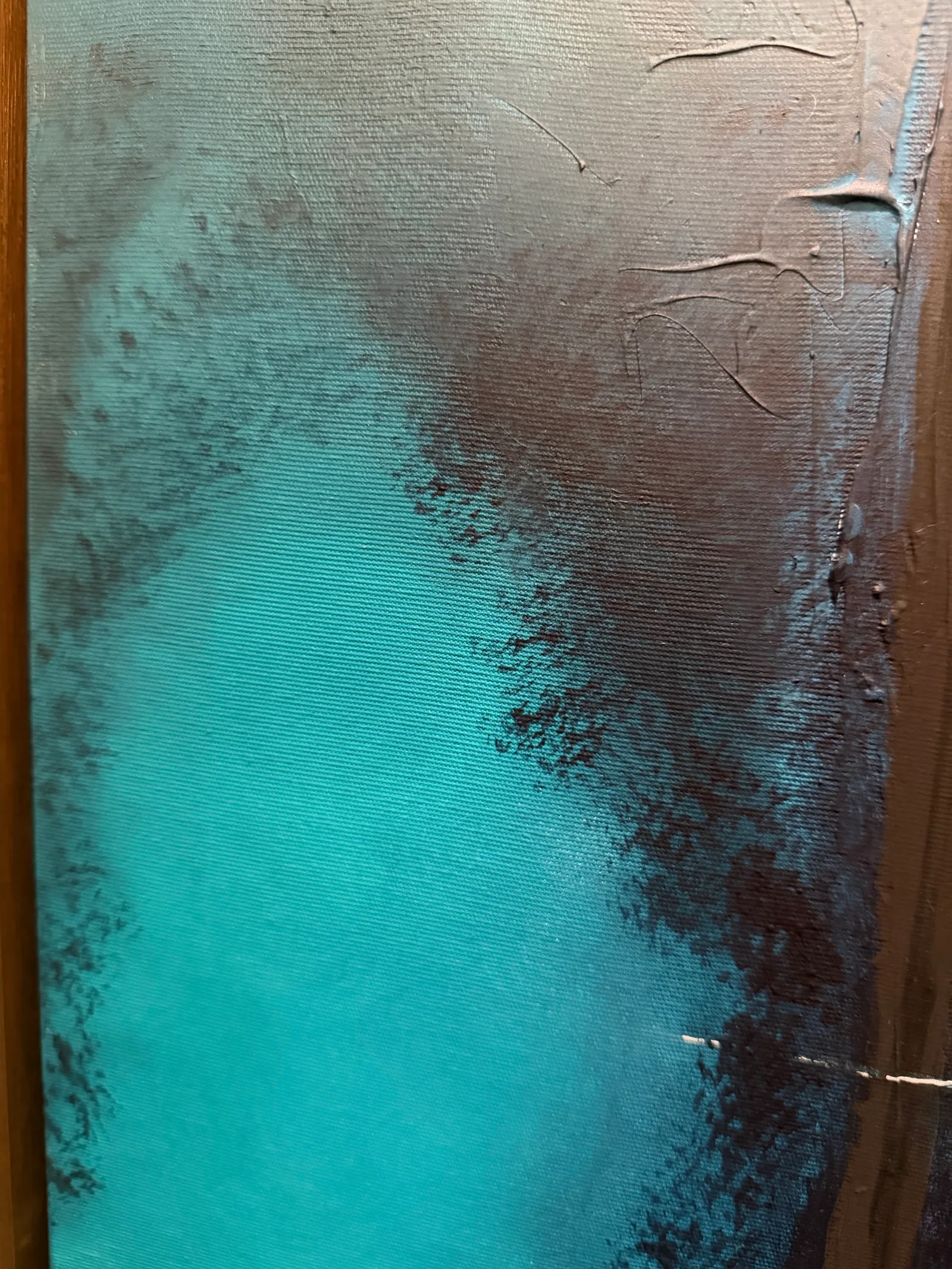
Out of the frame, but never off the stretcher
The AIC tip sheet for water-damaged heirlooms puts it in one line: remove wet paintings from the frame, but not the stretcher. The University of Delaware's art conservation programme gives the same order and adds that glazing should come off too, if possible. Its guidance is blunt on the second point: never remove a painting from its stretcher.
If the frame is stuck, or you see paint lifting or flaking, Delaware's advice is to stop. Set the painting aside face up and horizontal, and contact a professional. Solar Rain, acrylic on a 70 × 110 cm canvas, has raised passages of red-copper paint over the yellow field. If anything lifts there, leave it flat and still and let the conservator handle it.
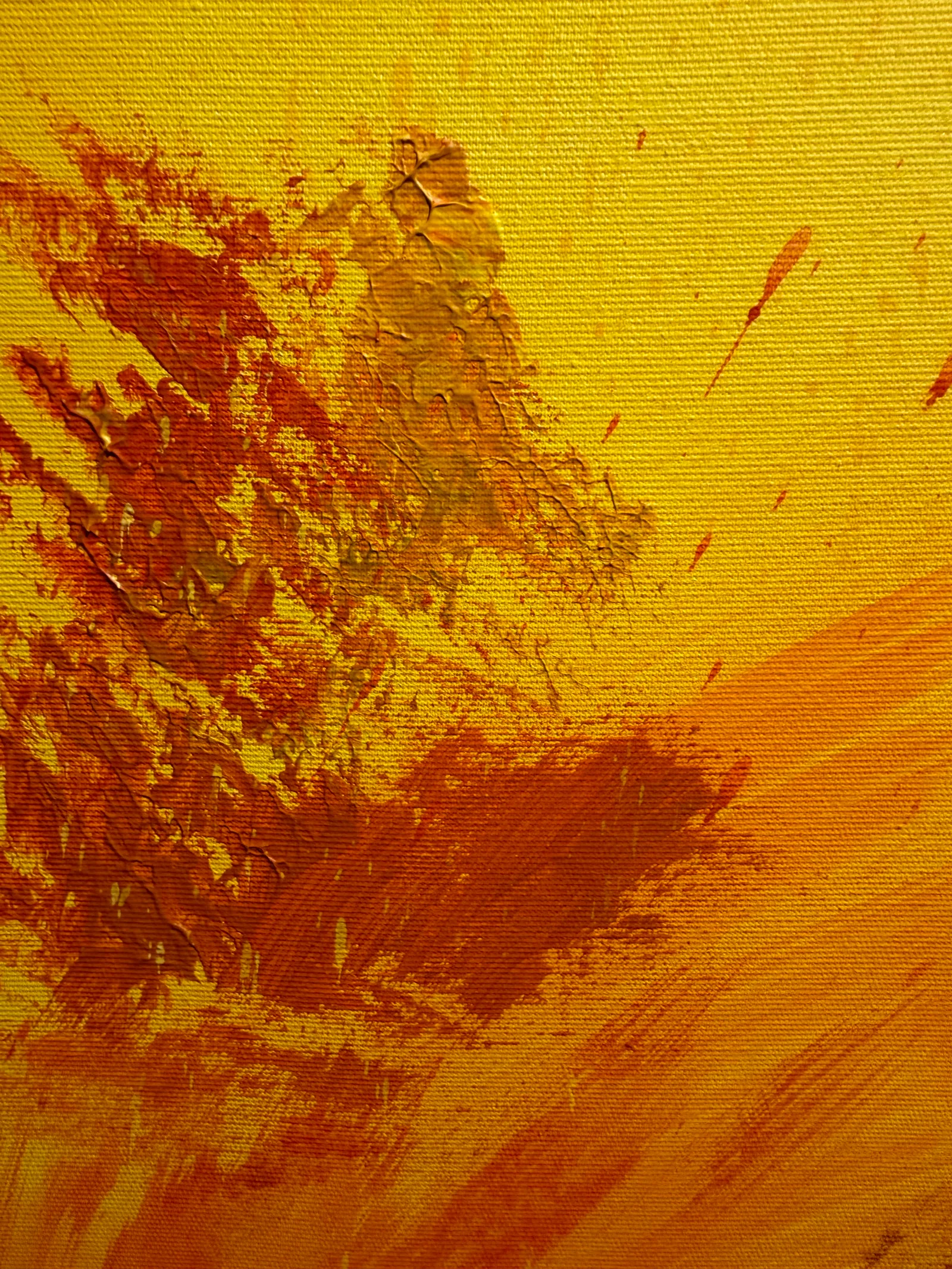
Drying: still air, no heat
Lay the canvas face up on a table, raised on blocks so air reaches the back as well as the front (Delaware). Keep it indoors and out of direct sunlight. The AIC explains why: sunlight and heat can dry some materials too quickly and cause splits, warping and buckling. Delaware says not to use a hair dryer, and to run fans that move air around the room without blowing straight at the object.
Do not wrap the painting in plastic while it is damp. The AIC warns that damp items stored in sealed plastic bags develop mould, and Delaware notes that mould can start within 48 hours of a water event. To bring humidity down, the AIC suggests fans, open windows, air conditioning and dehumidifiers.
A white haze or bloom can appear on a painted surface after contact with water. The AIC says this does not need immediate attention and should be treated by a conservator, so leave it alone while the work dries.
If it is a framed work on paper
Ochre Bloom is watercolour and acrylic on paper, framed with a mat; its 45 × 45 cm includes the frame. Paper behaves differently from canvas. The AIC says works of art on paper can be extremely fragile when wet, and advises freeing the edges of prints and paper objects in mats and frames, if possible, and letting them air-dry. Delaware adds that prints and drawings should be taken carefully out of the frame and glazing.
If the sheet is stuck to the glass, do not peel it: Delaware says to seek expert help for items adhered to their glazing. Watercolour moves with water, so avoid blotting or rubbing the front. Paper may cockle as it dries; Delaware notes it can be flattened under light weight later, once it is fully dry.
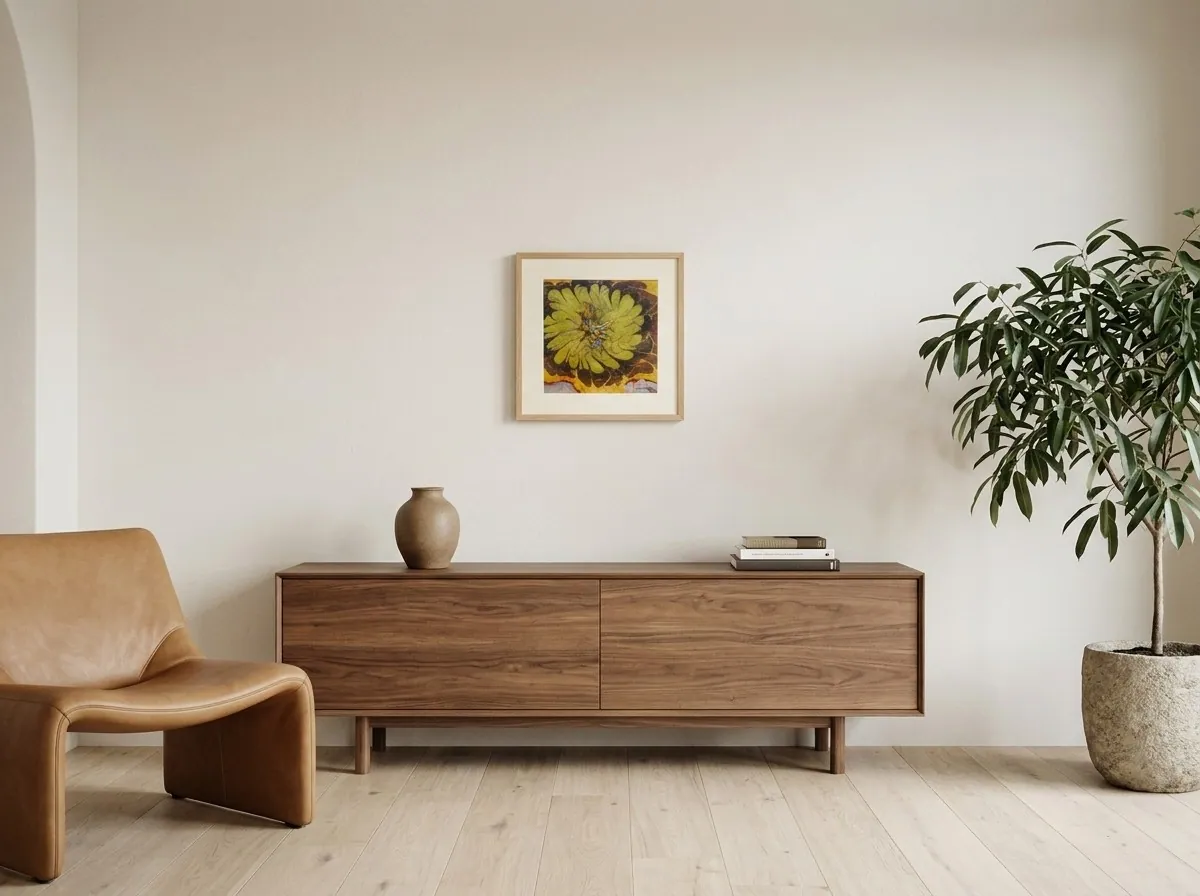
When to call a conservator
Call when paint is lifting or flaking, when the frame or glazing will not come off, when paper is stuck to glass, and when a haze stays on the surface after drying. The AIC also says not to attempt repairs until the object is completely dry, and to consult a professional conservator before treating anything important. In the United States, the AIC's National Heritage Responders take questions from individuals at NHRPublicHelpline@culturalheritage.org,. Keep your photographs of the damage with the work.
For those acquiring a work
Veil of Light (70 × 110 cm, R$ 4,700) and Solar Rain (70 × 110 cm, R$ 4,800) are canvases from the Luminous Rebirth series, 2026. Ochre Bloom (45 × 45 cm with frame, R$ 2,400) is a framed work on paper from Water & Bloom. Each is unique, with no editions or reproductions. Before hanging, check what is behind and above the wall: a bathroom, a window or a pipe run. Mark the size with tape against the furniture below. Any conversion from BRL is approximate.
Every acquisition comes directly from the artist with a signed Certificate of Authenticity carrying the Archive ID, a fiscal invoice or receipt, an Artwork Acquisition Agreement, an artist dossier and care and preservation instructions. Shipping is quoted per destination and paid by the buyer; professional packaging is included and transit insurance is available. See shipping.
Available works
-
 Veil of Light
70 x 110 cm (27.6 x 43.3 in) · R$ 4.700
-
 Veil of Light
70 x 110 cm (27.6 x 43.3 in) · R$ 4.700
-
 Ochre Bloom
45 x 45 cm (17.7 x 17.7 in) · R$ 2.400
-
 Ochre Bloom
45 x 45 cm (17.7 x 17.7 in) · R$ 2.400
-
 Solar Rain
70 x 110 cm (27.6 x 43.3 in) · R$ 4.800
-
 Solar Rain
70 x 110 cm (27.6 x 43.3 in) · R$ 4.800
From the studio
From the studio
Alyne Perfeito is a Brazilian visual artist, trained as an architect, based in Brasília. Veil of Light carries sculpted texture over acrylic, and Ochre Bloom is watercolour and acrylic on paper, framed with a mat, so the same leak calls for two different responses. Keep the certificate and the artist dossier with the work: both carry the technical record of medium, dimensions and year, with the Archive ID, which is the first thing a conservator will ask for.
Frequently asked
Should I use a hair dryer?
No. University of Delaware conservation guidance says not to use a hair dryer, and the AIC says sunlight and heat can dry materials too quickly and cause splits, warping and buckling. Air-dry indoors, face up, with fans moving air around the room but not pointed at the painting.
Do I take the canvas off the stretcher?
No. The AIC says to remove a wet painting from its frame but not from the stretcher, and Delaware says never to remove a painting from its stretcher. Lay it face up on blocks so air reaches both sides.
What if it is a framed work on paper?
Take it carefully out of the frame and glazing and let it air-dry, as the AIC and Delaware advise. If the paper is stuck to the glass, leave it and ask a conservator. Watercolour moves with water, so do not blot or rub the front. Cockling can be flattened under light weight once the sheet is completely dry.
When do I call a conservator?
When paint flakes or lifts, when the frame will not come off, when paper is stuck to glass, or when a white haze remains after drying. The AIC advises not attempting repairs until the object is fully dry and consulting a professional conservator for anything important.
How fast can mould appear?
University of Delaware guidance says mould can begin to grow within 48 hours after a water event. Keep the work out of sealed plastic, and lower humidity with fans, open windows, air conditioning or a dehumidifier, as the AIC suggests.
See the surfaces up close
Ask the studio for detail photographs of Veil of Light, Solar Rain or Ochre Bloom and a shipping quote to your address.
Sources
- American Institute for Conservation, Tips for the Care of Water-Damaged Family Heirlooms and Other Valuables — 2026-11-19
- American Institute for Conservation — 2026-11-19
- University of Delaware, Art Conservation Resources — 2026-11-19
- Perfeito Studio — 2026-11-19
- Perfeito Studio — 2026-11-19
- Perfeito Studio (src/data/obras.json and studio-facts.json) — 2026-11-19
Published on
Edited and reviewed by: Alyne Perfeito, architect and visual artist · CAU A1023098
Alyne Perfeito is a trained architect and visual artist with a studio in Brasília, Brazil. She edits and reviews the Journal from her painting practice. See Alyne's works →