Which insects damage paintings, and how to spot them before the damage spreads
Most insect damage to paintings at home comes from wood borers such as the furniture beetle in stretchers and frames, carpet beetle and clothes moth larvae in fibres, and silverfish on paper pasted with starch. Look for small holes, powdery droppings, cast larval skins and dead insects. Never spray the painting: bag it and call a conservator.

Works cited in this text


Wood: the stretcher and the frame
A canvas painting hangs on wood. The Canadian Conservation Institute (CCI), in its guide to pests as an agent of deterioration, describes larvae of the anobiid beetle (the furniture beetle) chewing out most of the wood inside a table support while the varnished surfaces looked almost untouched. Lyctid borers did the same to wooden machinery in a rural museum. Borers lay their eggs on rough, exposed end grain.
So the useful place to look is the back. Take the painting down with clean hands and tilt it to see the stretcher bars and the inside of the frame. The CCI's pest guide shows the evidence to look for: holes, frass (the powdery waste insects leave behind), cast larval skins and dead insects. Check the shelf or floor below the painting too. Do not press on the back of the canvas while you look: the CCI's care page for paintings says even finger pressure there can harm it.
Fibres: carpet beetles and clothes moths
The Natural History Museum in London describes the adult varied carpet beetle as round and 1.5 to 3.5 mm long, with a mottled pattern of white, orange and black patches on its wing cases. Its larva, the woolly bear, is 4 to 4.5 mm and hairy. The larvae are pests of woollen goods and will not feed on fabric that is entirely synthetic. They leave small clean holes, powdery droppings and shed skins, and their holes carry no silk webbing, which is how the NHM tells their damage from that of clothes moths. Adults often turn up on windowsills in the warmer months, trying to get out.
The CCI adds two points that concern paintings. Dermestid larvae (the carpet beetle family) ate the painted decoration on a hide mitten because the pigment binder made it more nourishing. And case-making clothes moths build their cases from what they eat, so they are hard to see. A rug, a wool throw or a wardrobe in the same room is where these insects breed before they reach a painting.

Works on paper: silverfish
Silverfish graze on paper and can perforate it, and the CCI notes they go more readily for paper pasted with starch adhesive. A framed watercolour has paper, a mat and often a paste somewhere in the package. Look along the edge of the mat for grazed, thinned patches or small irregular holes, and check the back of the frame for droppings.
Petal Current (Water & Bloom, 2026) is watercolour and acrylic on paper, framed, 73 × 73 cm including the frame. For a piece like this, ask your framer what holds the paper in the frame, and keep it away from damp corners, where silverfish live.

What to do when you find signs
The CCI's page on response methods is direct: spraying objects, on purpose or by accident, is highly discouraged because it can stain them and cause mechanical and chemical damage. Its advice is to treat the room (baseboards and the crevices around them) and leave the object alone.
Isolate the painting. The CCI recommends sealing an infested item in a polyethylene bag and labelling it, which stops the insects spreading to the rest of the house. Museums kill pests with cold (the CCI's most conservative guidance is −30 to −20 °C for one to two weeks) or with controlled heat. Those are protocols run under supervision. A stretched painting is paint on canvas over a wooden frame, materials that react differently, so the decision to freeze or heat it belongs to a painting conservator. Photograph the holes and the droppings before you clean anything; the conservator will want to see them.

When a new painting arrives
The CCI's rule for collections is to quarantine and visually inspect every incoming object before it joins the rest. At home that means unpacking the painting away from rugs and wardrobes, then looking at the front, the edges, the back of the stretcher and the packing material before you throw it away. Its guiding phrase is "early warning, easier cure": sticky traps along the bottom of the walls, replaced from time to time, show which insects are moving around the house.
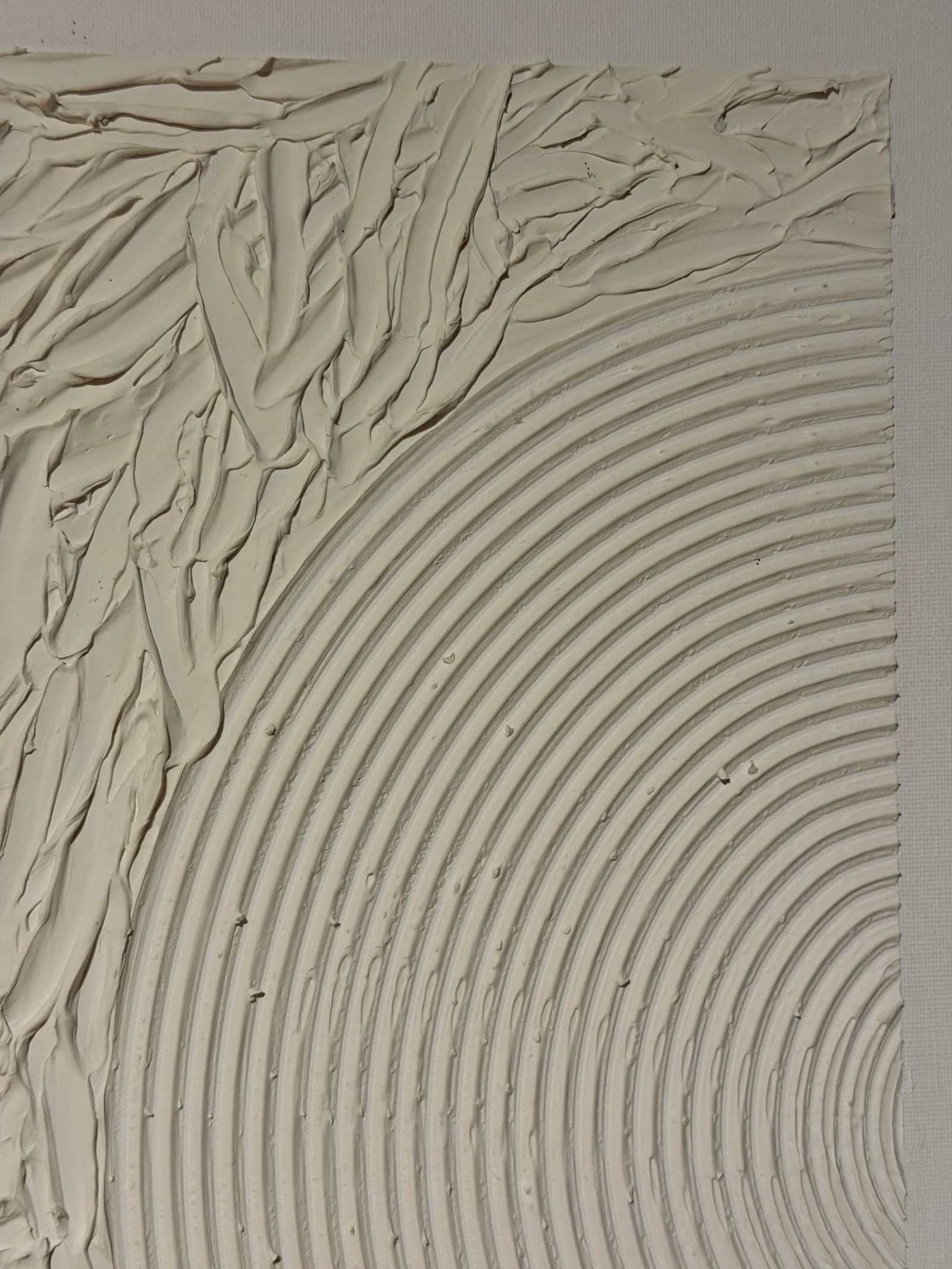
Relief surfaces need a closer look. The grooves of Echo of Silence (sculpted texture on canvas) and the raised paste in Crossing Currents (acrylic and texture paste) hold dust, and the CCI's care page mentions insect specks among what collects on a paint surface. Cleaning them is work for a conservator.

For those acquiring a work
Silent Interval measures 120 × 160 cm (R$ 7,900) and Crossing Currents 80 × 120 cm (R$ 4,400); both need a tall wall with room to lift them down for a look at the back. Echo of Silence is 50 × 70 cm (R$ 2,400) and Petal Current 73 × 73 cm framed (R$ 3,300). Any conversion from BRL is approximate. Choose a dry interior wall, away from the wardrobe and the rug, and hang the work at a height you can reach.
Each work is photographed in detail before it leaves the studio, and those photographs make a record to compare against later. Every acquisition comes directly from the artist with a signed Certificate of Authenticity carrying the Archive ID, a fiscal invoice or receipt, an Artwork Acquisition Agreement, an artist dossier and conservation and care guidance. Shipping is quoted per destination and paid by the buyer, with any import duties; professional packaging is included and transit insurance is available. See shipping and acquisition.
Available works
-
 Silent Interval
120 x 160 cm (47.2 x 63 in) · R$ 7.900
-
 Silent Interval
120 x 160 cm (47.2 x 63 in) · R$ 7.900
-
 Crossing Currents
80 x 120 cm (31 x 47 in) · R$ 4.400
-
 Crossing Currents
80 x 120 cm (31 x 47 in) · R$ 4.400
-
 Echo of Silence
50 x 70 cm (19.7 x 27.6 in) · R$ 2.400
-
 Echo of Silence
50 x 70 cm (19.7 x 27.6 in) · R$ 2.400
From the studio
From the studio
Alyne Perfeito is a Brazilian visual artist, trained as an architect, based in Brasília. Silent Interval (AP-MAS-2026-003), Crossing Currents (AP-TAE-2025-002) and Echo of Silence (AP-MAS-2025-002) are stretched canvases; Petal Current (AP-WAB-2026-003) is paper in a frame. If you find holes or powder near one of our works, send the studio photographs of the front, the back and what you found, and ask for the detail photographs taken before it was shipped.
Frequently asked
What insects eat canvas or wooden stretcher bars?
In wood, the Canadian Conservation Institute names anobiid beetles (the furniture beetle) and lyctid borers, whose larvae tunnel inside and lay eggs on rough end grain. In natural fibres, the Natural History Museum in London names carpet beetle larvae, which feed on woollen goods, and clothes moths do similar damage.
What does carpet beetle damage look like compared with moth damage?
According to the Natural History Museum, carpet beetle larvae leave small clean holes, powdery droppings and shed skins, with no silk webbing in the holes. Clothes moth damage usually comes with silk. The adult carpet beetle is round, 1.5 to 3.5 mm, with mottled wing cases, and is often seen on windowsills in warm months.
Can I spray insecticide near a painting?
The Canadian Conservation Institute says direct or incidental spraying of objects is highly discouraged because it can stain them and cause mechanical and chemical damage. It describes treating baseboards and crevices. Move the painting out of the room first, seal it in a polyethylene bag if you see signs, and ask a conservator.
Should a new painting be inspected before it joins the rest of the collection?
Yes. The Canadian Conservation Institute recommends quarantining and visually inspecting every incoming object before it joins a collection. Unpack the painting away from rugs and wardrobes, look at the front and edges, then the back of the stretcher, and check the packing material before discarding it.
Can I put an infested painting in the freezer?
Museums use cold treatment, around −30 to −20 °C for one to two weeks according to the Canadian Conservation Institute, under controlled conditions. A stretched painting is paint on canvas over a wooden frame, so whether to freeze it is a decision for a painting conservator. Seal it in a bag and get advice first.
Ask the studio about a work
Ask about Silent Interval, Crossing Currents, Echo of Silence or Petal Current, the detail photographs of the piece and a shipping quote to your address.
Sources
- Canadian Conservation Institute, Government of Canada — 2026-11-22
- Canadian Conservation Institute, Government of Canada — 2026-11-22
- Natural History Museum, London — 2026-11-22
- Canadian Conservation Institute, Government of Canada — 2026-11-22
- Perfeito Studio (src/data/obras.json) — 2026-11-22
- Perfeito Studio (src/data/studio-facts.json) — 2026-11-22
Published on
Edited and reviewed by: Alyne Perfeito, architect and visual artist · CAU A1023098
Alyne Perfeito is a trained architect and visual artist with a studio in Brasília, Brazil. She edits and reviews the Journal from her painting practice. See Alyne's works →