Why original abstract art costs what it does: materials, time and the studio behind it
An original abstract painting costs what it does because its price is a stack: materials, the artist's time, the cost of running a studio, the channel that sells it, and the documentation and packaging that travel with it. Published guidance for artists treats materials and time as the floor; size, reputation and channel then move the figure above it.
The floor: materials, time and the studio
Published guidance written for artists starts from a floor. Artquest, a public programme of the University of the Arts London, describes the price of a direct sale as the cost of making the work plus a fee for the artist's time. It says to add up the materials, and to include part of the cost of a studio and, for some artists, other overheads. It also notes that around half of artists have a separate studio that they rent, own or share. ArtConnect's pricing guide lists the same ingredients in plainer terms: materials, studio expenses, framing, shipping and the time involved in producing and presenting the work.
None of this is paint alone. A canvas that looks like a few colours and some texture sits on top of a studio's running costs, which the buyer never sees on a label.
Why "materials" is a wider line than it sounds
Paint is not one product. Sennelier, a maker of artists' colours, says its extra-fine quality contains twice as much pigment as its fine quality, and that artist-grade colours carry up to six or seven different prices depending on the colour, because pigments themselves cost different amounts. Student-grade lines, by contrast, are priced as one tier across every colour. On that reading, a work built from a wide range of pigments does not have one materials cost; it has a spread.
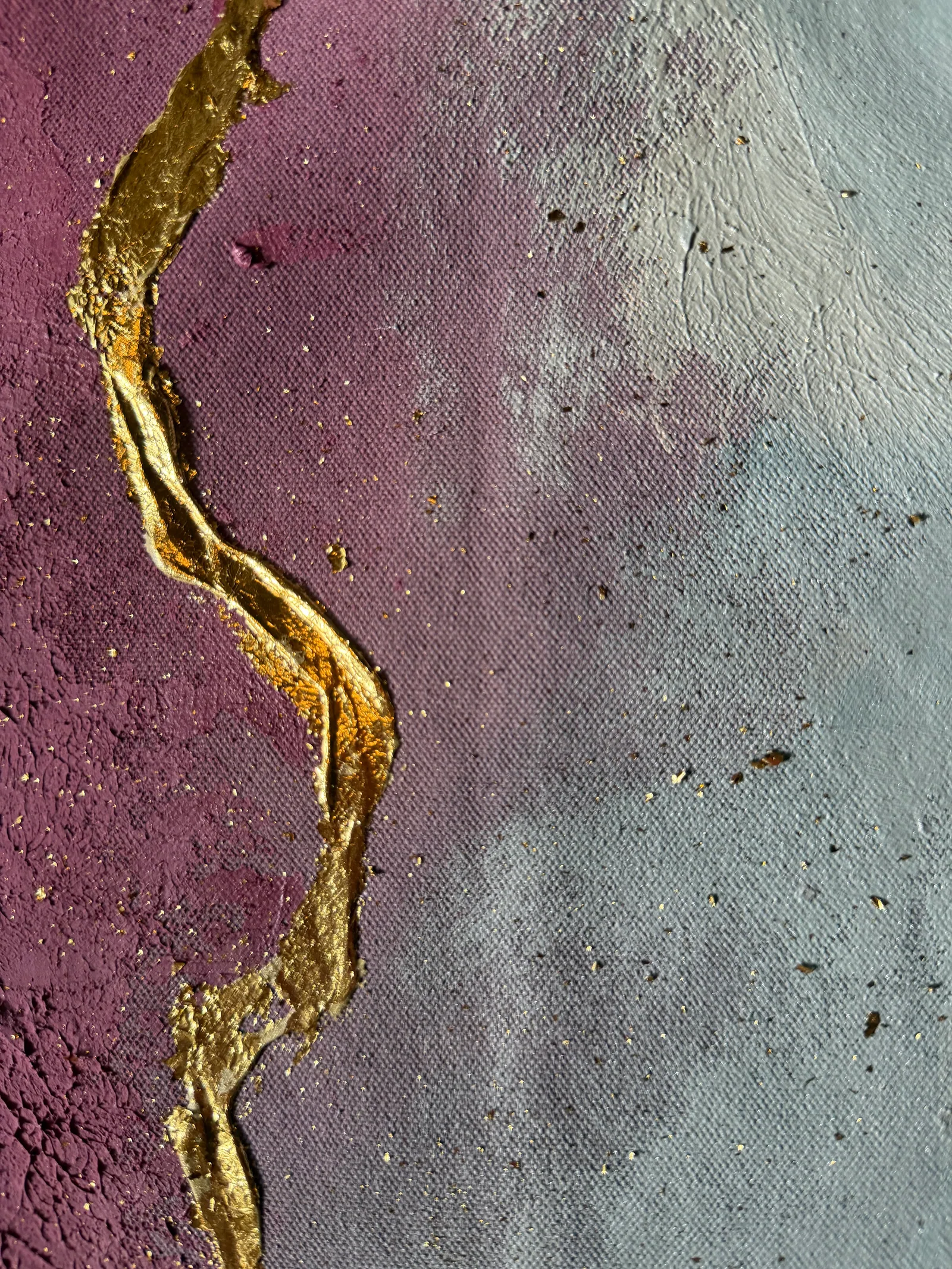
The medium line on a work's page is the buyer's clue. Quartz Seam (98 × 152 cm, 2026) is listed as mixed media with acrylic and imitation gold leaf on canvas, so its materials include a metal leaf as well as paint. Fire of Devotion (100 × 150 cm, 2026) is listed as acrylic on canvas. The listing states these differences; it does not itemise what each costs.
With abstract work there is no recognisable subject to point at and say what the price paid for, which is why the listing's medium, size and year, and the detail photographs, are the only concrete things to read the number against.
Time counts, but rarely by the hour
Lori Woodward, writing in Artists Network, says she is not aware of any professional artist who pays herself by the hour. She prices by size instead, and doubles the combined cost of frame, canvas and materials. Artquest, for its part, treats time as a fee that sits on top of the cost of making. Both treat time as one component of the number, not the whole of it.
That is why "how many hours did it take" is a poor test of a price. Hours matter to an artist's floor, but the figure a buyer sees is also shaped by size and by where the artist stands in the market. Woodward puts it bluntly: the price of artwork reflects the artist's position and reputation in the art-selling world more than what the art looks like.
Where a gallery commission sits in the price
Artquest sets out the structure clearly: a direct sale is production cost plus the artist's fee, and a gallery sale adds the gallery's commission on top. Woodward notes that galleries often take 50 percent, ArtConnect says the commission is often around 50%, and Artquest adds that many artists believe galleries take half but that this does not always happen. The percentage varies by gallery and agreement.
The other side of that arrangement is the dealer's own cost base. The Art Basel and UBS Global Art Market Report 2026, which analyses the market in 2025, found that dealers' total operating costs rose by an estimated 5% on average in 2025, higher than the rate of inflation in most major art markets and higher than aggregate sales growth. ArtConnect also advises artists not to undercut their gallery by selling the same work cheaper through their own website or studio, which keeps the buyer-facing figure consistent across channels; the commission changes how that figure is divided, not what the buyer sees.
A work bought directly from a studio involves no gallery commission, but it still carries every layer beneath it.
What the price includes at this studio
At Perfeito Studio, prices are set by the studio and stated in Brazilian reais; across the available works they run from R$ 2,400 to R$ 8,800, depending on size and work. Every acquisition is direct from the artist and includes the original painting, a certificate of authenticity signed by hand with the full technical record and the Archive ID, a fiscal invoice or official receipt, an acquisition agreement covering transfer of ownership, copyright and image use, an artist dossier, care guidance and professional packaging. Shipping is quoted by destination and paid by the buyer, as are any import duties or taxes in the destination country. The studio does not set or quote secondary-market values.
Alyne Perfeito's current body of work was painted between 2025 and 2026, so the reputation line that Woodward describes is at an early stage. This page says nothing about what a work may be worth later; the price covers what is being bought today.
From the studio
From the studio
I find a price easiest to explain when two works can be set side by side. Quartz Seam is 98 × 152 cm, mixed media with acrylic and imitation gold leaf on canvas, listed at R$ 6,700. Fire of Devotion is 100 × 150 cm, acrylic on canvas, listed at R$ 5,700. They occupy almost the same footprint on a wall, both date from 2026, and the listings are R$ 1,000 apart.
The gap is not an itemised price for the imitation gold leaf. I calculate price per square meter within each series, and these two works belong to different series; the pages record medium, size and year without itemising anything else. What a page can show you is the surface: in the close view above, a raised seam of imitation gold leaf crosses a field of grey-blue and mauve, with small flecks of gold scattered around it. Read the number with that object in view, even if only through a detail photograph.
Frequently asked
Why is original abstract art so expensive?
Because the price stacks several things that a reproduction never carries. Published guidance for artists lists materials, studio expenses, framing, shipping and the artist's time as the floor. On top of that come size, the artist's position and reputation, and the channel that sells the work, since a gallery adds commission. Each work is also one unique object, not a copy from an edition, and it comes with documentation.
What goes into the price besides paint?
Artquest and ArtConnect both list more than paint: a share of studio costs, other overheads, framing, shipping and the artist's time. At this studio a direct purchase also includes a signed certificate of authenticity with the Archive ID, an invoice or receipt, an acquisition agreement, an artist dossier, care guidance and professional packaging. Shipping is quoted by destination and paid by the buyer.
Does size or time matter more?
Neither is a clean answer. Lori Woodward says she is not aware of professional artists who pay themselves by the hour, and she prices by size: she lowers the rate per unit of area for much larger pieces so as not to price beyond what her reputation can sustain, and raises it for small works because they take almost as much effort as larger ones. Time shapes the floor, size gives a measurable starting point, and the artist's position in the market moves the final figure.
Why does a gallery add a commission to the price?
A gallery sale is built as the artist's direct-sale price plus the gallery's commission, as Artquest describes it; ArtConnect advises artists to keep the same price across channels. Woodward and ArtConnect both say galleries often take around 50 percent, though Artquest notes this does not always happen and varies by agreement. The Art Basel and UBS 2026 report also found dealers' operating costs rising by an estimated 5% on average in 2025, faster than inflation in most major art markets.
What does a buyer pay for beyond the object?
At this studio, a buyer also receives the paperwork that makes the work traceable: a certificate of authenticity signed by hand with a QR code that links to the work's official page, a fiscal invoice or receipt, an acquisition agreement covering ownership, copyright and image use, a dossier and care guidance. Professional packaging is included. Shipping, and any import duties or taxes abroad, are paid by the buyer.
Want to read a price against the work itself?
Ask for the medium, dimensions and detail photographs of a specific work. Prices are stated in Brazilian reais; any conversion is approximate.
Sources
- Artquest (public programme of the University of the Arts London) — 2026-10-09
- ArtConnect Magazine — 2026-10-09
- Lori Woodward, Artists Network — 2026-10-09
- Sennelier — 2026-10-09
- Art Basel and UBS Global Art Market Report 2026 (Arts Economics), via Art Basel — 2026-10-09
Published on · Updated on