Can a US business depreciate a painting hung in its office? What Rev. Rul. 68-232 says
Under US federal tax rules, usually not. IRS Publication 946 allows depreciation only for property with a determinable useful life, and Revenue Ruling 68-232 says a valuable work of art has none. A 1983 Tax Court memo left an opening for paintings it saw as wall decorations, if the owner proves a useful life. Ask your CPA before filing.


The four tests in Publication 946
Golden Passage is mixed media, texture paste and imitation gold leaf (metallic leaf) on canvas, 60 × 80 cm, made in 2025. The black paste is laid in rows of raised strokes, and the metallic leaf sits on top of some of them. Picture it on a boardroom wall and the accountant's question follows: can the company write it off over time?
IRS Publication 946 (2025), the federal guide to depreciation, says that to be depreciable, property must meet all four of these requirements. It must be property you own. It must be used in your business or income-producing activity. It must have a determinable useful life. It must be expected to last more than one year.
The section of Pub 946 on property that cannot be depreciated names land and four kinds of excepted property. It does not mention art. The art question turns on the third test.

What Rev. Rul. 68-232 says
Revenue Ruling 68-232 dates from 1968. As quoted in a 2012 article in The Tax Adviser, the journal of the AICPA, it says that "a valuable and treasured art piece does not have a determinable useful life" and that "depreciation of works of art generally is not allowable."
The author, CPA Anthony S. Bakale, wrote that the ruling became the standard for office decorations and that the IRS had said little on the subject since 1968. He also noted that the ruling gives no guidance on what makes a work "valuable and treasured." The publisher now marks the article as archived, so read it as background and check current law with your adviser.
Wall decoration or work of art: the 1983 case
In Associated Obstetricians and Gynecologists, P.C. (T.C. Memo. 1983-380), a medical practice depreciated the artwork in its office and the IRS disallowed it. The Tax Court sided with the IRS. It also found Rev. Rul. 68-232 inapplicable, because it saw the paintings as "more wall decorations than works of art," and said they could be depreciated if the practice established their economic useful life and salvage value. The practice had not done so.
The same article cites two 1994 Tax Court cases, Simon and Liddle, that allowed depreciation of a violin bow and an antique bass viol played by working musicians. The test there was whether the property is subject to wear and tear or obsolescence. A painting on a wall is not played every night, which is why the useful-life question stays open for art.
Section 179 starts from the same question
Section 179 lets a business deduct the cost of qualifying property in the year it is placed in service. Pub 946 says that to qualify, "your property must be one of the following types of depreciable property," and that it must have been acquired for use in your trade or business, with more than 50% business use for mixed-use property.
So a painting that fails the useful-life test under Rev. Rul. 68-232 has the same problem under Section 179. Whether a given work counts as decoration or as art is a judgment about facts, and it belongs to your CPA or tax attorney, who can read the current rules for your entity and your state. This page explains the federal mechanism and is not tax advice.

For those acquiring a work
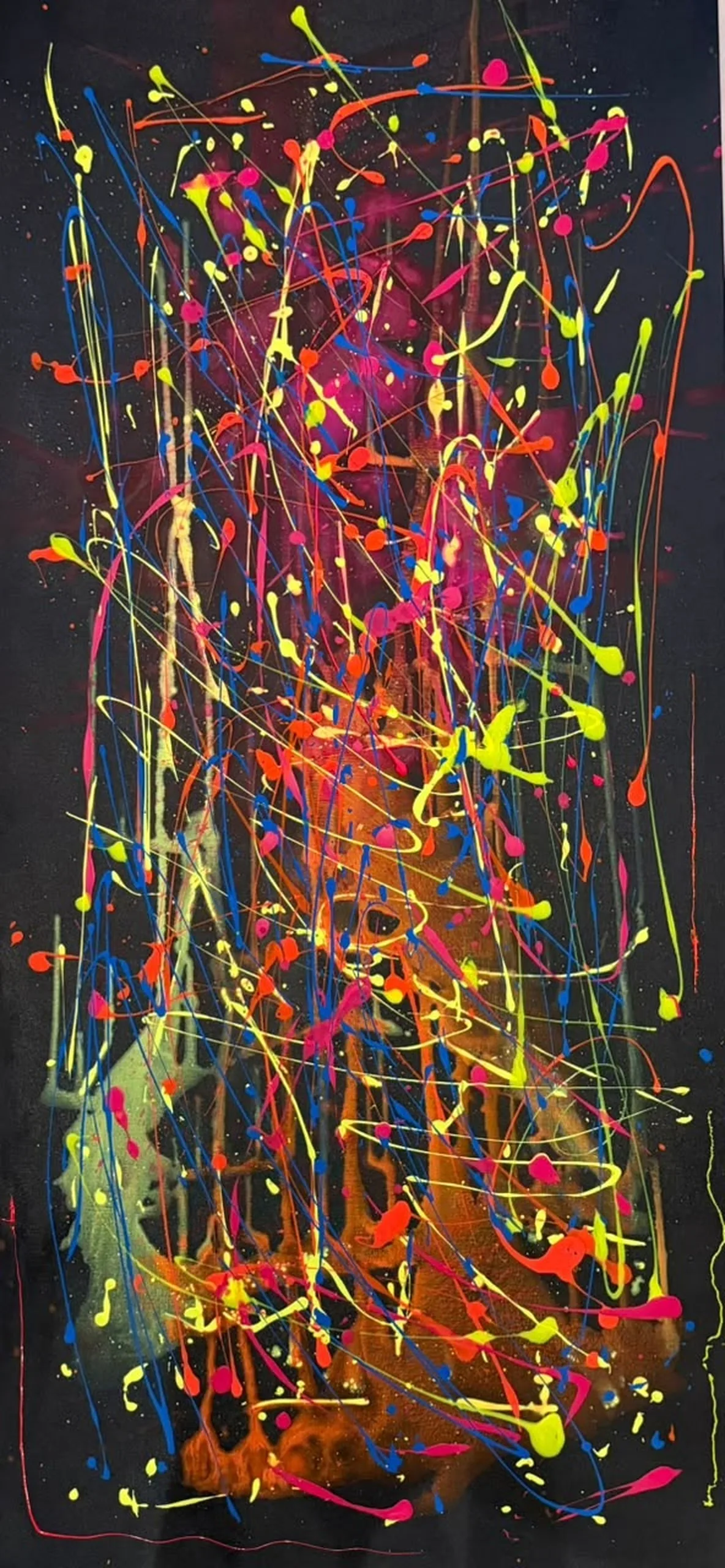
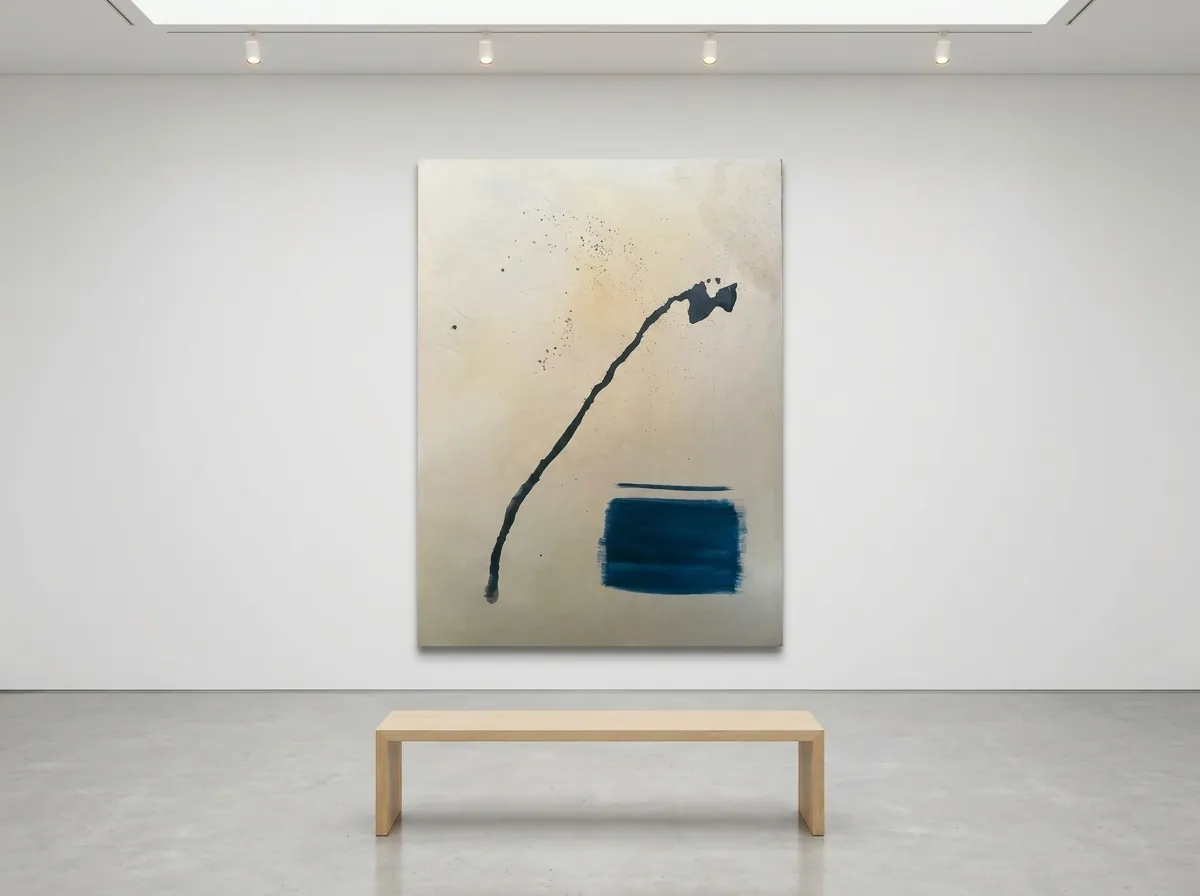
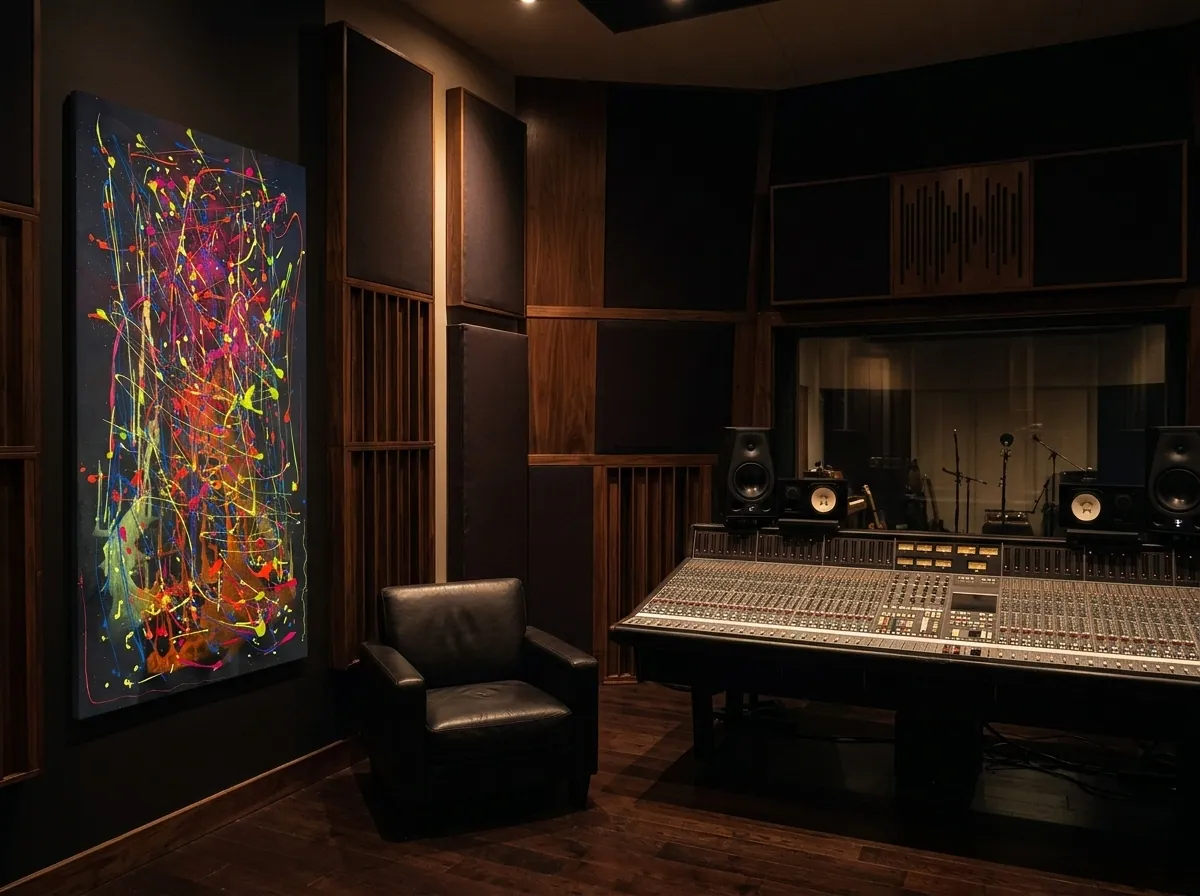
Measure the wall and the furniture below it. Silent Interval is 120 × 160 cm, Electric Nocturne is 80 × 170 cm and Golden Passage is 60 × 80 cm.
Every acquisition comes with a signed Certificate of Authenticity with the internal Archive ID, a fiscal invoice or official receipt, an Artwork Acquisition Agreement and an artist dossier. Your accountant will want the invoice. Shipping is quoted per destination and paid by the buyer, as are any import duties or taxes. See Shipping.
Available works
-
 Golden Passage
60 x 80 cm (23.6 x 31.5 in) · R$ 3.500
-
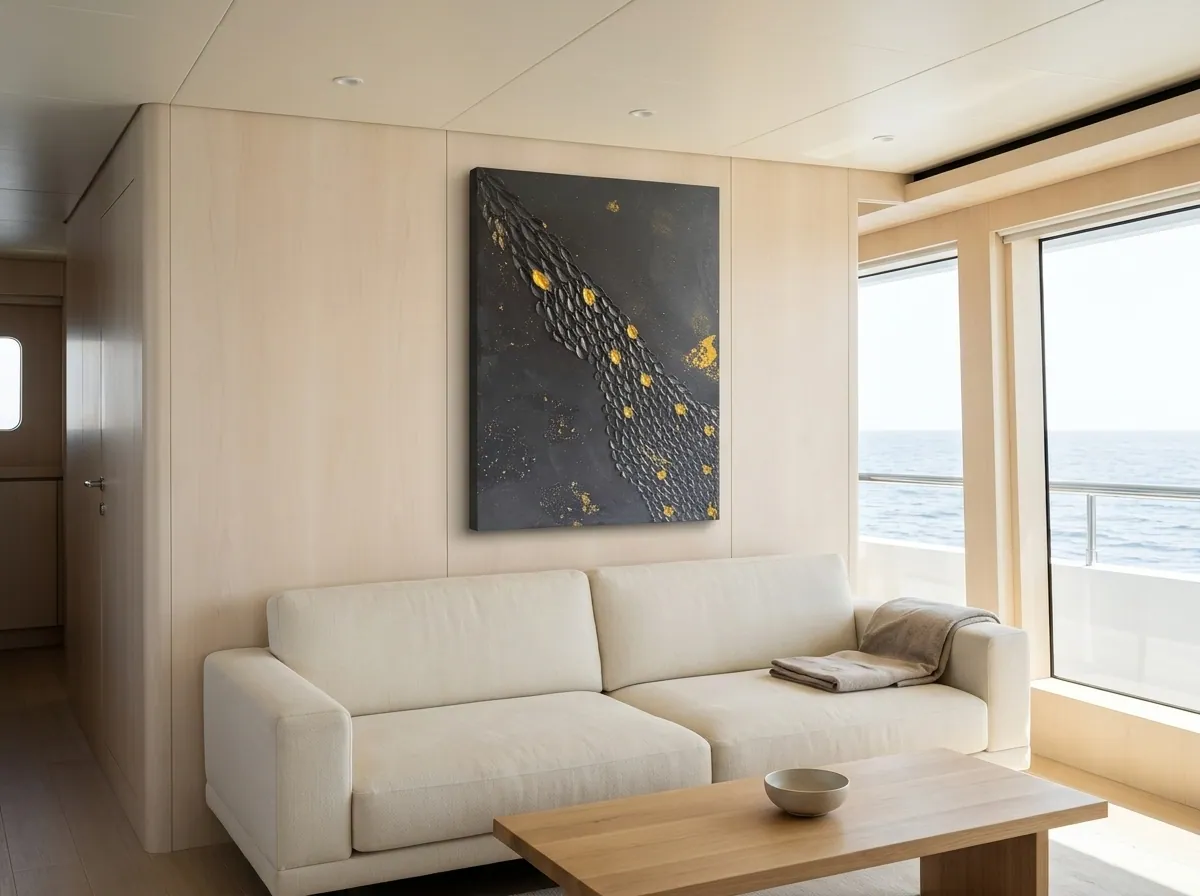 Golden Passage
60 x 80 cm (23.6 x 31.5 in) · R$ 3.500
-
 Silent Interval
120 x 160 cm (47.2 x 63 in) · R$ 7.900
-
 Silent Interval
120 x 160 cm (47.2 x 63 in) · R$ 7.900
-
 Electric Nocturne
80 x 170 cm (31.5 x 66.9 in) · R$ 5.200
-
 Electric Nocturne
80 x 170 cm (31.5 x 66.9 in) · R$ 5.200
From the studio
From the studio
Alyne Perfeito is a Brazilian visual artist, trained as an architect, based in Brasília. Golden Passage (AP-BNG-2025-001) is R$ 3,500, Electric Nocturne (AP-HOC-2026-004) R$ 5,200 and Silent Interval (AP-MAS-2026-003) R$ 7,900. Any conversion from BRL is approximate.
Frequently asked
Can you depreciate artwork for a business?
Under US federal rules, generally not. IRS Publication 946 requires a determinable useful life, and Rev. Rul. 68-232 says a valuable work of art has none. Your CPA can tell you how this applies to your case.
What is Rev. Rul. 68-232?
A 1968 IRS revenue ruling stating that a valuable and treasured art piece does not have a determinable useful life, so depreciation of works of art generally is not allowable. It does not define what makes a work valuable and treasured.
Is decorative office art treated differently from a valuable work?
It can be. In a 1983 Tax Court memo, Associated Obstetricians and Gynecologists, the court found the ruling inapplicable to paintings it saw as wall decorations, and said they could be depreciated if the owner established a useful life and salvage value. The owner had not, so the deduction was still denied.
Can I use Section 179 on a painting?
IRS Publication 946 limits Section 179 to depreciable property acquired for use in a trade or business. A painting that has no determinable useful life fails that first step. Check with your tax adviser.
Ask the studio for the documents
Write about Golden Passage, Silent Interval or Electric Nocturne, the invoice and certificate that come with each, and a shipping quote to your address.
Sources
- Internal Revenue Service — 2026-11-28
- Internal Revenue Service — 2026-11-28
- The Tax Adviser (AICPA) — 2026-11-28
- Perfeito Studio — 2026-11-28
- Perfeito Studio — 2026-11-28
Published on
Edited and reviewed by: Alyne Perfeito, architect and visual artist · CAU A1023098
Alyne Perfeito is a trained architect and visual artist with a studio in Brasília, Brazil. She edits and reviews the Journal from her painting practice. See Alyne's works →