Giving a client a painting as a business gift: the IRS $25 deduction limit explained
IRS Publication 463 lets a business deduct no more than $25 for gifts given directly or indirectly to each person in a tax year. A painting given to a client falls under the same cap, whatever it cost. Packaging, insurance and mailing generally stay outside the $25. Your CPA decides how the return treats it.



What Publication 463 says about the $25 limit
Petal Current is a 2026 work on paper from the Water & Bloom series, painted in watercolour and acrylic. Horizontal bands of moss green and lilac, with pale yellow between them, cross the sheet, carrying dark blue marks and small drops of crimson. Framed, it measures 73 × 73 cm (28.7 × 28.7 in). A company that sends it to a client in December will get one question from its bookkeeper: how much of this can we deduct?
Chapter 3 of IRS Publication 463 (2025), Travel, Gift, and Car Expenses, answers it: “You can deduct no more than $25 for business gifts you give directly or indirectly to each person during your tax year.” The cap counts per recipient and per year. It does not grow with the price of the gift, so a framed watercolour priced at R$ 3,300 meets the same ceiling as a box of pears. This page summarises the publication. It is not tax advice.

Gifts through a company, a spouse or a partnership
Publication 463 treats a gift to a company that is meant for the eventual personal use of a particular person, or a small group, as an indirect gift to those people. A gift to a client's family member is generally an indirect gift to the client as well, unless you have your own business connection with that family member and the gift is not meant for the client.
The giving side is pooled too. You and your spouse count as one taxpayer for gifts, even with separate businesses, and a partnership and its partners count as one. Two partners who each send the same client a present share a single $25.
A painting addressed to a client's company but chosen for one director's private office is the kind of case to put to a CPA under the indirect-gift rule.

Which costs stay outside the $25
Incidental costs, which the publication illustrates with engraving on jewelry and with packaging, insuring or mailing, are “generally not included in determining the cost of a gift for purposes of the $25 limit,” in the publication's words. Its test is short: “A cost is incidental only if it doesn't add substantial value to the gift.” Packaging and transit insurance both appear on that list by name.
The frame is a different case. Water & Bloom works are sold framed, their listed dimensions include the frame, and the price covers the whole piece, so the frame is part of the work the client receives. How shipping and insurance are recorded outside the gift rule is a question for the CPA.
Is a painting for the client's office promotional material?
Publication 463 names two kinds of item that are not treated as gifts at all. The first is an item costing $4 or less, with your name permanently imprinted, that is one of many identical items you distribute widely, such as pens. The second is “signs, display racks, or other promotional material to be used on the business premises of the recipient.”
An original painting signed by the artist carries no imprint of the giver and exists as one piece. This page does not say it fits the promotional-material exception. If your business wants to argue that it does, ask a CPA or tax attorney before filing. When the painting will hang in a clinic, shop or office, the guide on displaying a painting a business bought covers the artist's side.

Records to keep for a gift
Chapter 5 of the publication lists what to prove for a gift: its cost, its date and a description. It also says you generally need documentary evidence “such as receipts, canceled checks, or bills.”
An acquisition from Perfeito Studio includes a fiscal invoice or official receipt, a Certificate of Authenticity signed by the artist with the technical record and the internal Archive ID, and an Artwork Acquisition Agreement covering transfer of ownership (see acquisition and the certificate). Before paying, ask the studio whose name should appear on the invoice and on the certificate: your company's or the client's. The certificate travels with the painting, so keep copies and the payment record on file. For a record of the work itself, see how to make an Object ID record.

For buyers
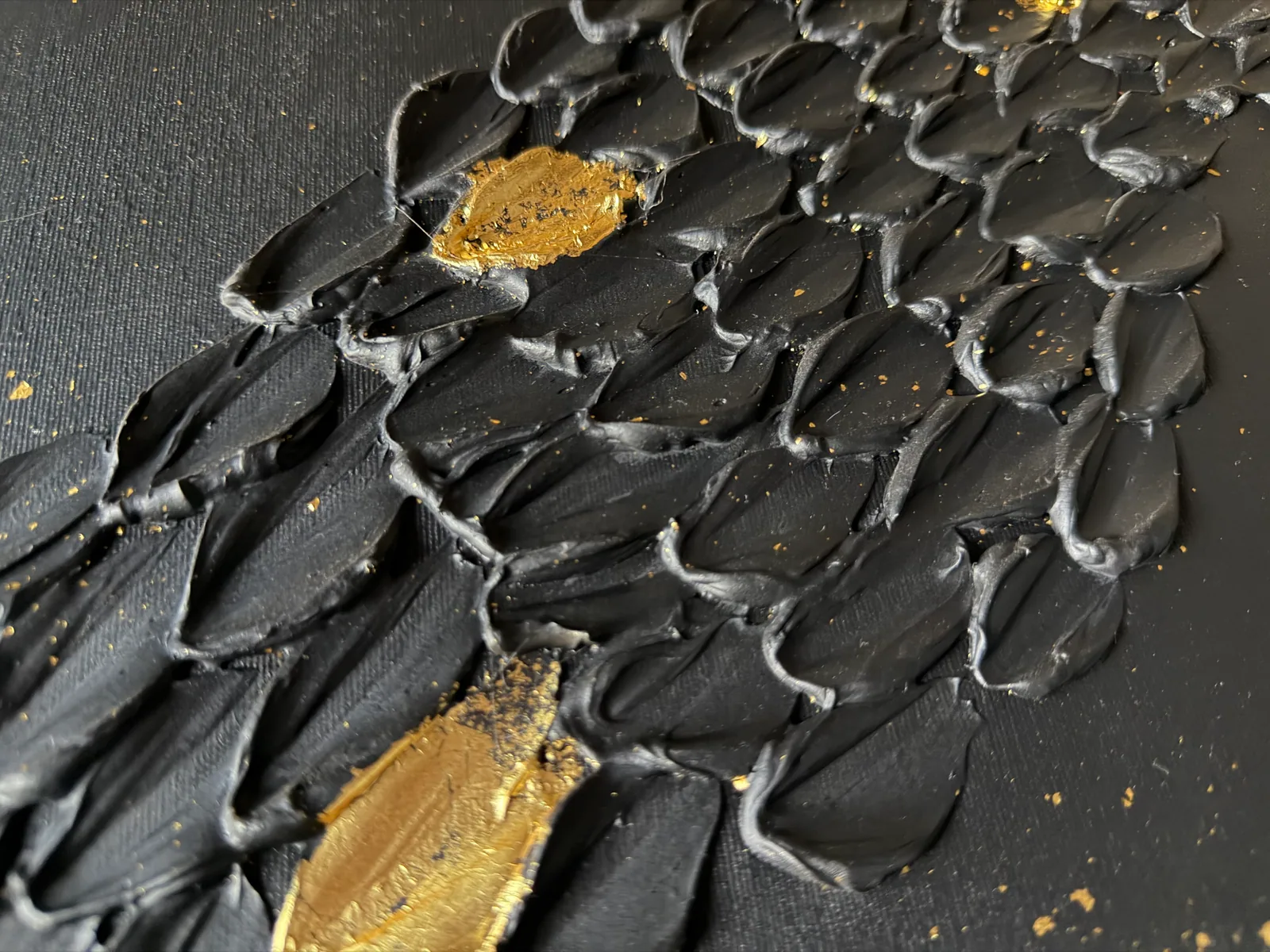
Ochre Bloom (R$ 2,400) measures 45 × 45 cm including the frame: one yellow-green flower inside rings of brown and burnt red, sized for a small wall above a desk. Petal Current (R$ 3,300), 73 × 73 cm framed, fits above a sideboard or a long console. Golden Passage (R$ 3,500), from 2025, is 60 × 80 cm on canvas, in mixed media with texture paste and imitation gold leaf (metallic leaf), sealed with a spray sealant. If you can, ask the client for the width of the wall and whether direct sun reaches it.
Each painting is original and unique, with no editions or reproductions, acquired directly from the artist. Shipping is quoted per destination and paid by the buyer, as are any import duties or taxes in the destination country. Professional packaging is included and transit insurance is available (see shipping). More works are in the gallery.
Available works
-
 Petal Current
73 x 73 cm (28.7 x 28.7 in) · R$ 3.300
-
 Petal Current
73 x 73 cm (28.7 x 28.7 in) · R$ 3.300
-
 Ochre Bloom
45 x 45 cm (17.7 x 17.7 in) · R$ 2.400
-
 Ochre Bloom
45 x 45 cm (17.7 x 17.7 in) · R$ 2.400
-
 Golden Passage
60 x 80 cm (23.6 x 31.5 in) · R$ 3.500
-
 Golden Passage
60 x 80 cm (23.6 x 31.5 in) · R$ 3.500
From the studio
From the studio
Ochre Bloom (AP-WAB-2026-002), Petal Current (AP-WAB-2026-003) and Golden Passage (AP-BNG-2025-001) each carry an Archive ID on their certificate. A bookkeeper can copy that ID into the gift record beside the date and the cost, and the client can open the work's page from the certificate's QR code.
Frequently asked
How much can a business deduct for a gift to a client?
Up to $25 per recipient per tax year, according to IRS Publication 463, whatever the gift cost. Gifts given indirectly, for example to the client's company for that person's use or to a family member, count toward the same $25.
Do packaging, insurance and shipping count toward the $25?
Generally no. Publication 463 says incidental costs such as packaging or mailing are not included in the gift's cost for the $25 limit, as long as they do not add substantial value to the gift. Ask a CPA how to record them.
Is a painting for the client's office a gift or promotional material?
Publication 463 excludes signs, display racks and other promotional material used on the recipient's business premises from the gift rules. An original painting is not named on that list, so treat it as promotional material only if a CPA or tax attorney agrees.
What records should the business keep?
The publication asks for the cost and date of each gift plus a description, backed by documents such as receipts, canceled checks or bills. Keep the invoice or receipt, the payment record and a copy of the certificate of authenticity with the work's Archive ID.
A painting for a client
Tell the studio who the gift is for and where it will be delivered. Shipping is quoted for that address, with transit insurance if you want it.
Sources
- Internal Revenue Service — 2026-11-25
- Internal Revenue Service — 2026-11-25
- Internal Revenue Service — 2026-11-25
- Internal Revenue Service — 2026-11-25
- Internal Revenue Service — 2026-11-25
- Perfeito Studio — 2026-11-25
- Perfeito Studio — 2026-11-25
- Perfeito Studio — 2026-11-25
Published on
Edited and reviewed by: Alyne Perfeito, architect and visual artist · CAU A1023098
Alyne Perfeito is a trained architect and visual artist with a studio in Brasília, Brazil. She edits and reviews the Journal from her painting practice. See Alyne's works →