Can an interior designer use an artist's painting in a 3D render or client presentation?
Not by default. Copyright in a painting arises automatically, without registration, and covers reproducing its image, so a render that includes it should be agreed with the artist first. At Perfeito Studio, ask the studio before using a work's image in a project render. This is general information, not legal advice.

What copyright says about putting a painting in a render
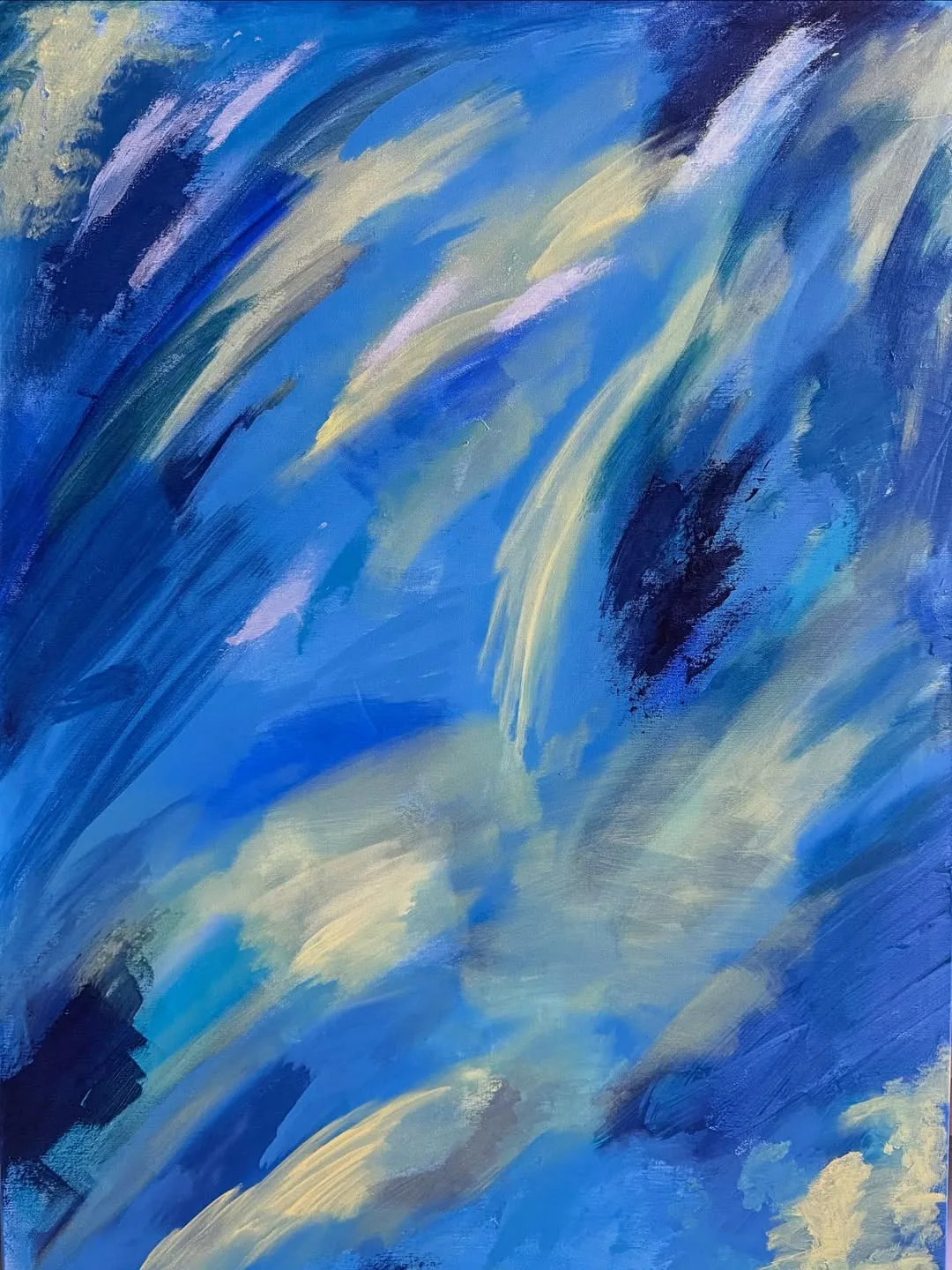
Celestial Drift is acrylic on canvas, 70 x 100 cm (27 x 39 in), built in fluid layers of blue, ivory and deep indigo with strokes of pale yellow. A photograph of it, dropped into a 3D scene, is a reproduction of that surface, and that is where copyright is relevant.
WIPO's summary of the Berne Convention states two principles that matter here. Works from one member country must receive the same protection in the others ("national treatment"), and protection "must not be conditional upon compliance with any formality" ("automatic" protection). Among the exclusive rights it lists is the right to make reproductions in any manner or form. It also lists limited exceptions, which each country defines in its own law, and "moral rights", including the right to claim authorship of the work.
Practical reading for a designer: you do not need to find a copyright registration to know a painting is protected, and the exceptions that may apply to a client render depend on the country and the facts. For a legal answer, ask a lawyer where the project is. This page does not grant any licence.


Presentation use and publication use are different requests
The same render can travel to very different places. When you ask an artist for permission, state which of these you mean:
- Presentation: a deck, a mood board or a 3D walkthrough shown to one client during the design phase.
- Project archive: the file kept in the office's own records after delivery.
- Publication: a portfolio website, social media, a competition entry, a magazine or a trade-show board, where the image reaches people who are not your client.
The first is the narrowest. The last is the widest, and the one where the artist's name, the image's credit and the scope of permission matter most. Naming the intended use, the platforms and the period in your request lets the artist answer precisely, and gives you something in writing to keep.
How to ask the studio, and what it offers for projects
At Perfeito Studio, ask the studio before using a work's image in a render, deck or publication; the site does not publish a blanket licence. Requests go through the studio's WhatsApp.
According to the architects page, the studio collaborates with architects, interior designers and curators, and offers: a curated selection for a space from a floor plan, reference images and lighting context; high-resolution previews, meaning custom renders or mockups of the work in the actual space when reference photography is provided, sized for client presentations; a project-level dossier; installation coordination; and commercial terms for partners, available on request.
A request that gets a fast answer includes: the project type and city, the work or works you want to show (by title), where the image will appear and for how long, who will see it, and whether you need a visualisation made by the studio in the client's room. If the visualisation is made by the studio, you may ask in the same message how it can be credited and used.

What credit line a render with an artwork can carry
There is no single rule on credit, but a complete line lets anyone looking at the image trace the work. A format that uses the data already published for each work:
Artwork: Celestial Drift, 2025, acrylic on canvas, 70 x 100 cm. Alyne Perfeito, Perfeito Studio, Brasília. Digital visualisation, for illustration only.
The last sentence matters because a render shows a placement, not a photograph of the finished room. The Archive ID printed on each work's page (for Celestial Drift, AP-LMR-2025-001) identifies the work precisely if a client asks for it. Whether the credit has to appear, and where, belongs in the permission you agree with the studio.
For whoever is going to acquire the work shown in the render
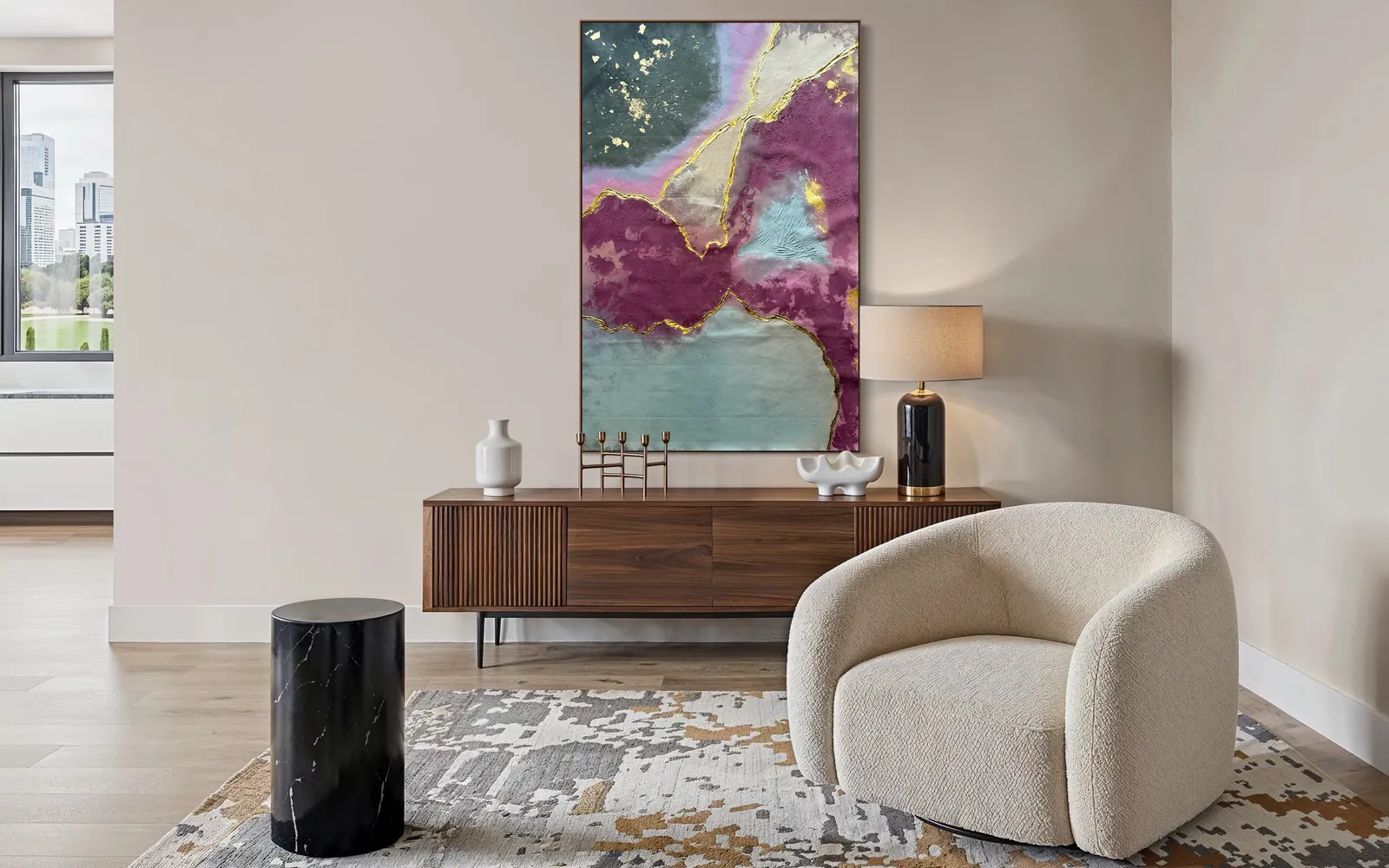
If the client falls for the work in the presentation, the render has already done part of the specification, so check it against the real object. Quartz Seam, for example, is 98 x 152 cm (38.6 x 59.8 in), mixed media with acrylic and imitation gold leaf (metallic leaf) on canvas, so it is a tall, narrow-proportioned vertical that needs a wall able to hold it above a sideboard or console. Patina Field is a 100 x 100 cm square. Compare each against the furniture below it in your drawing, not against the render alone.
Light: view the work in the daylight and the artificial light of the real room; a visualisation shows a plausible placement, not exact colour. Distance: leave enough space for a viewer to step back from a work of this size. Weight and fixing details are not published; ask the studio for the information on the work.
Every acquisition is direct from the artist and includes the original unique painting; a signed Certificate of Authenticity with the technical record and the Archive ID; a fiscal invoice or official receipt; an Artwork Acquisition Agreement covering transfer of ownership, copyright and image use; an artist dossier; conservation and care guidance; and professional packaging. Shipping, within Brazil and internationally, is quoted per destination; see shipping.
From the studio
From the studio
Alyne Perfeito is a Brazilian visual artist and trained architect, so a floor plan, a wall elevation and a lighting note are documents she reads as part of the work of choosing. The studio's own proposals for a space start from the floor plan, reference images and lighting context, with scale and atmosphere in mind. Patina Field is built by applying pigment, scraping it back and applying it again, and Quartz Seam carries pigment thick enough to hold its own relief, so a flat image shows the composition but not the surface. A render is a good tool for deciding where a work goes. The surface itself is better judged from the detail photographs the studio sends on request.
Frequently asked
Is it allowed to place a photo of an artist's painting in a project render?
Copyright protects a painting automatically, and reproducing its image is one of the rights the Berne Convention reserves to the author, subject to exceptions set by each country. For that reason, the safe route is to ask the artist or studio before including the image, and to describe the use. At Perfeito Studio, ask the studio before using a work's image in a render. This is general information and not legal advice.
What is the difference between a presentation use and a publication use?
A presentation use shows the render to one client during design. A publication use sends it to people beyond the client: a portfolio site, social media, a competition or a magazine. These are different scopes, and a permission given for one does not automatically cover the other. State both the audience and the platform when you ask, and keep the answer in writing.
How do I ask an artist for permission and a high-resolution file?
Write to the studio with the project type and city, the titles of the works, where the image will appear, for how long, and who will see it. Ask in the same message what reference files or previews the studio can provide. The studio's architects page lists high-resolution previews as a service when reference photography of the space is supplied, and commercial terms for partners on request.
Can the studio produce the visualisation in the client's actual room?
Yes, when reference photography is provided. The architects page of Perfeito Studio describes custom renders or mockups of the work in the actual space, sized for client presentations. Send a photo of the wall, the floor plan and a note on the lighting, and say which work you want to see there.
What credit line should a render that shows an artwork carry?
Include the artist, title, year, medium, dimensions and studio, and mark the image as a visualisation. For example: Artwork: Celestial Drift, 2025, acrylic on canvas, 70 x 100 cm, Alyne Perfeito, Perfeito Studio, Brasília. Digital visualisation, for illustration only. Confirm with the studio whether a credit is required for your use.
Show a work in your project
Send the studio the floor plan, a photo of the wall and the intended use of the image, and ask for the work you have in mind.
Sources
- WIPO — 2026-10-31
- Perfeito Studio — 2026-10-31
Published on