Can an acrylic painting be shipped in freezing weather?
Yes, it can, with care at both ends. Liquitex says a set acrylic film can turn brittle like glass at 44°F (about 7°C); the Canadian Conservation Institute puts the glassy phase below 5°C. Cracks come from knocks and flexing while the paint is cold, so keep the box closed until it reaches room temperature, then lift the canvas flat.

Works cited in this text

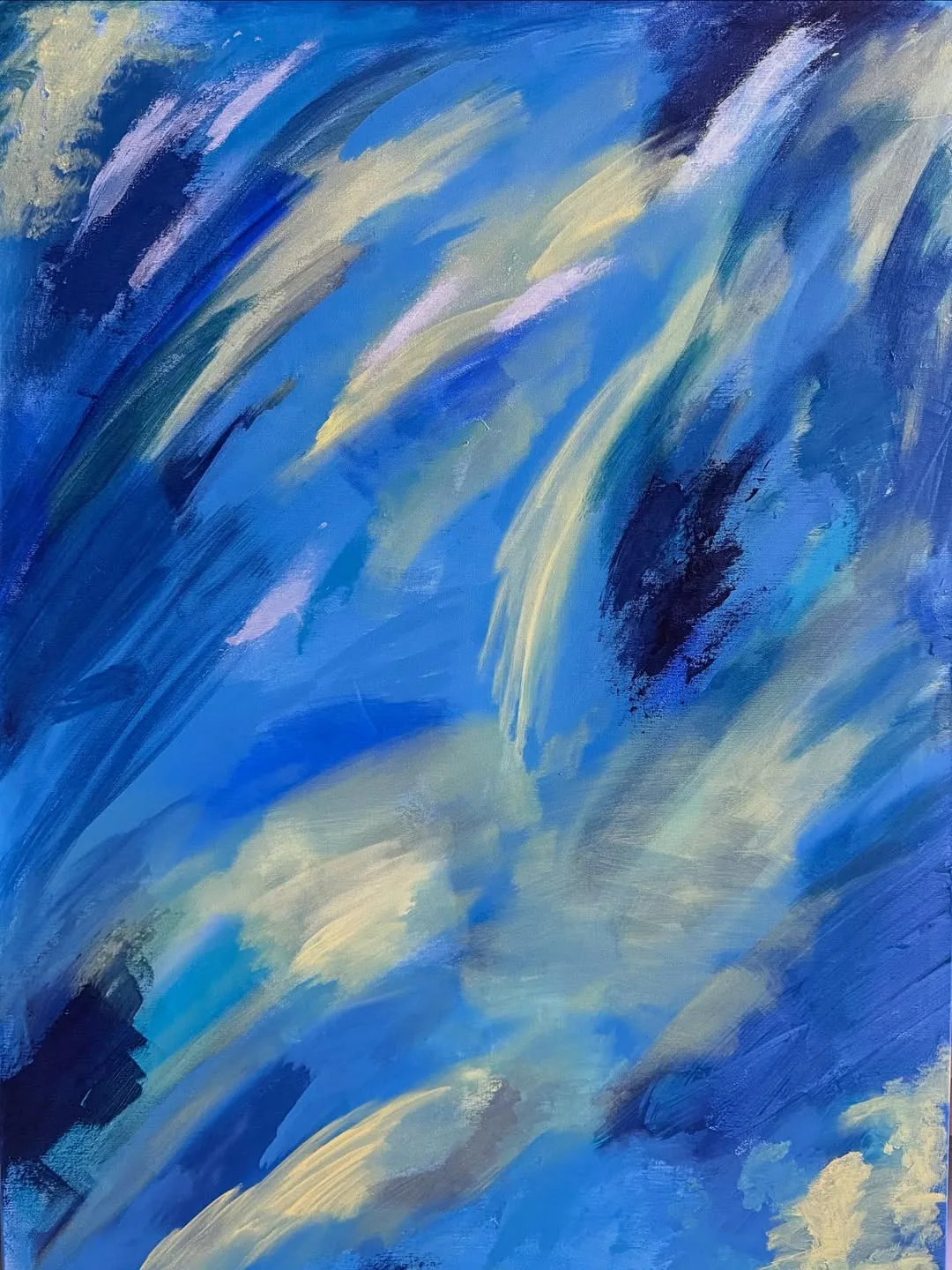


What cold does to a dry acrylic film
Acrylic paint dries into a flexible plastic film, and that flexibility depends on temperature. The Canadian Conservation Institute (CCI) table on incorrect temperature says artists' acrylic paints, leathery and tough at room temperature, enter their glassy phase below 5°C, where acrylic paintings become more vulnerable to shocks and blows. CCI places the ductile-to-brittle transition of acrylic paint at −40°C, and notes that the change comes sooner and harder in acrylic paintings than in oils.
Liquitex, in its guide to shipping a painting, uses a warmer figure: at 44°F the set film "can become brittle like glass" and may crack if disturbed. The two numbers come from different documents and are not one shared limit. Stephen Hackney, retired head of conservation science at Tate, writes in the Getty's Conserving Canvas (2023) that cracking of acrylic paintings at very low temperatures first surprised conservators, until the idea of a glass transition temperature explained it.

Where the cold reaches the painting in transit
In winter, the cold reaches a painting mainly inside the vehicle. CCI warns that truck interiors in winter fall well below its "too low" values for acrylic paintings, and that even a brief trip can leave a lightly wrapped painting much more brittle than the people carrying it expect. Its advice is to insulate artworks in transit, in the crate or at least with blankets for a short carry outdoors.
Museums Galleries Scotland, in its guidance on caring for paintings, asks for heated vans in cold weather, because sub-zero temperatures can damage acrylic paints, and for paintings to be raised off the van floor to absorb vibration. For a private buyer this becomes two questions for the shipping quote: which carrier handles the last leg, and whether the painting waits in an unheated depot.
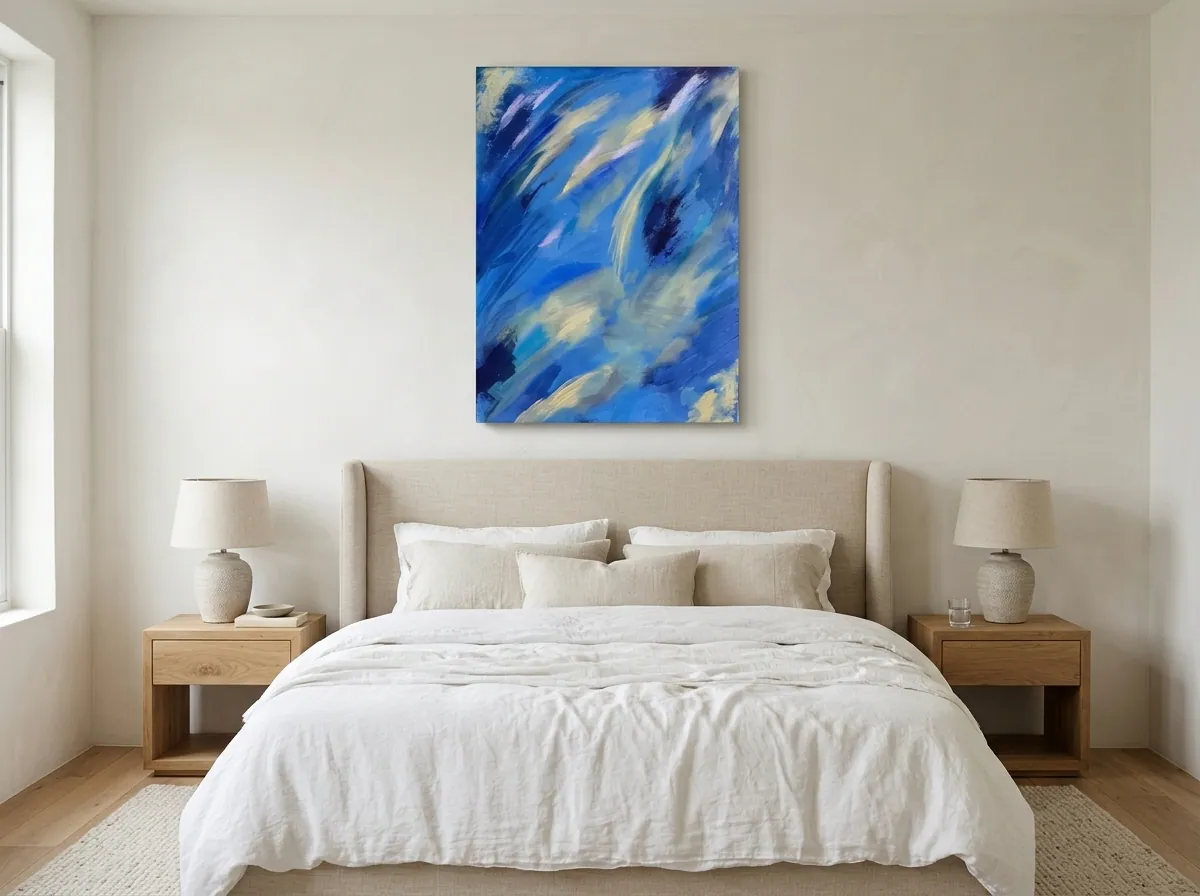
When the box arrives on a cold day
Bring the package indoors and leave it closed. Museums apply the same patience at a larger scale: a 2009 Hammer Museum blog post describes keeping a painting in its crate for a minimum of 24 hours after arrival so it can adjust to the new surroundings. A domestic parcel is lighter than a museum crate, and none of these sources gives a time for it, so the safe reading is to wait until the box feels like the room.
Then open it on a table. Liquitex tells shippers not to roll, fold or stack acrylic work, and to keep surfaces from touching or flexing while the paint may be brittle; the same applies when you unwrap. Lift by the stretcher at the sides and never press the face. If anything looks wrong, the studio's returns page asks for notice within 48 hours of delivery, with photographs of the work and of the packaging.

Before you acquire
Size first. Vibrant Awakening is 100 × 150 cm, acrylic on canvas, 2025; Celestial Drift is 70 × 100 cm, also acrylic on canvas, 2025; Crossing Currents is 80 × 120 cm in acrylic and texture paste. Measure the wall and the furniture below it before choosing between them, and leave the painting out of direct sun: Museums Galleries Scotland recommends no more than 200 lux on paintings and a room near 20°C.
Every acquisition comes directly from the artist with a signed Certificate of Authenticity carrying the Archive ID, a fiscal invoice or receipt, the Artwork Acquisition Agreement and care guidance. Professional packaging is included and transit insurance is available. International shipping is quoted per destination on request and paid by the buyer, together with any import duties; the terms are on the shipping page.

Available works
-
 Vibrant Awakening
100 x 150 cm (39 x 59 in) · R$ 5.900
-
 Vibrant Awakening
100 x 150 cm (39 x 59 in) · R$ 5.900
-
 Celestial Drift
70 x 100 cm (27 x 39 in) · R$ 3.700
-
 Celestial Drift
70 x 100 cm (27 x 39 in) · R$ 3.700
-
 Crossing Currents
80 x 120 cm (31 x 47 in) · R$ 4.400
-
 Crossing Currents
80 x 120 cm (31 x 47 in) · R$ 4.400
From the studio
The studio's view
Alyne Perfeito is a Brazilian visual artist, trained as an architect, based in Brasília. Vibrant Awakening and Celestial Drift, from the Luminous Rebirth series, are listed as acrylic on canvas; Crossing Currents adds texture paste in raised ridges, and Patina Field is pigment applied, scraped back and applied again. Ask for the detail photographs before delivery; with them in hand, the 48-hour check becomes a comparison: the surface you unpack against the one in the pictures, corner by corner, once the canvas is warm.
For a winter delivery, ask the studio for the carrier and the route when you request the quote, and plan to be home on the delivery day so the box does not sit in a cold hallway or porch.
Frequently asked
At what temperature does acrylic paint become brittle?
The sources give different figures. Liquitex says a set acrylic film can become brittle like glass at 44°F, about 7°C. The Canadian Conservation Institute says artists' acrylic paints enter a glassy phase below 5°C, when paintings become more vulnerable to shocks, and places the ductile-to-brittle transition at −40°C. Treat any temperature near or below freezing as a reason to avoid knocks and flexing.
Should I let the crate warm up before opening it?
Yes. Leave the package closed indoors until it reaches room temperature, then unwrap it on a flat surface. The Hammer Museum keeps exhibition loans crated for a minimum of 24 hours after arrival so they adjust to the new space. For a smaller parcel no source gives an exact time; wait until the box no longer feels cold to the touch.
Is a textured painting more at risk in the cold?
The thresholds published by Liquitex and the Canadian Conservation Institute apply to acrylic films in general and give no separate figure for thick texture. Crossing Currents carries raised ridges of texture paste, so the same handling applies with more attention: no pressure on the face, no flexing of the canvas, and lifting only by the stretcher bars at the sides.
Who decides how the painting travels in winter?
International shipping is quoted per destination when you ask, and the buyer pays for it along with any import duties. Professional packaging is included and transit insurance is available. You can ask the studio which carrier and route the quote uses, and arrange to be at home on delivery day so the parcel is brought inside straight away.
A painting delivered in winter
Ask the studio for detail photographs and a shipping quote to your address over WhatsApp.
Sources
- Canadian Conservation Institute (Stefan Michalski, Agent of Deterioration: Incorrect Temperature) — 2026-11-19
- Liquitex, How to Ship a Painting — 2026-11-19
- Museums Galleries Scotland, Caring for paintings and frames — 2026-11-19
- Hammer Museum, Climate Change (blog, 23 Sep 2009) — 2026-11-19
- Stephen Hackney, Understanding Structure, Changing Practice, in Conserving Canvas (Getty Conservation Institute, 2023) — 2026-11-19
- Perfeito Studio — 2026-11-19
- Perfeito Studio — 2026-11-19
- Perfeito Studio — 2026-11-19
Published on
Edited and reviewed by: Alyne Perfeito, architect and visual artist · CAU A1023098
Alyne Perfeito is a trained architect and visual artist with a studio in Brasília, Brazil. She edits and reviews the Journal from her painting practice. See Alyne's works →