I bought the original painting: can the artist still sell prints of it?
Yes, under US law, unless you agreed otherwise in writing. 17 U.S.C. 202 separates the canvas from the copyright, and selling the original does not convey the copyright. The right to reproduce the image in copies stays with the artist (17 U.S.C. 106). A no-prints promise has to be in the purchase agreement.
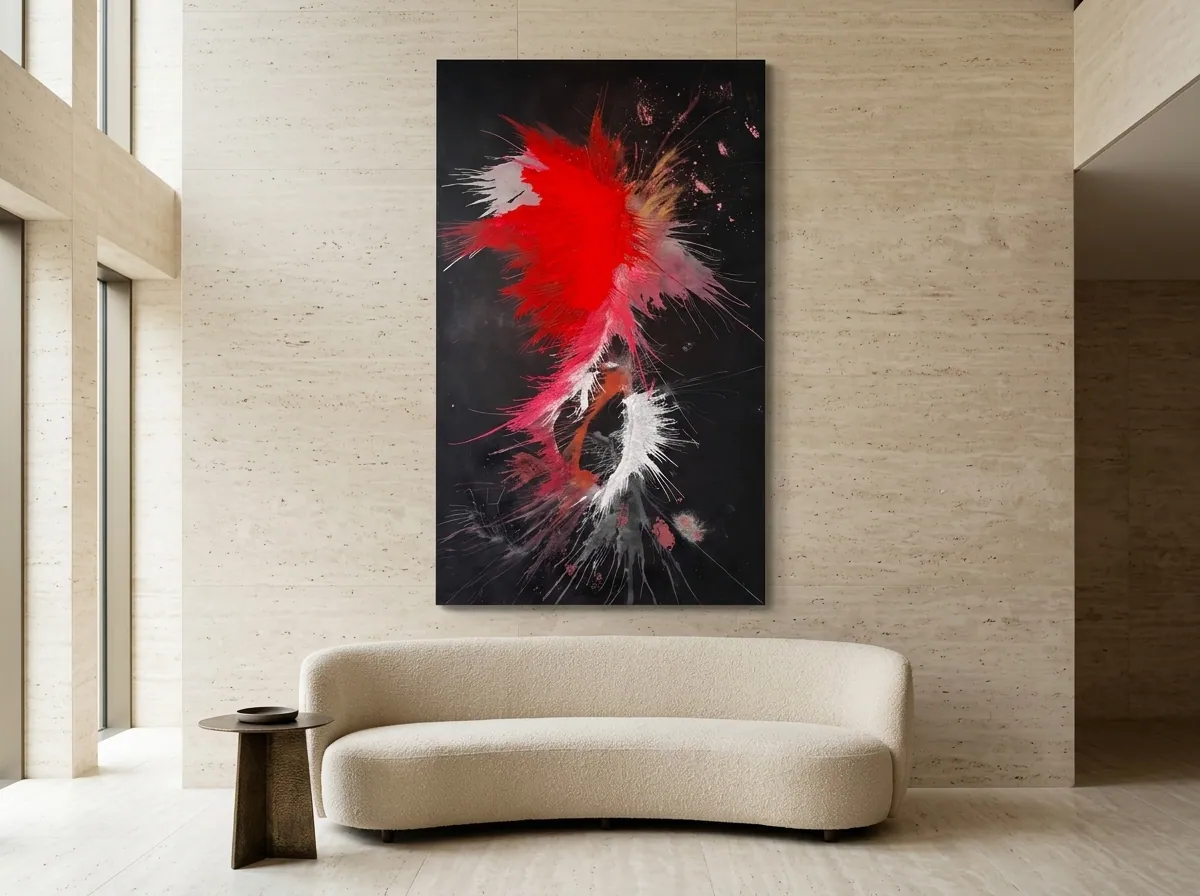


Two separate things changed hands, or only one did
When you pay for an original, you receive a physical object. In US law the image painted on it is a second piece of property. 17 U.S.C. 202 says ownership of a copyright, or of any of the exclusive rights in it, is distinct from ownership of the material object. Transferring the object, including the copy in which the work was first fixed, does not by itself convey any copyright. The reverse is also true: a copyright transfer does not hand over the canvas.
17 U.S.C. 106 lists what the copyright owner controls. Item 1 is reproducing the work in copies. Item 2 is preparing derivative works. Item 3 is distributing copies to the public by sale. A giclée edition, a poster run or a set of greeting cards falls under those three items. If the sale contract says nothing about them, they remain with the artist.
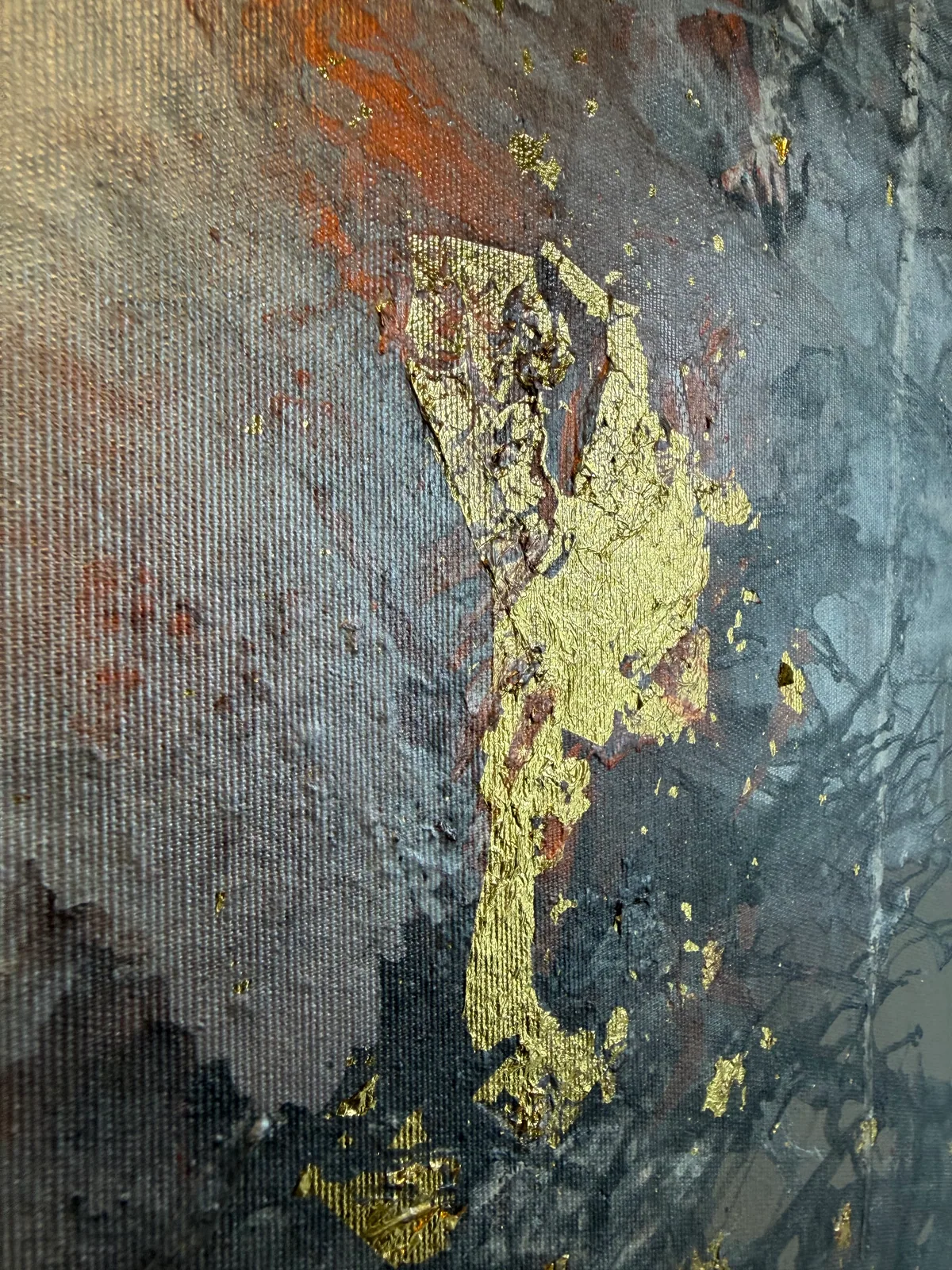
What a print cannot carry
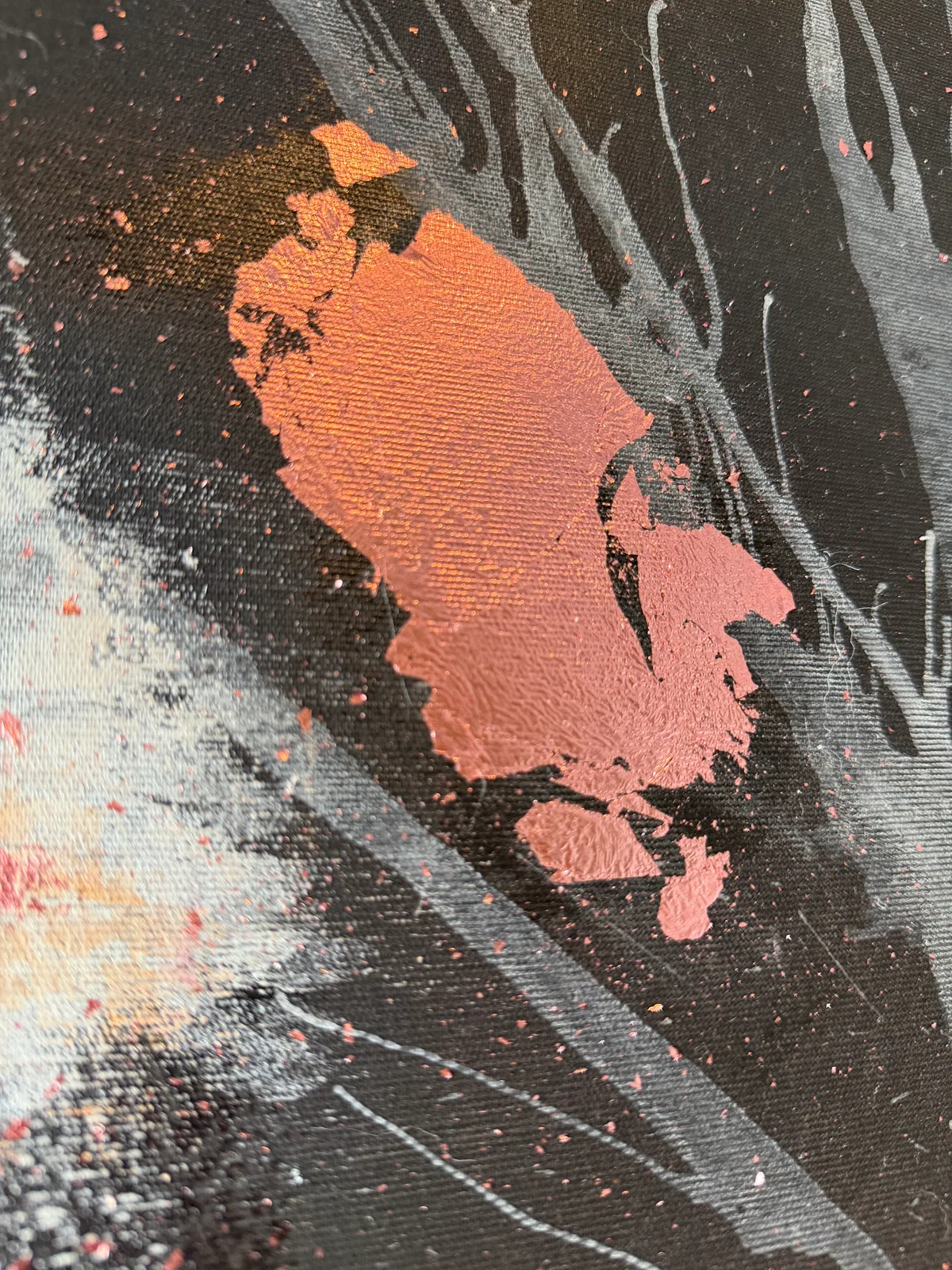
Origin of Light (Heart of Chaos, 2025, 60 × 80 cm) is acrylic with imitation gold leaf on canvas, sealed with spray sealant. The leaf was pressed by hand, so it wrinkles and catches light at angles a flat inkjet surface cannot hold. A print of this painting would show the colours of the gold. The folds you see in the detail photo above exist only on the canvas.
That is the practical answer many buyers reach. A print market can exist next to your painting without making a second original. Whether you want one to exist is a separate question, and it is the one the contract has to settle.
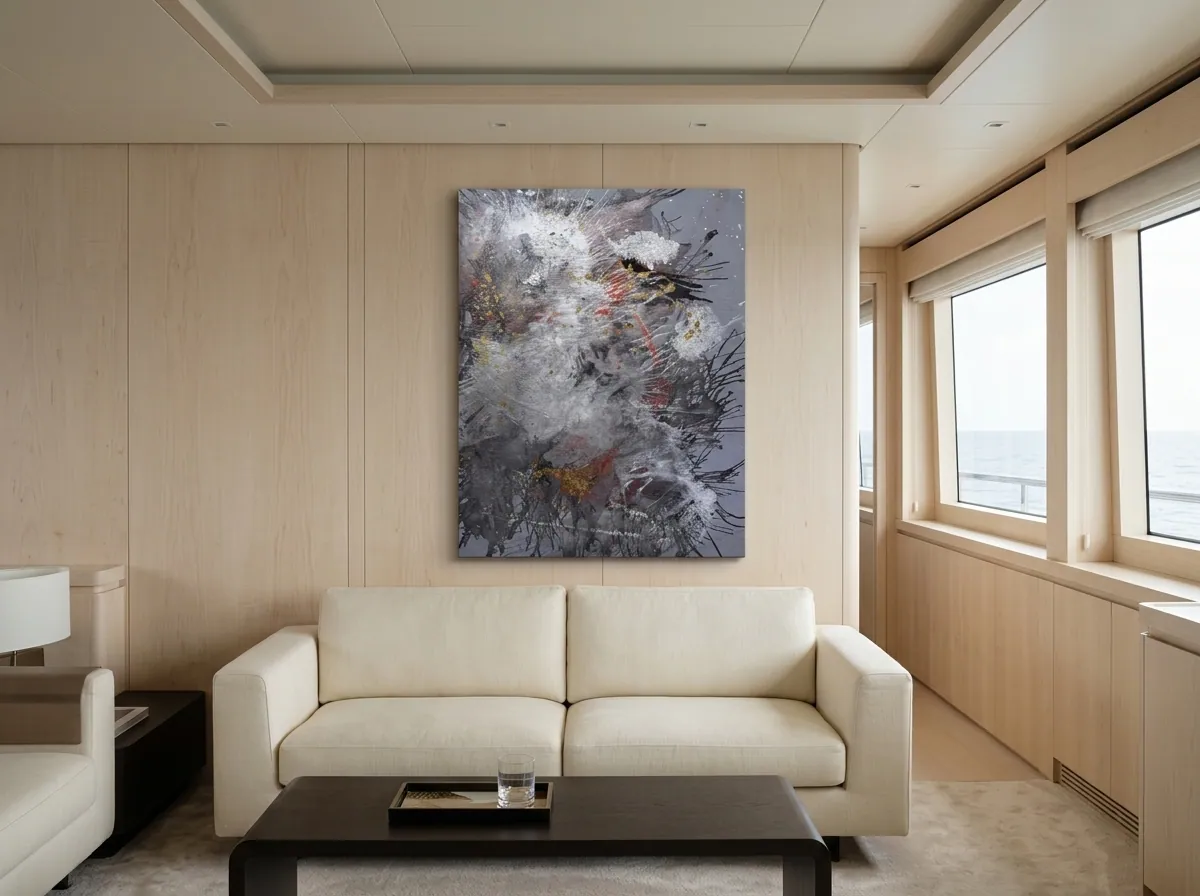
Photos of the painting you own
Owning the canvas does give you some rights. 17 U.S.C. 109(a) lets the owner of a lawfully made copy sell or give it away without asking the artist. 109(c) lets that owner display it publicly to viewers present where the copy is located. Photographing it and posting the photo online is a new copy plus a display that reaches people somewhere else, and 109(c) does not mention that. If you want to share pictures of your painting, ask for that permission in the same agreement.
We cover the display rule in more detail, with offices and clinics in mind, in Can a clinic, office or shop display a painting it bought without the artist's permission?
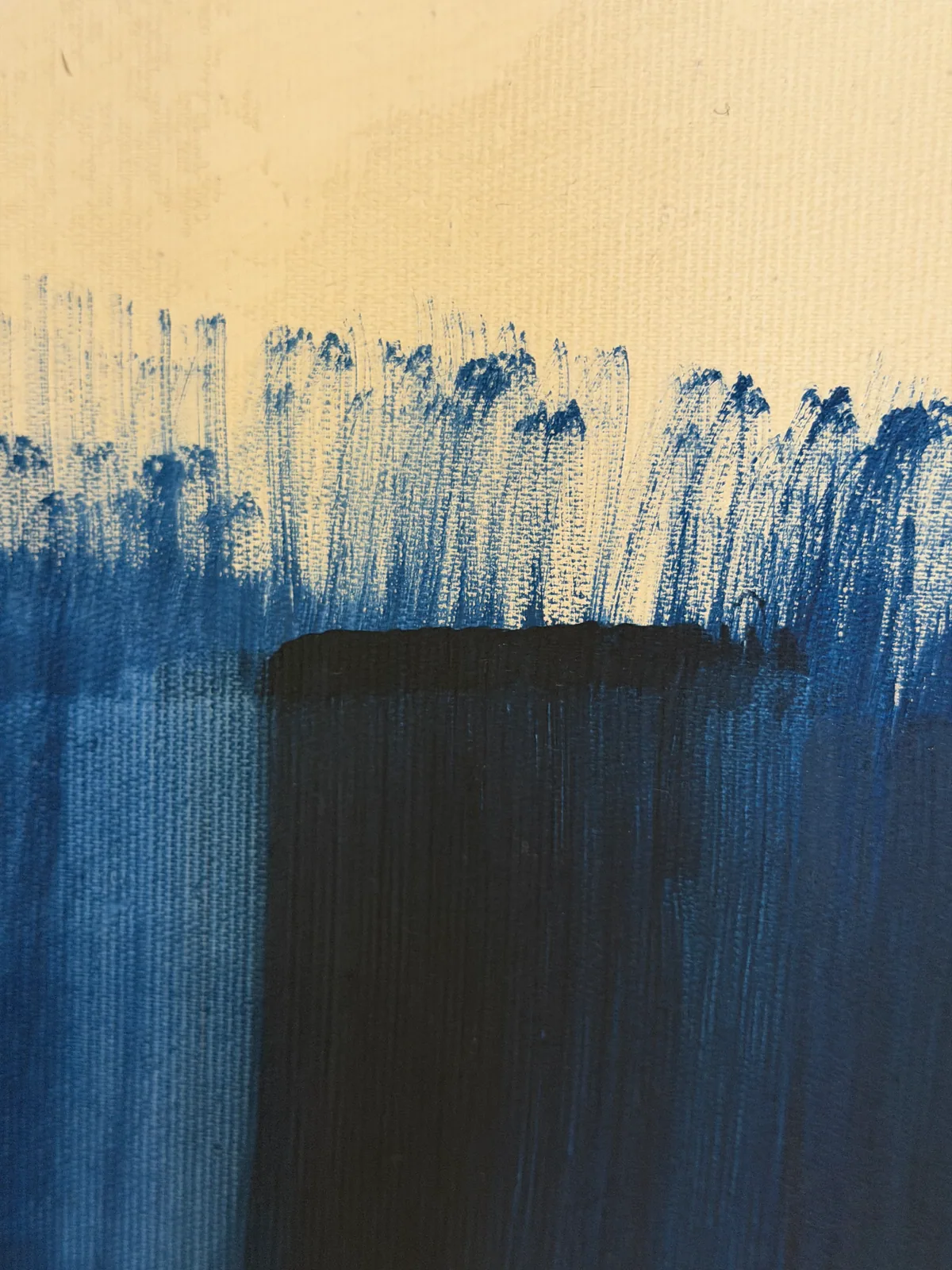
How to write the exclusivity clause
There are two ways to get what you want. You can buy the reproduction right itself, or the artist can promise not to use it. 17 U.S.C. 101 counts an assignment or an exclusive license of any one of the 106 rights as a transfer of copyright ownership, even when it is limited in time or place. 17 U.S.C. 204(a) says that kind of transfer is not valid unless it is in writing and signed by the owner of the rights or an authorized agent.
A usable clause names the painting by title and Archive ID. For Silent Interval that is AP-MAS-2026-003. It then lists what is excluded: prints and posters in any size, licensing the image to manufacturers, a second painting of the same composition. It states whether the promise has an end date. The artist may want to keep the right to photograph the work for a portfolio or catalogue, and that can be written in too. If you buy from an artist in another country, the contract may name that country's law, so check which law the agreement chooses. For anything beyond these basics, talk to a copyright lawyer in your state before you sign. This page is general information, not legal advice.
For collectors considering an acquisition
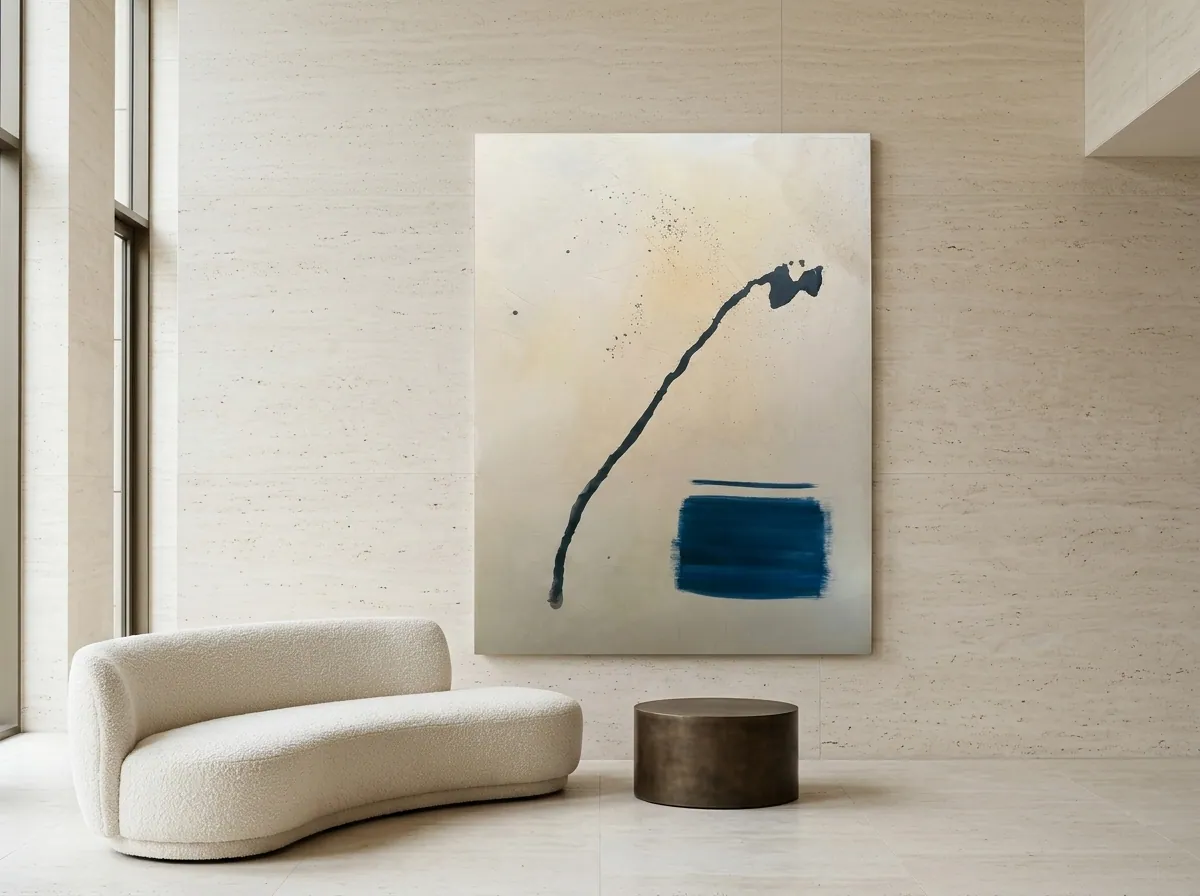
Silent Interval measures 120 × 160 cm and is mixed media with acrylic on canvas. It is 120 cm wide and 160 cm tall, so give it a clear wall and a few steps of distance to read the single line across it. Genesis of Flame stands 200 cm tall and suits a high ceiling. Origin of Light, at 60 × 80 cm, fits above a console or a dresser. Keep all three out of direct sun.
Every acquisition is direct from the artist and includes the original painting, a signed Certificate of Authenticity with the technical record, Archive ID and a QR code to the work's page, a fiscal invoice or receipt, an Artwork Acquisition Agreement covering transfer of ownership, copyright and image use, an artist dossier and care guidance. Ask the studio what the agreement says about reproduction for the painting you are considering. Shipping is quoted per destination and paid by the buyer, along with any import duties: see shipping. Browse every painting in the gallery.
Available works
-
 Silent Interval
120 x 160 cm (47.2 x 63 in) · R$ 7.900
-
 Silent Interval
120 x 160 cm (47.2 x 63 in) · R$ 7.900
-
 Origin of Light
60 x 80 cm (23.6 x 31.5 in) · R$ 3.300
-
 Origin of Light
60 x 80 cm (23.6 x 31.5 in) · R$ 3.300
-
 Genesis of Flame
120 x 200 cm (47 x 79 in) · R$ 8.800
-
 Genesis of Flame
120 x 200 cm (47 x 79 in) · R$ 8.800
From the studio
From the studio
Each painting leaves with its own Archive ID: AP-MAS-2026-003 for Silent Interval, AP-HOC-2025-002 for Origin of Light and AP-HOC-2025-001 for Genesis of Flame. If reproduction matters to you, write to the studio before you pay, quote the Archive ID and ask for the answer to be added to the Acquisition Agreement.
Frequently asked
Does buying an original painting transfer the copyright?
Not in the United States, unless there is a signed written transfer. 17 U.S.C. 202 says transferring the material object, including the original, does not convey the copyright, and 17 U.S.C. 204(a) requires a signed writing for a transfer of copyright ownership.
Can I stop the artist from making prints?
Only through the contract. The reproduction and distribution rights in 17 U.S.C. 106 stay with the artist after the sale. You can buy them, take an exclusive license (both need a signed writing under 204(a)), or get a written promise that no prints will be made.
Can I post photos of the painting I own?
17 U.S.C. 109(c) lets the owner display the painting to viewers present where it hangs. A photo posted online is a new copy shown elsewhere, which that subsection does not cover. Ask for image-use permission in the purchase agreement.
What should an exclusivity clause say?
The painting's title and Archive ID, the uses excluded (prints, posters, licensing, a repeat of the composition), whether there is an end date, and any use the artist keeps, such as portfolio photographs. Have a copyright lawyer review it if your situation is unusual.
Ask before you sign
Write to the studio about Silent Interval, Origin of Light or Genesis of Flame and ask what the Acquisition Agreement says about reproduction.
Sources
- Cornell Law School LII, 17 U.S.C. § 202 — 2026-11-26
- Cornell Law School LII, 17 U.S.C. § 106 — 2026-11-26
- Cornell Law School LII, 17 U.S.C. § 109 — 2026-11-26
- Cornell Law School LII, 17 U.S.C. § 101 — 2026-11-26
- Cornell Law School LII, 17 U.S.C. § 204 — 2026-11-26
- Perfeito Studio — 2026-11-26
- Perfeito Studio — 2026-11-26
- Perfeito Studio (src/data/obras.json) — 2026-11-26
Published on
Edited and reviewed by: Alyne Perfeito, architect and visual artist · CAU A1023098
Alyne Perfeito is a trained architect and visual artist with a studio in Brasília, Brazil. She edits and reviews the Journal from her painting practice. See Alyne's works →