Do you need a hygrometer for the art in your home?
A hygrometer helps only if its reading can be trusted. The Canadian Conservation Institute (CCI) calls low-cost hygrometers from hardware stores and desktop weather stations unreliable. Its care guide for paintings asks for relative humidity between 40% and 60% that does not change quickly. A meter that records, placed beside the painting, shows how the room behaves through the seasons.

Works cited in this text


What the reading is for
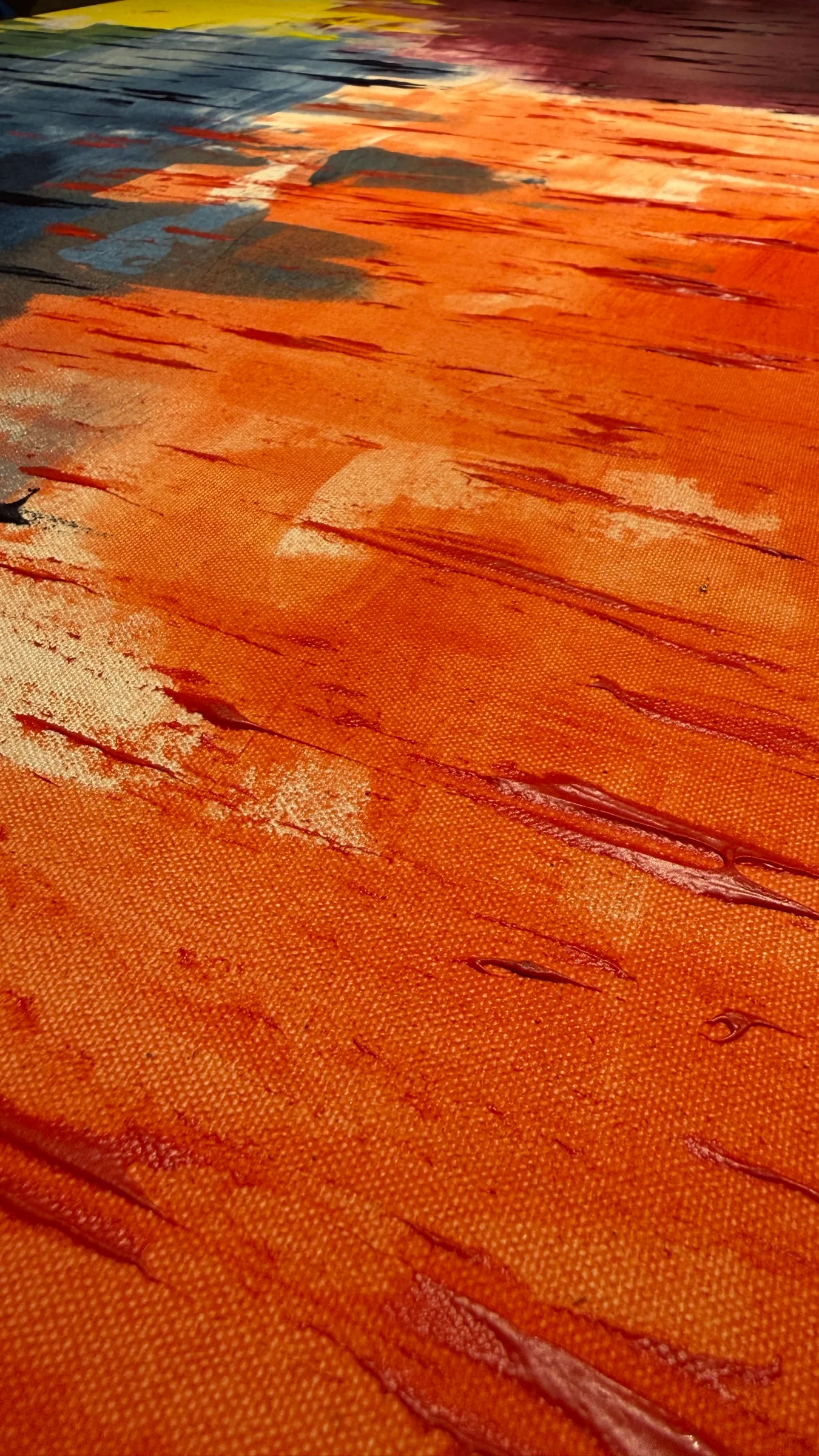
Birch Quartet (2026, acrylic on canvas, 65 × 140 cm) is painted in wide horizontal pulls of colour that break and leave the canvas weave showing, then crossed by short ridges of paint that lift at the ends. All of it sits on fabric stretched over a frame. The CCI notes that a painting needs a little space to expand and contract with changes in the air around it, and that paintings are especially prone to cracking in a dry environment, such as a heated house in a northern winter.
Its basic-care page puts the target in numbers: relative humidity (RH) and temperature fairly constant, not above 60% and not below 40%, with no quick changes. The CCI's humidity page adds that a fall to lower RH is a much higher risk to paintings than a rise. Without a meter you are guessing which side of that band your room sits on in January and in July.
Are cheap meters good enough?
The CCI is direct about it: low-cost hygrometers found in hardware stores, or desktop weather stations, are unreliable. Measuring RH precisely takes a better instrument plus calibration accessories, and the CCI describes routine calibration as time-consuming but feasible for the average user. Regional conservation organisations may also lend instruments that are already calibrated.
For the damp end of the scale there is a free check. Table salt deliquesces, taking up water until it turns liquid, at 75% RH, the figure the CCI uses to define damp. If salt in an open dish beside the painting turns wet while your meter shows a comfortable number, trust the salt.
Where to put it, and for how long
Put the sensor on the wall where the work hangs, close to it. The CCI asks for measurement focused on where the collection sits, and at several points in a space, because one corner can be damp while another is fine. Exterior walls run high in RH during cold weather. Heating pushes the other way: the CCI records indoor RH as low as 5% by December in parts of Canada when houses are heated to 21 °C without humidifying.
Then decide how you will read it. For long monitoring of a display case, the CCI names a simple dial hygrometer read daily as the most cost-effective method, and calls instruments that record RH over time the most useful. It recommends a full year of monitoring for a case. A house goes through the same seasons, so a logger left running from one winter to the next shows the pattern behind any single reading. Heating and cooling ducts, radiators and open doors or windows cause rapid changes, according to the CCI's page on paintings, so a sensor near one of them will swing more than the room as a whole.
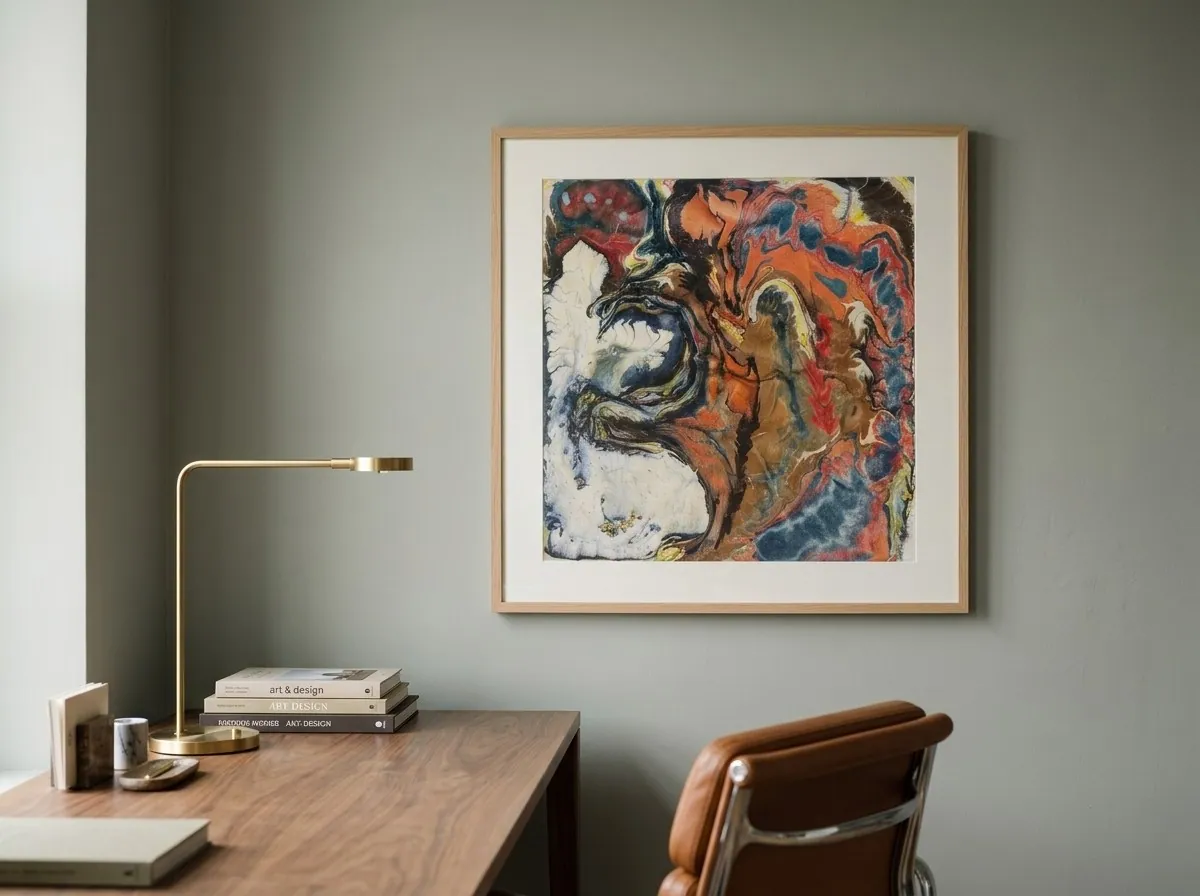
Framed works on paper
Ember Tide (2026) is watercolour and acrylic on paper, framed with a mat, 73 × 73 cm including the frame. Icon, the UK Institute of Conservation, gives an ideal of 16 °C to 19 °C and 45% to 60% RH for works on paper, and accepts that this may not be possible at home. There it advises a low and stable RH below 60%. It also warns that a radiator or spotlight dries the air out, and that the low temperature of an outside wall can cause condensation and mould inside a frame.
With a framed work, place the logger on the same wall, beside the frame. Choices about the glazing itself are covered in the guide on glass or acrylic glazing for a framed watercolour.
For those acquiring a work
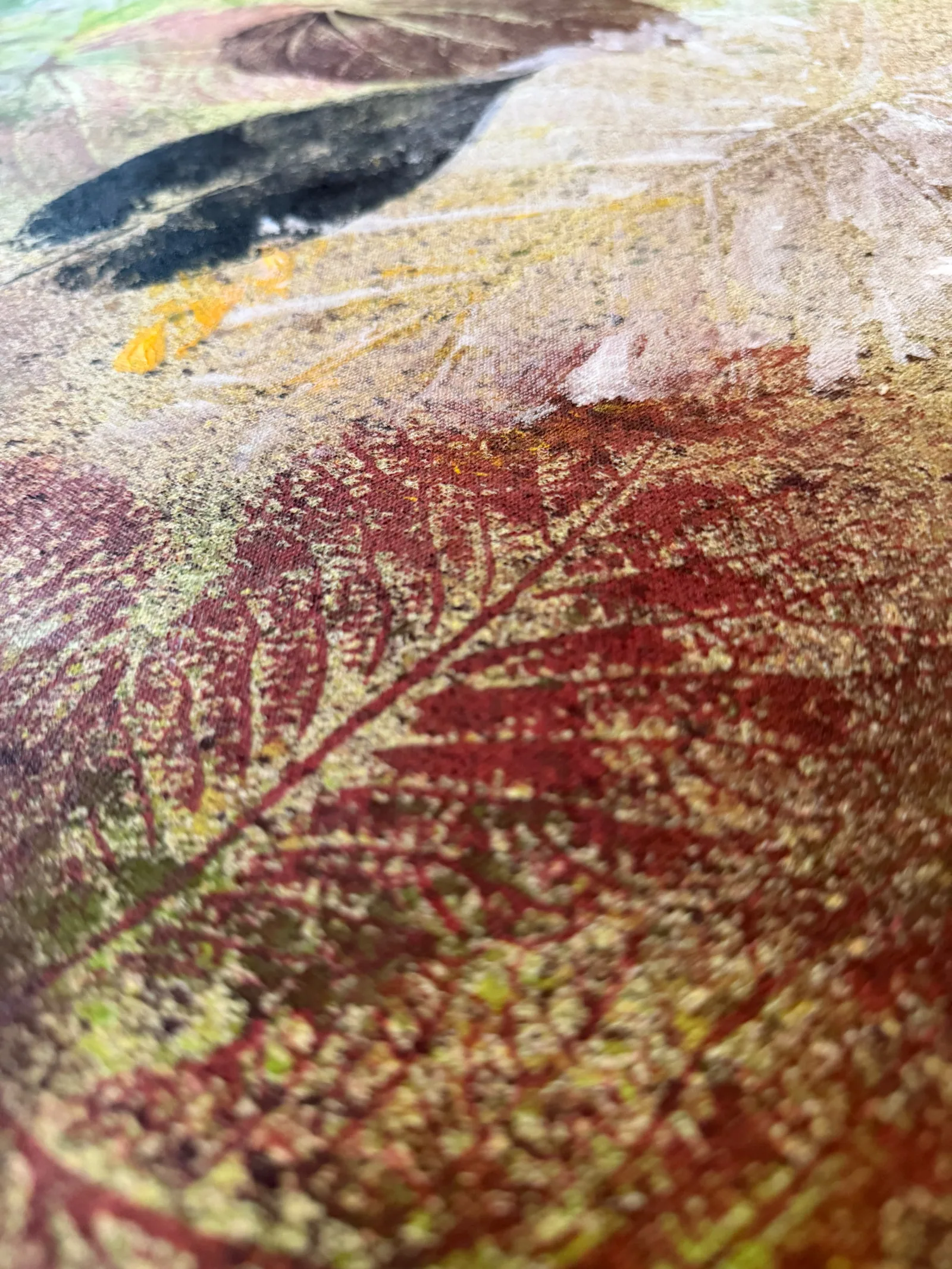
Birch Quartet is vertical, 65 × 140 cm (R$ 5,200); its page suggests a narrow wall or the space beside a window. Moss Herbarium and Autumn Herbarium are companion pieces of the same size, 78 × 100 cm, acrylic on canvas (R$ 4,000 each). Ember Tide measures 73 × 73 cm framed (R$ 3,300). Any conversion from BRL is approximate. Before you choose, leave the meter on the wall you have in mind for a few weeks, mark the outline of the work with masking tape and look at the light there at different hours.
Every acquisition comes directly from the artist with a signed Certificate of Authenticity carrying the Archive ID, a fiscal invoice or receipt, an Artwork Acquisition Agreement, an artist dossier and conservation and care guidance. Shipping is quoted per destination and paid by the buyer; professional packaging is included and transit insurance is available. See shipping and acquisition. If the readings point to a cold outside wall, the guide on hanging a painting on a cold exterior wall covers what conservators advise.
Available works
-
 Birch Quartet
65 x 140 cm (25.6 x 55.1 in) · R$ 5.200
-
 Birch Quartet
65 x 140 cm (25.6 x 55.1 in) · R$ 5.200
-
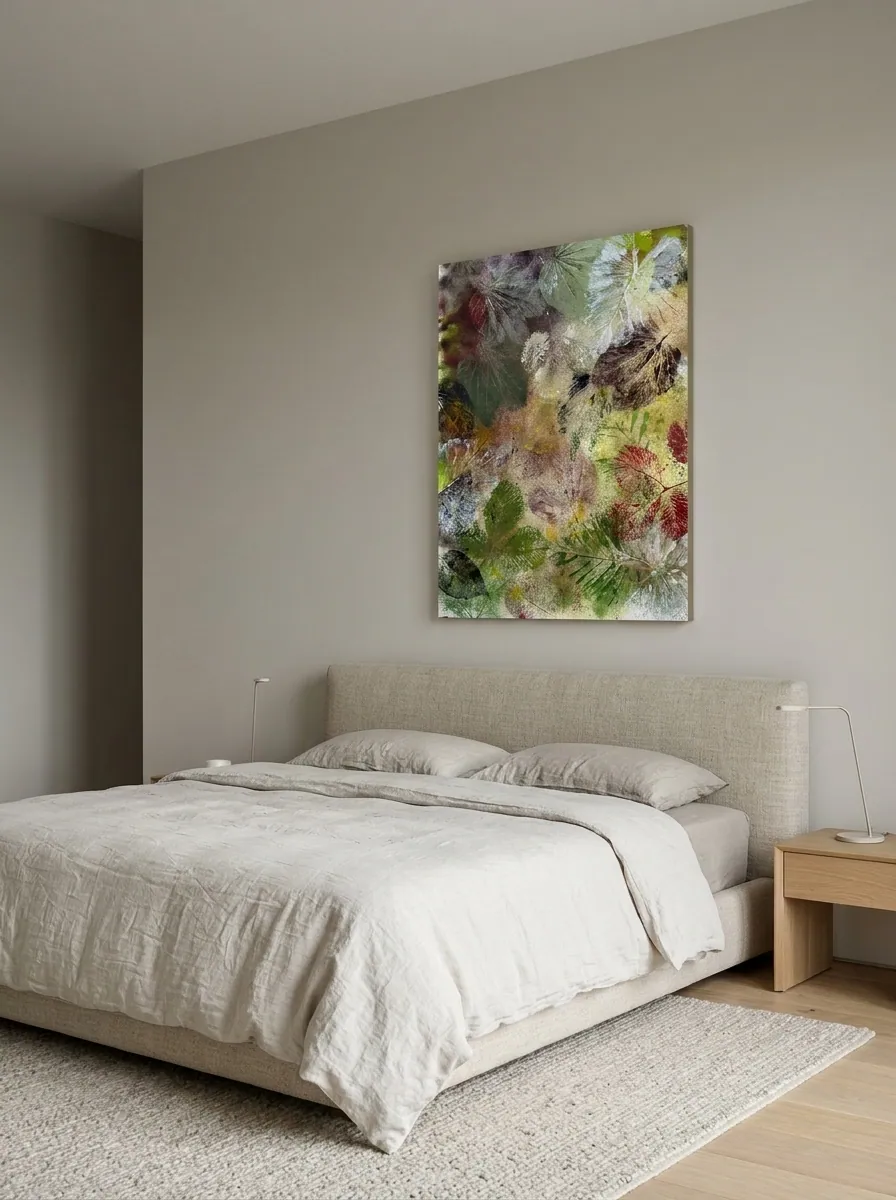 Moss Herbarium
78 x 100 cm (30.7 x 39.4 in) · R$ 4.000
-
 Moss Herbarium
78 x 100 cm (30.7 x 39.4 in) · R$ 4.000
-
 Autumn Herbarium
78 x 100 cm (30.7 x 39.4 in) · R$ 4.000
-
 Autumn Herbarium
78 x 100 cm (30.7 x 39.4 in) · R$ 4.000
From the studio
From the studio
Alyne Perfeito is a Brazilian visual artist, trained as an architect, based in Brasília. Birch Quartet (AP-LMR-2026-010), Moss Herbarium (AP-TAE-2026-009) and Autumn Herbarium (AP-TAE-2026-008) are acrylic on canvas; Ember Tide (AP-WAB-2026-004) is watercolour and acrylic on paper behind a mat, which is why this page treats paper on its own. If you already have readings for the wall you have in mind, send them with a photograph of the room when you ask about a work.
Frequently asked
What relative humidity is right for a canvas painting?
The Canadian Conservation Institute's care page for paintings asks for relative humidity and temperature that stay fairly constant, not above 60% and not below 40%, without quick changes. Its humidity page treats a drop to lower RH as a much higher risk to paintings than a rise, and defines damp as over 75% RH. A heated house in a northern winter is the example it gives of a dry environment where paintings crack.
Are cheap hygrometers reliable?
The CCI says low-cost hygrometers sold in hardware stores, and desktop weather stations, are unreliable. Precise measurement needs a better instrument and calibration accessories; routine calibration is time-consuming but within reach of the average user. Regional conservation organisations may lend calibrated instruments. For the damp end, table salt deliquesces at 75% RH, so salt that turns wet next to the painting is a warning whatever the meter says.
Where in the room should the hygrometer go?
On the wall where the painting hangs, close to it. The CCI asks for measurement where the collection sits and at several points in a space, since humidity can differ from one corner to another. Keep in mind that exterior walls run high in RH during cold weather, and that ducts, radiators and open doors or windows cause rapid changes, so a sensor next to one of them will read differently from the rest of the room.
Is a data logger worth it at home?
If you want to know what the wall does across the year, yes. The CCI calls instruments that record RH over time the most useful, and recommends a full year of monitoring for display cases. A dial hygrometer read every day is the cheaper method it names. One reading on one afternoon says little, because RH changes with heating, cooling and the seasons.
Measure the wall, then choose the work
Send the studio your readings and a photograph of the room, and ask about Birch Quartet, Moss Herbarium, Autumn Herbarium or Ember Tide, with a shipping quote to your address.
Sources
- Canadian Conservation Institute, Government of Canada — 2026-11-21
- Canadian Conservation Institute, Government of Canada — 2026-11-21
- Icon, the Institute of Conservation — 2026-11-21
- Perfeito Studio (src/data/obras.json) — 2026-11-21
- Perfeito Studio (src/data/studio-facts.json) — 2026-11-21
Published on
Edited and reviewed by: Alyne Perfeito, architect and visual artist · CAU A1023098
Alyne Perfeito is a trained architect and visual artist with a studio in Brasília, Brazil. She edits and reviews the Journal from her painting practice. See Alyne's works →