Does a new painting need to cure before it's shipped?
Yes: a new acrylic painting should be fully cured before it is packed, and dry to the touch does not mean cured. Golden Artist Colors explains that a skin forms first, while thick paint can stay wet inside for weeks or months. Packing too early risks marks, so a pause before shipping is sound practice.
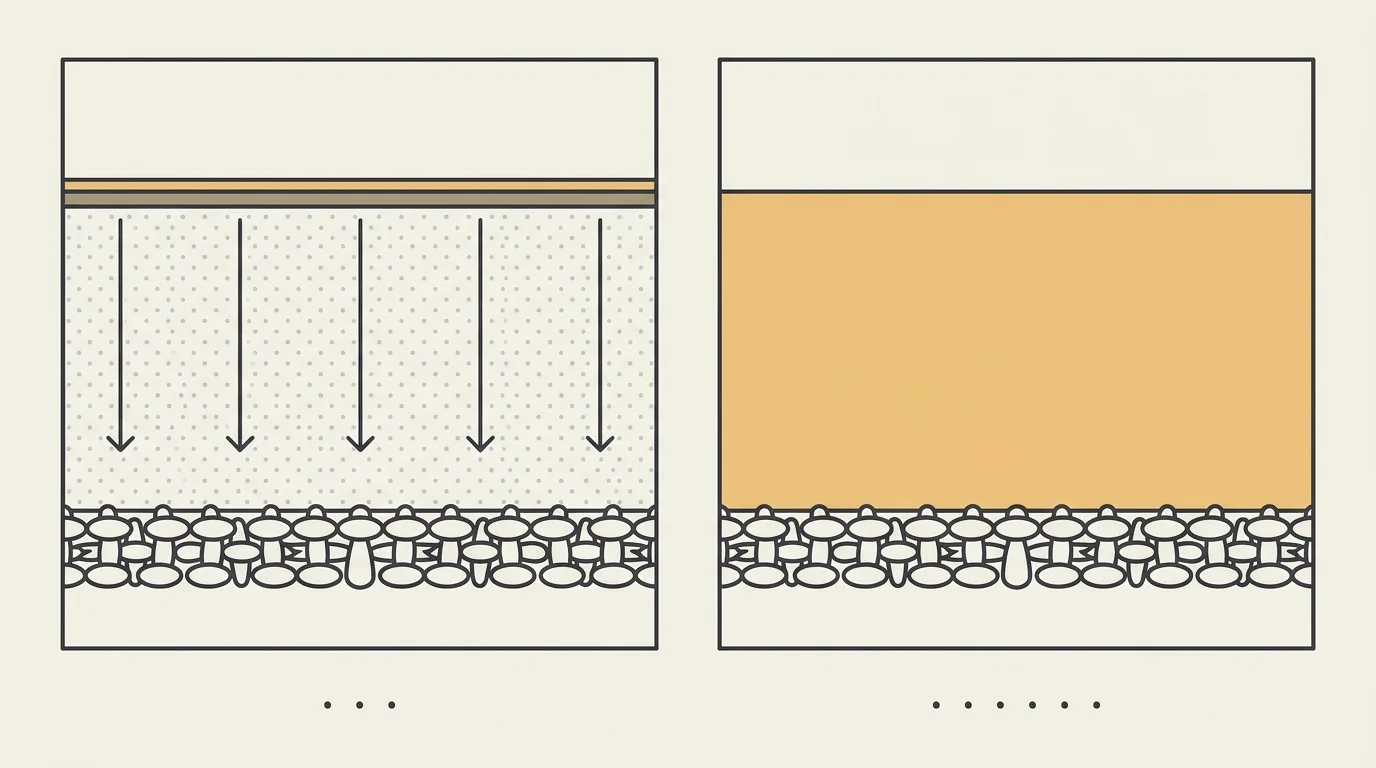
Dry to the touch is the first stage, not the last
Acrylic paint dries in two stages. The first, in Golden Artist Colors' technical notes, is the formation of a skin over the surface. The second is the time for the entire thickness of the film to be thoroughly dry. The same notes say that adhesion, hardness and clarity do not fully develop until the film is near complete dryness.
That is why a painting can feel finished to the hand and still be unfinished as a film. The difference between the two stages grows with thickness: very thin films can feel dry within seconds, while thick films may take a full day or more just to skin over.
Thick paint is where the wait gets long
On a smooth, thinly painted canvas the gap between the two stages is short. On a textured painting it is not. JUST PAINT, the technical publication from Golden Artist Colors, notes that thickly applied paint films can take weeks or months to reach the state of a thin one, and that a thick film can have several zones at different stages of drying. Golden's technical notes add that a skin can look dry while the paint in the centre is still wet, and that films of a quarter of an inch or more take months, even years, to dry completely.
A heavy, raised texture can therefore look settled on the surface long before it is settled through its depth. Surface appearance is a poor guide; the thickness of the paint is the better one.
Why packing and rolling too early is a problem
JUST PAINT, Golden's technical publication, calls the early stage a bad time to pack up or roll a painting for transportation, because the acrylics are very fragile at that point. The technical notes go further: a painting should not be put into any closed-in storage environment until fully dry, should not be rolled or disturbed excessively during the transitional period, and should have nothing other than air touching the paint surface. They name glassine, paper, bubble wrap and other plastic as materials that may stick to the paint and cause ferrotyping, the transfer of a texture onto the paint surface.
For acrylic works, this is the reason a seller may ask for some days before dispatch. It is manufacturer guidance written for painters, and the right interval depends on the paint and its thickness, so the useful question for a buyer is not a number but whether the seller has allowed the work to cure before it is wrapped.
Warmth, humidity and the speed of curing
Conditions change the pace. Golden's notes put the ideal at roughly 70 to 85 degrees Fahrenheit with relative humidity under 75 percent. Humidity above 75 percent slows the evaporation of water from the surface, and below 49 degrees Fahrenheit (9 degrees Celsius) the polymer solids cannot coalesce properly into a continuous film. JUST PAINT adds that higher temperatures and more air flow tend to drive off moisture, while higher humidity makes the film hold on to it.
In practice, a painting curing in a warm, dry, ventilated room finishes sooner than one kept in a damp or cold space.
Varnish has its own waiting period
Curing also governs varnish. For thin acrylic layers, Golden recommends waiting a day or two before an isolation layer and then another two days to a week before varnishing. For thick impasto it advises waiting a week or two before applying the isolating layer or varnish. Golden notes that excessive humidity or cool temperature can cause bloom, a whiteness or opacity resulting from moisture trapped between the varnish and paint layers, and advises letting varnish cure several days before packing or transporting art.
So the clock can run twice: once for the paint, and again for any varnish on top of it.
If a painting arrives soft or tacky
Golden's technical notes say a cured film should not feel cool, excessively soft or tacky, and that these symptoms indicate an uncured acrylic film. If a painting arrives like that, avoid pressing, stacking or re-wrapping anything against the surface, since the same notes warn against anything other than air touching it. Photograph the surface and the packaging as they are and write to the seller before doing anything else. Our guide to what to do if a painting arrives damaged covers the documentation that helps.
From the studio
The studio's view: ask about the surface before it travels
The studio does not publish a curing schedule for individual works, so the useful step is to ask. Fire of Devotion, acrylic on canvas, 100 x 150 cm, from the Heart of Chaos series, is a vertical field of saturated red, pink and gold with flecks of gold and copper; a buyer interested in a work like this can ask about its surface and delivery before it travels.
Delivery from the studio is quoted at up to 15 business days within Brazil, with professional packaging included. If you want to know more about the surface of a specific work before it ships, ask: detail photographs and video of a work are available on request.
Frequently asked
How long does acrylic take to dry fully?
It depends mostly on thickness. Golden Artist Colors notes that very thin films can feel dry within seconds, while thick films may take a full day or more just to form a skin. Thickly applied paint can take weeks or months to settle, and films a quarter of an inch or more take months, even years, to dry completely. Warmth, air flow and low humidity speed the process; high humidity slows it.
Can a wet-looking texture be packed?
A texture that looks wet or soft should not be packed yet. Golden's technical notes warn that a skin may be dry while the paint at the centre is still wet, and JUST PAINT, Golden's technical publication, calls the early period a bad time to pack up or roll a painting for transportation. Anything touching the surface other than air can mark it, so a seller should let it cure first.
Why do sellers ask for time before shipping?
Because acrylic is fragile until the full thickness of the film has dried. Golden says adhesion, hardness and clarity do not fully develop until the film is near complete dryness, and that plastic or paper in contact with the surface can cause ferrotyping, the transfer of a texture onto the paint. Waiting protects the surface during transit, and the time needed grows with the thickness of the paint. Ask the seller what delivery window they quote.
Does curing affect varnish?
Yes, in two ways. Golden recommends waiting a day or two before an isolation layer and then two days to a week before varnishing thin layers, and a week or two for thick impasto. Golden also warns that excessive humidity or cool temperature can trap moisture between varnish and paint and cause bloom, and advises letting varnish cure several days before packing or transporting art.
What if my painting arrives sticky?
Golden's technical notes say a cured acrylic film should not feel cool, excessively soft or tacky, and that these symptoms indicate an uncured film. Do not press, stack or wrap anything against the surface. Photograph the painting and its packaging as they arrived and contact the seller promptly, so they can advise on the next step for that specific work.
Questions about a work's surface or delivery?
Write to the studio about a specific painting. Professional packaging is included, and detail photographs and video are available on request.
Sources
- Golden Artist Colors, Drying - Technical Notes — 2026-10-17
- JUST PAINT (technical publication, Golden Artist Colors), Investigating the Drying Process of Acrylic Color and Gel Medium — 2026-10-17
- Golden Artist Colors, Varnish Application Guidelines — 2026-10-17
- Perfeito Studio (src/data/obras.json, src/data/studio-facts.json) — 2026-10-17
Published on