Hanging art in an office corridor: does the ADA 4-inch protrusion rule apply to framed paintings?
The US Access Board guide to the ADA Standards limits any wall-mounted object whose leading edge sits between 27 and 80 inches above the floor to 4 inches of projection. The guide does not name artwork. Treat a framed painting on a corridor wall as covered and measure how far it stands off the wall.


What the guide says about objects on walls
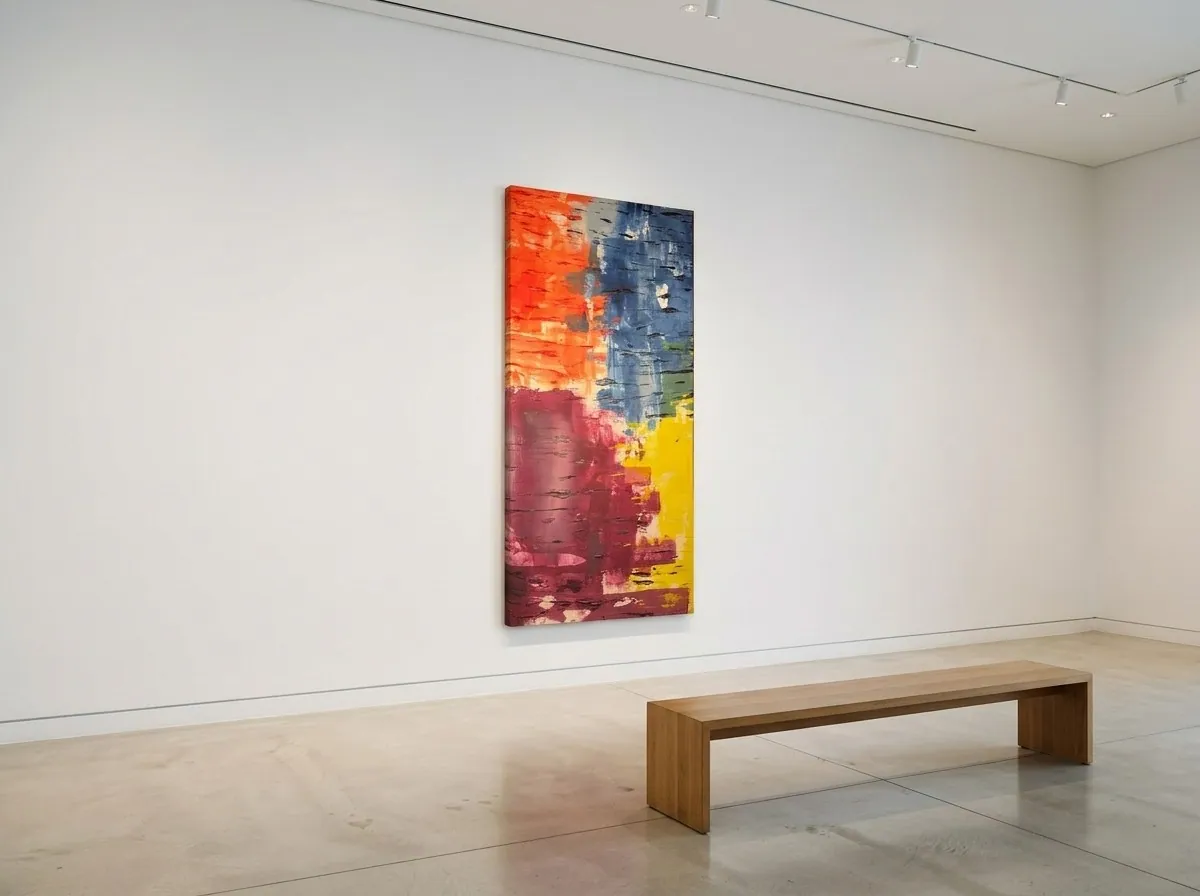
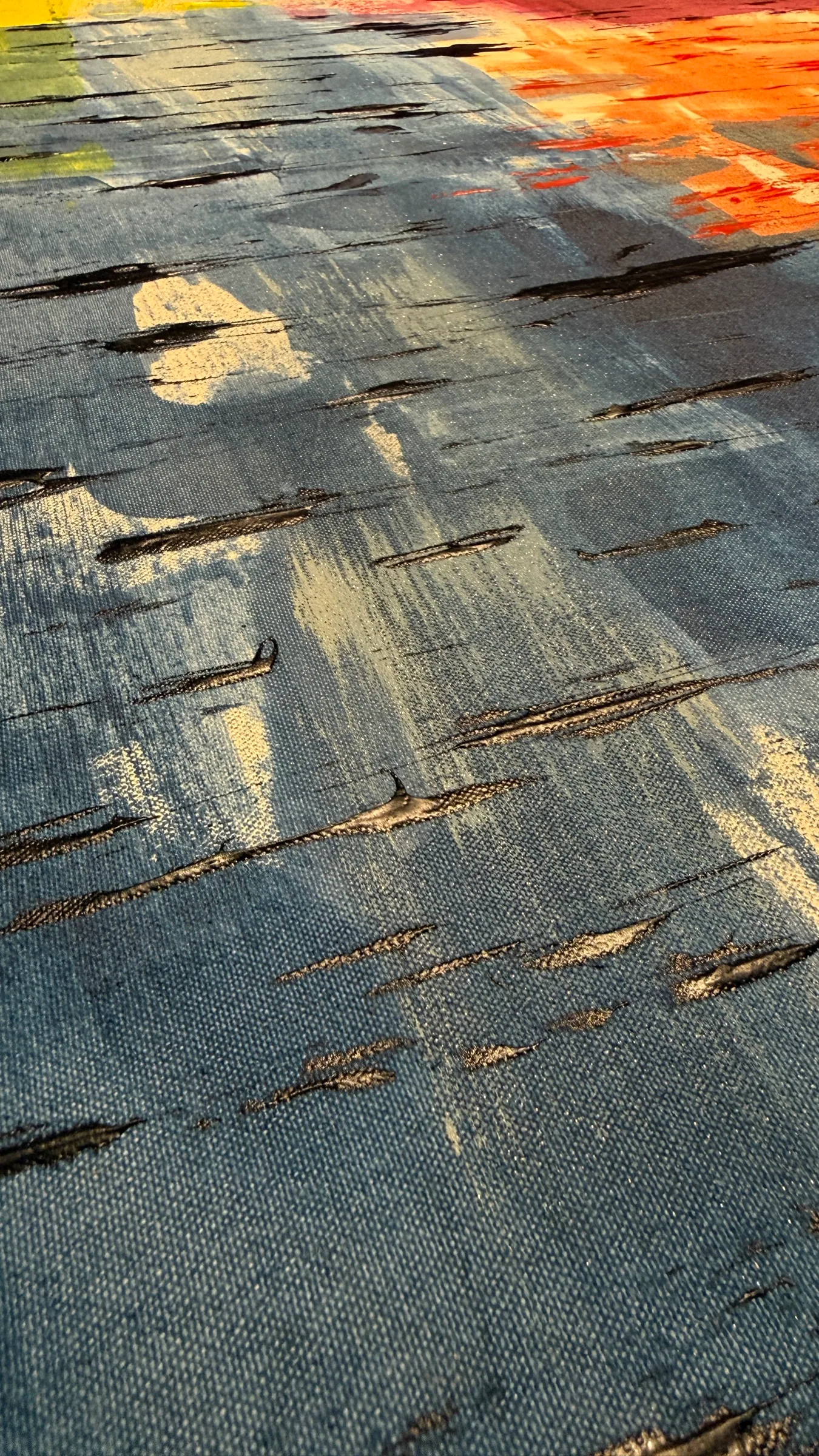
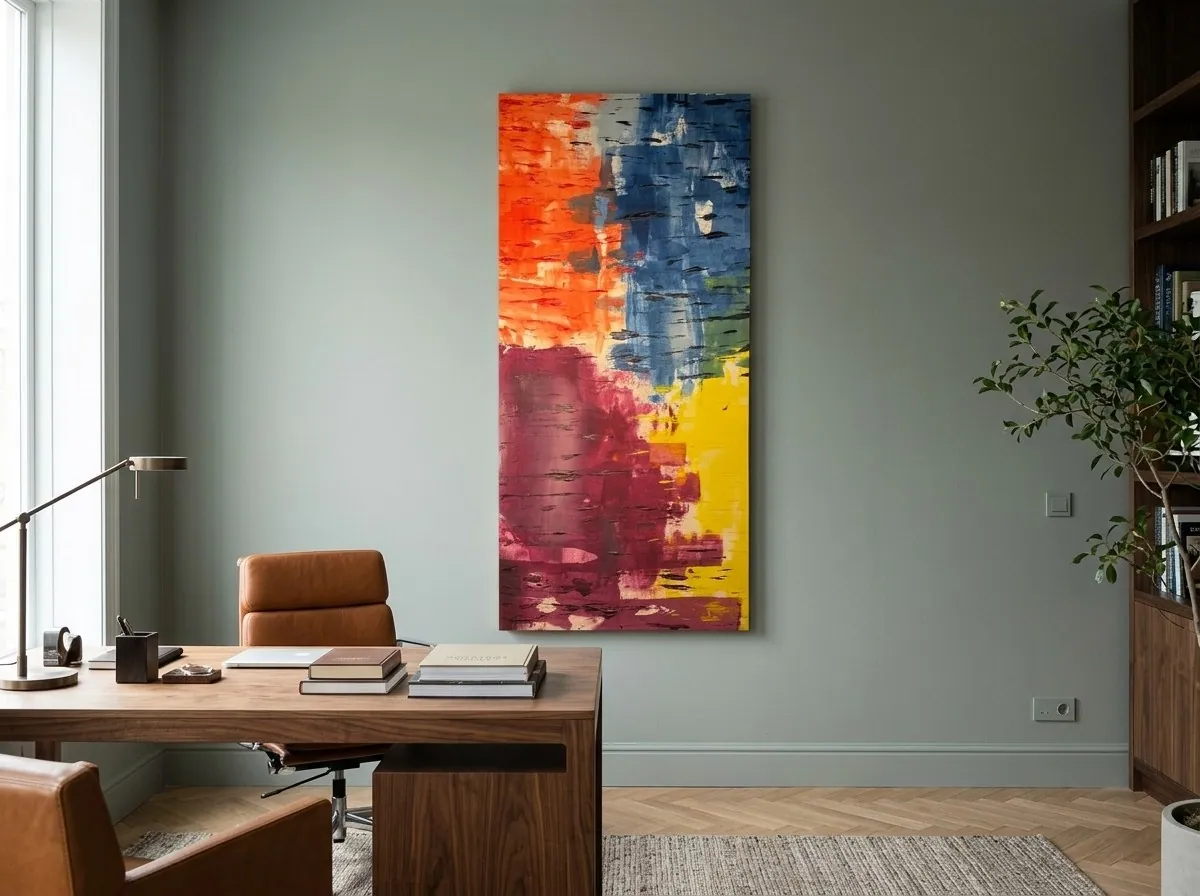
Birch Quartet is acrylic on canvas, 65 × 140 cm (25.6 × 55.1 in), with short raised ridges of paint laid across four fields of colour. Hung in a corridor, almost all of its height falls inside the band the ADA rule watches.
The Access Board explains section 307.2 of the ADA Standards this way: wall-mounted objects with leading edges above 27 inches and below 80 inches are limited to 4 inches of projection, or 4½ inches for handrails. Objects within cane sweep, at 27 inches high or lower, may protrude any amount. So may objects that leave at least 80 inches of headroom. The guide gives the reason in one line: such objects can pose hazards unless their projection is limited.
Corridors, waiting rooms and lobbies
The rule covers every circulation path in the building, accessible routes and other routes alike. The guide lists walks, hallways, courtyards, elevators, ramps, stairways and landings, and adds that the requirements apply equally to circulation paths in rooms and spaces.
For an office, a clinic or a hotel, that reaches past the corridor itself. The wall beside the path through a waiting room counts. So does a lobby wall next to the route from the door to the reception desk. Whether a wall behind a sofa or a desk lies on a circulation path is a call for the building's architect.
The guide also asks for at least 80 inches of headroom along circulation paths, with 78 inches allowed at doors and doorways.
How to measure a painting against 4 inches
Measure from the wall surface to the most forward point of the hung work. That point is the front of the frame on a framed piece, or the painted face on a canvas with no frame. Add any spacer, cleat or bumper that holds the back off the wall.
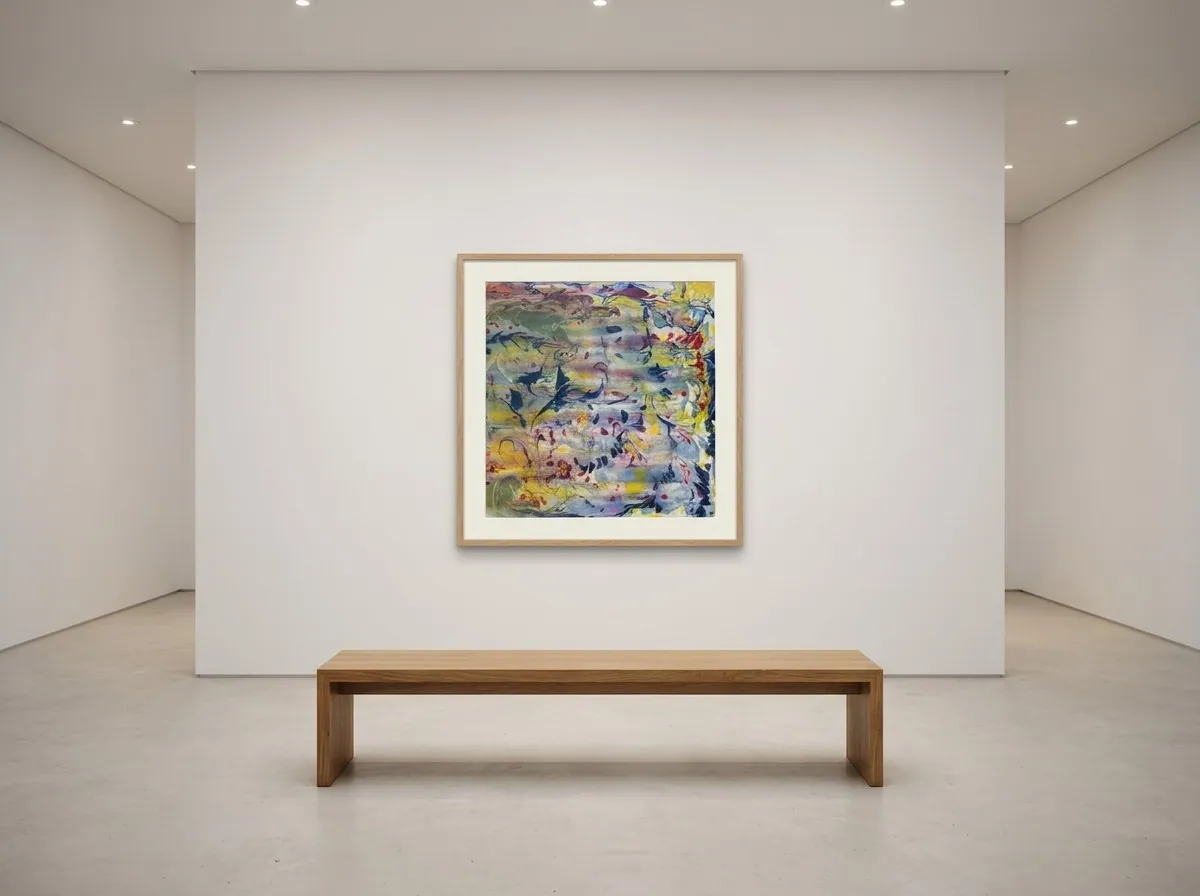
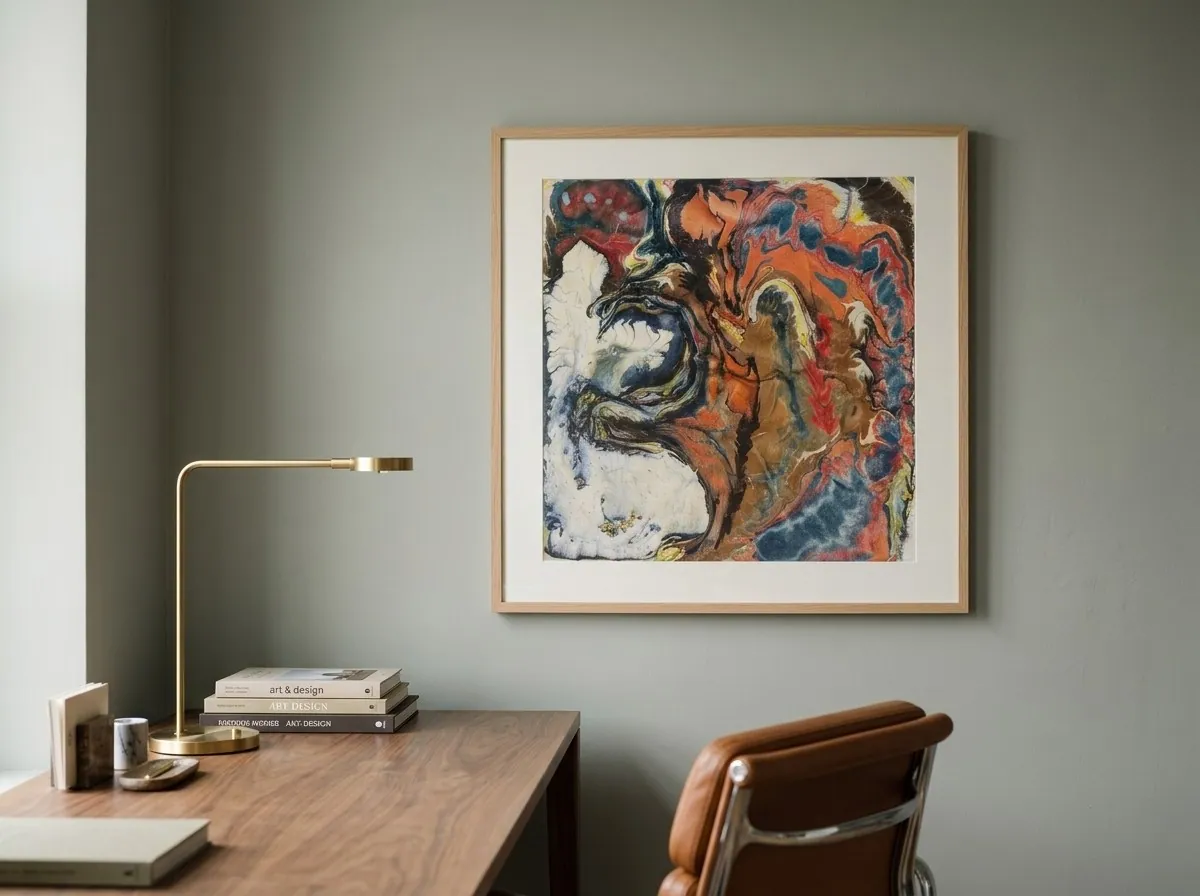
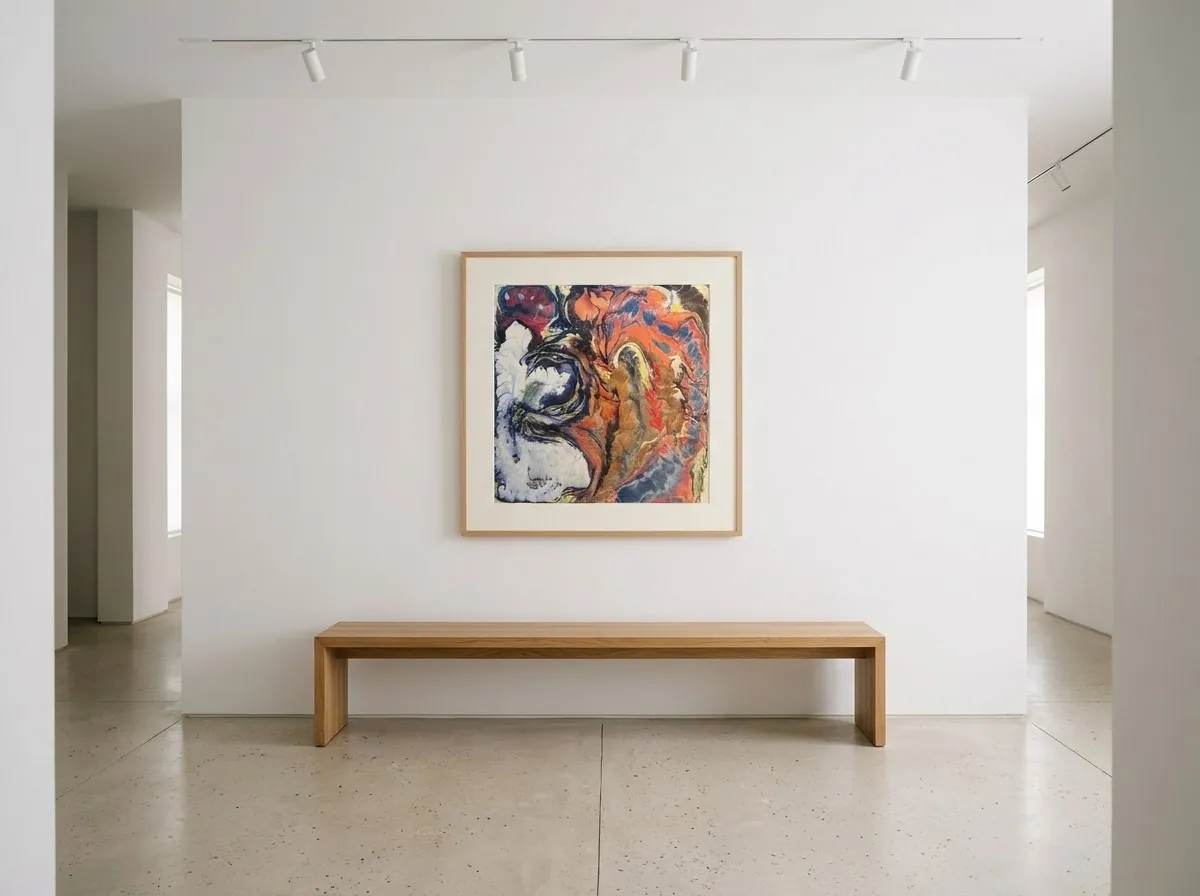
Then check the heights. 27 inches is about 68.6 cm and 80 inches is about 203.2 cm. A work of 140 cm (55.1 in) such as Birch Quartet, centred at about 150 cm, runs from roughly 80 cm to 220 cm: its lower edge sits inside the band and its top rises above 80 inches, so the leading edge to measure is the lower one. Petal Current and Ember Tide are 73 × 73 cm (28.7 × 28.7 in), and on these two the measurement includes the frame.
The catalogue sheet of each work does not give the depth of the frame or of the stretcher. Ask the studio for that number before you plan the wall.
When a work stands off the wall more than 4 inches
The guide names two ways to keep a deeper object compliant. It can sit in an alcove, recessed so that it no longer projects into the path. Or side partitions or wing walls with a bottom edge no higher than 27 inches can be built beside it, which a cane will find. Placing a painting with its lower edge at 27 inches or less, or entirely above 80 inches, also takes it out of the limit, though few paintings are hung that way.
A painting on an easel or a stand in the path is a different case. The guide limits objects on posts or pylons, with leading edges between 27 and 80 inches, to 12 inches of protrusion into circulation paths.
This page summarises a public guide and is not legal advice. In a commercial building the architect or an ADA consultant decides how the rule applies to a given wall.
If you are acquiring for an office or clinic
Birch Quartet (R$ 5,200) has a tall format of 65 × 140 cm that fits a narrow stretch of wall between doors. Petal Current and Ember Tide (R$ 3,300 each) are framed works on paper of the same size, 73 × 73 cm, and can hang as a pair along a corridor. Prices are in Brazilian reais; the conversion to your currency is approximate. Before buying, tape the outline of the work on the wall and walk past it at the speed people use that corridor. Look at it under the building's own lighting, by day and after hours.
Every acquisition comes direct from the artist with a signed Certificate of Authenticity carrying the Archive ID, a fiscal invoice or official receipt, and an Artwork Acquisition Agreement (see acquisition). The studio ships within Brazil and abroad. International shipping is quoted on request and paid by the buyer, as are import duties; professional packaging is included and transit insurance is available (see shipping). If the work will hang in a business, read whether a business may display a painting it bought. Other works are in the gallery.
Available works
-
 Birch Quartet
65 x 140 cm (25.6 x 55.1 in) · R$ 5.200
-
 Birch Quartet
65 x 140 cm (25.6 x 55.1 in) · R$ 5.200
-
 Petal Current
73 x 73 cm (28.7 x 28.7 in) · R$ 3.300
-
 Petal Current
73 x 73 cm (28.7 x 28.7 in) · R$ 3.300
-
 Ember Tide
73 x 73 cm (28.7 x 28.7 in) · R$ 3.300
-
 Ember Tide
73 x 73 cm (28.7 x 28.7 in) · R$ 3.300
From the studio
From the studio
The Water & Bloom works are painted on paper and leave the studio framed with a mat, and the size on their sheet already includes the frame. For a corridor, the figure to ask us for is the depth of that frame, from the side that touches the wall to its front edge. Birch Quartet is unframed canvas, so the stretcher depth is the number to check.
Frequently asked
Does a painting on a corridor wall count as a protruding object under the ADA?
The Access Board guide does not name artwork. Its limit applies to wall-mounted objects with leading edges between 27 and 80 inches above the floor, along any circulation path. A framed painting on a corridor wall fits that description, so measure it as one and confirm with the building's architect or ADA consultant.
How far can a frame stick out from the wall?
Up to 4 inches, about 10.2 cm, when its leading edge is between 27 and 80 inches above the floor. Handrails may project 4.5 inches. Measure from the wall to the most forward point, including any spacer behind the frame.
What heights does the 4-inch limit apply to?
Leading edges above 27 inches and below 80 inches. Objects at 27 inches or lower are within cane sweep and may protrude any amount, and objects at 80 inches or higher leave the required headroom.
How deep are the frames on these works?
The depth is not listed on the catalogue sheets. Ask the studio for the frame depth of Petal Current or Ember Tide, or the stretcher depth of Birch Quartet, before planning the wall.
Plan the wall before the work arrives
Ask the studio for the frame or stretcher depth of a work and for a shipping quote to your address.
Sources
- U.S. Access Board — 2026-11-26
- Perfeito Studio — 2026-11-26
- Perfeito Studio — 2026-11-26
- Perfeito Studio — 2026-11-26
Published on
Edited and reviewed by: Alyne Perfeito, architect and visual artist · CAU A1023098
Alyne Perfeito is a trained architect and visual artist with a studio in Brasília, Brazil. She edits and reviews the Journal from her painting practice. See Alyne's works →