Does Chile charge import duty or VAT on an original painting imported from Brazil?
Usually both, depending on how the shipment is entered. Chile's tariff lists hand-painted works under 9701.9100 with a general 6% ad valorem duty on CIF value, and 19% IVA is calculated on CIF plus duty. A separate regime applies to some post and courier purchases from foreign online platforms; rates and limits change, so confirm before shipping.
How does Chile classify an original painting?
Chile uses the Harmonized System, extended to eight digits in its national customs tariff. Original artworks fall in Chapter 97, "Objetos de arte o colección y antigüedades." Heading 97.01 covers "pinturas y dibujos, hechos totalmente a mano", paintings and drawings executed entirely by hand. Within it, the subheading for works not over 100 years old is 9701.9100, "Pinturas y dibujos". In the Section XXI sheet published on the Servicio Nacional de Aduanas website (the worksheet is labelled "Arancel Ad. 2022"), that line carries an ad valorem rate of 6, the same general rate shown for the other lines of the chapter.
Two chapter notes matter in practice. A painting's frame is classified together with the painting when its character and value relate to the work; a frame that does not is classified under its own rules (Note 6). Because heading 97.01 is defined by the work being executed entirely by hand, the description on the invoice, artist, medium, dimensions and the fact that the work is an original, is what the person filing the entry has to match against the tariff. The final classification is made by the declarant and the customs service, not by the seller.
What duty and IVA does Chile charge on imports?
The customs service states the general rule on its own pages: imports are subject to the derecho ad valorem (the customs duty) of 6% on the CIF value, and to IVA of 19% calculated on the CIF value plus the ad valorem duty. CIF is the cost of the goods, plus insurance, plus the freight to Chile. Because IVA is calculated on a base that already includes duty, the two do not simply add up as 6% plus 19%.
As an illustration of the mechanism only, not a quote: for a work with a CIF value of 100 monetary units and the general 6% rate, duty would be 6 and the IVA base 106, giving IVA of 20.14. That arithmetic applies only if the general rate is what applies to the shipment; the next section explains why it may not be.
One change matters for lower-value shipments. The customs service says that from 25 October 2025 the 19% IVA on goods bought from foreign online platforms and sent by post or courier, up to USD 500, is charged at the time of purchase by platforms registered with the tax authority (SII), the earlier USD 41 threshold was eliminated, and the ad valorem duty is not charged on import when the IVA was collected online. Above USD 500 the customs service states that IVA of 19% and the 6% customs duty both apply. The pages read describe purchases made through foreign online platforms; they do not say how a direct sale from an artist to a buyer in Chile is treated, so which regime applies to a given painting is something to confirm with the carrier or a customs agent. Values and limits in this regime can change, so check the customs service's current pages.
Does the Chile–Brazil trade agreement change the duty?
Chile and Mercosur, which includes Brazil, are parties to Economic Complementation Agreement No. 35 (ACE 35). The customs service says on its pages that for countries with which Chile has trade agreements, the ad valorem duty may be free or subject to a percentage reduction. In a published customs resolution (2007) on a Brazilian-origin chemical product, goods with a 100% preference under ACE 35 were admitted at 0% ad valorem, "afecto a IVA" (still subject to IVA), on presentation of a certificate of origin issued by an authorized body in Brazil.
That resolution concerns a different product and the preference level is set product by product. I did not find an official statement of the ACE 35 preference for subheading 9701.9100, so this page does not say that an original painting from Brazil enters duty-free. What the sources do support is narrower: a preference, where one exists, removes or reduces the duty and not the IVA, and it depends on origin documentation. Whether it applies to a specific painting is a question for the customs agent who prepares the declaration.
Who declares the painting and who pays?
In Chile an import is cleared through an import declaration validated by the customs service. The Tesorería General de la República handles payment of the customs duties: the importer can pay directly, or the customs agent (agente de aduanas) can pay once the declaration has been prepared and validated. For goods that arrive through the national postal operator, an older customs page (2011) describes Correos de Chile preparing the import form and the recipient paying duties and taxes at Correos offices; the customs service has since changed the treatment of post and courier shipments up to USD 500 (see above), so that older description may no longer apply.
Perfeito Studio ships internationally, quotes international shipping on request, and the buyer pays shipping and any import duties or taxes in the destination country. How the entry is prepared and what a broker does is described, in the US context, in the customs broker guide; for the route out of Brasília, see shipping original art internationally from Brazil. For the papers that travel with the painting, see invoice versus certificate of authenticity.
What to confirm before a painting ships to Chile
Rates and thresholds change, and the pages consulted here do not all show an edition date. Before shipping, the points worth settling with the carrier or a customs agent are: the tariff line used for the work, whether an ACE 35 preference is claimed and with which certificate of origin, the CIF value declared, and who will present the declaration at destination. The studio can supply the invoice and the technical record of the work; the filing itself belongs to the declarant in Chile.
This text is informational and is not tax or customs advice; confirm with the customs authority or a broker.
From the studio
What the studio records for a work that crosses a border
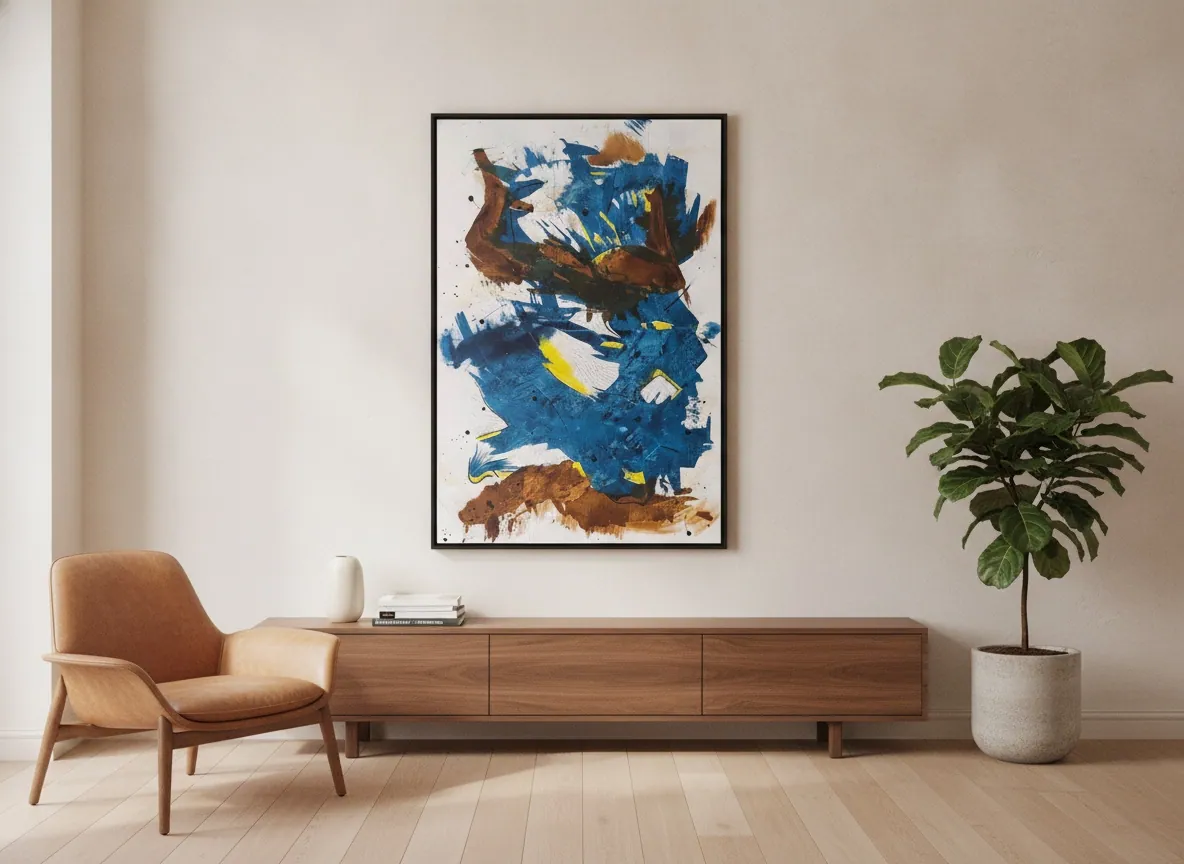
I paint Crossing Currents, from the Terra & Ether series, as an 80 x 120 cm mixed media on canvas with acrylic and texture paste, dated 2025 and catalogued as AP-TAE-2025-002. In the studio those are the facts written down for every painting: artist, medium, dimensions, year and Archive ID. They sit on the technical record that travels with the painting, so the person preparing a declaration has them in one place.
Every acquisition from the studio includes a fiscal invoice or official receipt and a signed Certificate of Authenticity carrying the full technical record. See Crossing Currents or the full catalogue.
Frequently asked
Does Chile charge IVA and import duty on an original painting imported from Brazil?
IVA of 19% applies to imports, calculated on the CIF value plus any ad valorem duty. The tariff's general ad valorem rate for paintings executed by hand (9701.9100) is 6%. Since 25 October 2025 the customs service describes a separate treatment for post and courier shipments up to USD 500 bought on foreign online platforms: IVA is collected at purchase and the ad valorem duty is not charged on import; above USD 500, IVA and the 6% duty both apply. A trade-agreement preference between Brazil and Chile can reduce or remove the duty but, in the customs resolution consulted, goods at 0% ad valorem were still subject to IVA. Rates and limits change. This is general information, not tax or customs advice.
Is an original painting treated differently from a print when it enters Chile?
Yes, in the tariff. Heading 97.01 covers paintings executed entirely by hand, and original engravings, prints and lithographs have their own heading, 97.02, with a stated definition of an original print. Because 97.01 requires the work to be executed entirely by hand, the invoice description of the work matters. The classification is made by the declarant and customs.
Who declares the painting to Aduanas Chile: the buyer, the seller or the carrier?
Declaration in Chile is made through an import declaration validated by the customs service, which the importer or a customs agent in Chile arranges; for post and courier shipments the process changed on 25 October 2025 (see the USD 500 note above), so confirm the current route with the carrier. Under the studio's terms the buyer bears import duties and taxes in the destination country.
What documents usually accompany a painting entering Chile?
The sources consulted point to the commercial invoice and, where a trade-agreement preference is claimed, a certificate of origin issued by an authorized body. Every acquisition from the studio comes with a fiscal invoice or official receipt and a signed Certificate of Authenticity with the technical record. Which documents a given shipment needs is for the customs agent or carrier to confirm.
Do I need a customs broker to receive a painting in Chile?
Not necessarily in every case: the customs service describes both the importer and the customs agent paying duties through the Tesorería, and post and courier shipments up to USD 500 follow the separate treatment described above. A customs agent is the usual way to prepare a declaration for a shipment that is not cleared by the postal operator. Confirm the route with the carrier or customs authority before shipping.
Buying from Chile?
Tell the studio which work you have in mind and where it is going, and ask for an international shipping quote.
Sources
- Servicio Nacional de Aduanas de Chile — 2026-10-08
- Servicio Nacional de Aduanas de Chile — 2026-10-08
- Servicio Nacional de Aduanas de Chile, Arancel Aduanero Vigente, Sección XXI (worksheet labelled Arancel Ad. 2022) — 2026-10-08
- Servicio Nacional de Aduanas de Chile — 2026-10-08
- ChileAtiende (Government of Chile) — 2026-10-08
- Servicio Nacional de Aduanas de Chile — 2026-10-08
- Servicio Nacional de Aduanas de Chile — 2026-10-08
- Servicio Nacional de Aduanas de Chile — 2026-10-08
Published on