Brazilian art in museum collections outside Brazil: what is documented and why it matters to buyers
Brazilian art is documented in museum collections outside Brazil through public records: artist, title, date, medium, dimensions, credit line and accession number. The Art Institute of Chicago and Tate publish such entries online. For a buyer, a record confirms attribution and context; it does not set or predict a price.
What a museum record actually states
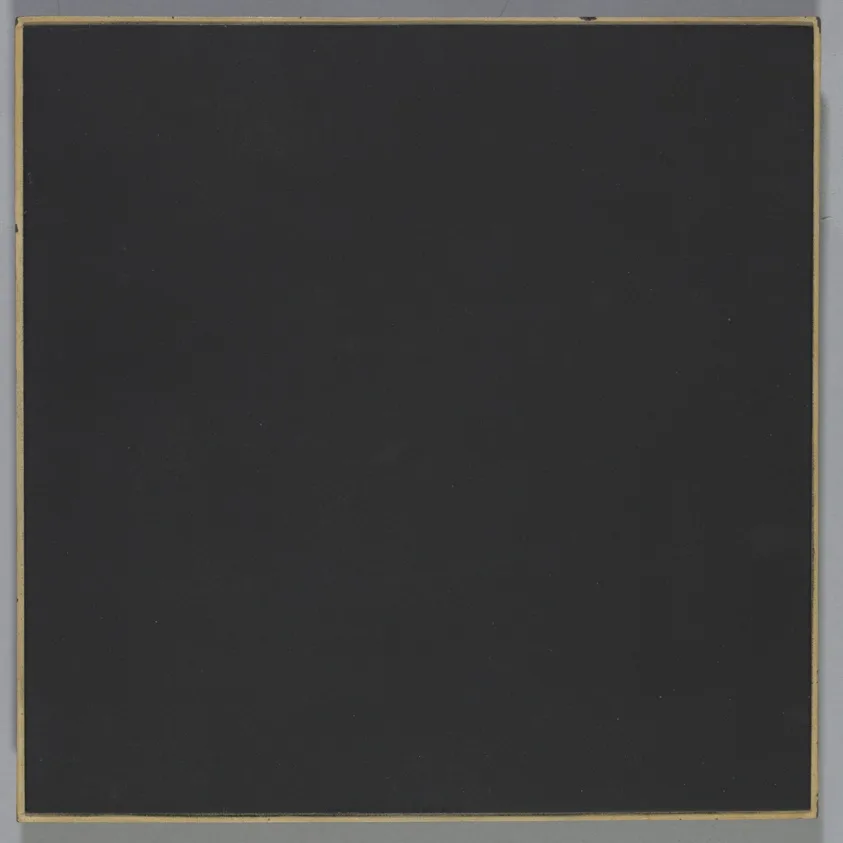
A collection record is a short, structured document. The Art Institute of Chicago, for example, publishes for Lygia Clark's Unity No. 1 (Unidade No. 1) the date (1958), the medium (industrial paint on wood), the size (30 × 30 cm), the reference number (2021.254), the artist's dates and nationality (Brazilian, 1920–1988), and a credit line naming how the museum came to hold it. Its public data service states that the record data, apart from the description text, is released under a CC0 designation.
Those fields are the useful part for a buyer, because they are the same fields a serious seller of any original work should be able to give: who made it, when, in what material, at what size, and how it is identified. A record is evidence that the work exists, is attributed, and is catalogued. It is not an appraisal.
Brazilian artists in institutional records abroad
Two institutions show what this looks like in practice. All entries below were read on the institutions' own pages or data services.
- Art Institute of Chicago. Records for Lygia Clark, Unity No. 1 (Unidade No. 1), 1958 (2021.254); Hélio Oiticica (1937–1980), Metaesquema, No. 244, 1957, opaque watercolor on paperboard, 46 × 52 cm (2017.238); Mira Schendel (1919–1988), Untitled, 1964, tempera on canvas, 91.5 × 130 cm (2020.339); and Lygia Pape (1927–2004), Weaving (Tecelar), 1953, woodcut monoprint on Japanese paper (2018.197).
- Tate. Tate's artwork pages list Clark's Creature-Maquette (320) (1964) and Planes on Modulated Surface (Study) (56) (1957), and Oiticica's Metaesquema (1958). Tate also publishes a display page that describes both artists as members of Grupo Frente in Rio de Janeiro in the early 1950s and, in the late 1950s, as leaders of the Neo-Concrete movement.
This is a sample, not a ranking or a complete list: it covers only the entries listed here.
What a museum record does not tell a buyer
The record does not state a price, and nothing in the records above links a museum's holding to what any other work by that artist costs. This page makes no claim in either direction: an institution's interest is a documented fact about that institution, not a forecast about a market. The Art Institute of Chicago's credit lines, for instance, name funds and gifts; they say nothing about value.
It also does not transfer to other works. A museum holding one piece by an artist tells you that piece is catalogued, not that a different piece offered to you is authentic. For that question, the paperwork that travels with the individual work matters, as covered in provenance for a cross-border buyer and how to verify an artist's authenticity before buying internationally.
How to check whether an artist is in a collection
Start with the institution's own collection search, not a third-party summary. Search the artist's name, then open an individual record and read the fields: title, date, medium, dimensions, credit line and reference number. Spelling matters, so try the name with and without accents.
Absence from one museum's database says nothing in itself, since each institution collects on its own terms. Note the date you consulted the page. For a work offered to you, ask the seller to state any institutional record the artist has, and then check that record yourself.
Museum collection versus private collection
Museums publish collection records on their own sites; a private owner is not required to, so a private collection's holdings are usually documented only by the owner's own papers: invoices, certificates, correspondence and condition records. That is why, for a buyer, the useful comparison is between the record and the paperwork. A museum record shows how an institution documents a work; a certificate with an identification number, a technical record and a clear transfer of ownership is how a private acquisition gets documented. The two are not interchangeable, and neither replaces the other. For the wider picture of how buying works from abroad, see how the Brazilian art market works, seen from abroad.
From the studio
From the studio: a different kind of record
Reading collection records is useful to us for one practical reason: they show what a complete description of a work looks like. Medium, size, date, identification number. When a work leaves the studio, we try to give a buyer the same fields. Each painting is catalogued under an internal Archive ID, and the signed certificate carries the technical record and a QR code that leads to the work's own page. Echo of Silence, from the Matter & Silence series, for example, is recorded as sculpted texture on canvas, 50 × 70 cm, 2025.
That is a studio's record of its own work, not an institutional one, and we do not present it as the same thing. Its purpose is narrower: so that a buyer anywhere can check what they are holding, years later, against a written description.
Frequently asked
Which museums outside Brazil collect Brazilian art?
Many do, and each publishes its own records. This page read entries at the Art Institute of Chicago, which lists Lygia Clark, Hélio Oiticica, Mira Schendel and Lygia Pape, and at Tate, whose artwork pages cover Clark and Oiticica. It is a sample of documented examples, not a complete or ranked list of institutions.
Does museum acquisition affect market prices?
The records read for this page do not address price, and this page makes no claim that a museum holding raises or lowers what other works cost. A museum record documents that a specific work is catalogued and attributed. Treat it as information about authenticity and context, never as a forecast of value, and judge any purchase on the work itself and on the paperwork that comes with it.
How can I check if an artist is in a museum collection?
Use the institution's own online collection search, enter the artist's name, and try spellings with and without accents. Open an individual record and read title, date, medium, dimensions, credit line and reference number. A work missing from one database says nothing about the artist, since each museum collects independently. Note the date you consulted the page.
What is the difference between a museum collection and a private one?
A museum publishes records for the works it holds in public trust. A private collection is documented only by the owner's own papers, such as invoices, certificates and correspondence. For a buyer, that means a museum record helps you understand how an institution describes an artist's work, but the document that matters for the piece in front of you is the paperwork that accompanies that specific work.
Where are collection records published?
On each institution's own website, in its collection or artworks section. The Art Institute of Chicago also runs a public data service whose terms state that record data, apart from description text, is released under a CC0 designation. Tate publishes dedicated artwork pages. Prefer the institution's own page to a third-party summary.
Ask how a work from the studio is documented
Write to the studio directly about a specific work, its certificate, Archive ID and technical record. Replies are personal.
Sources
- Art Institute of Chicago (public API) — 2026-10-14
- Art Institute of Chicago (public API) — 2026-10-14
- Art Institute of Chicago (public API) — 2026-10-14
- Art Institute of Chicago (public API) — 2026-10-14
- Tate — 2026-10-14
- Tate — 2026-10-14
- Tate — 2026-10-14
- Tate — 2026-10-14
Published on