Can you hang an original painting in a finished basement? Humidity, condensation and what to check first
Yes, if the room stays dry. The EPA advises keeping indoor relative humidity below 60 percent, ideally between 30 and 50 percent. Measure the basement with a humidity meter through a humid season first, hang on a wall that has never shown condensation, and keep the painting away from cold water pipes.


What the humidity numbers mean for a lower-level room
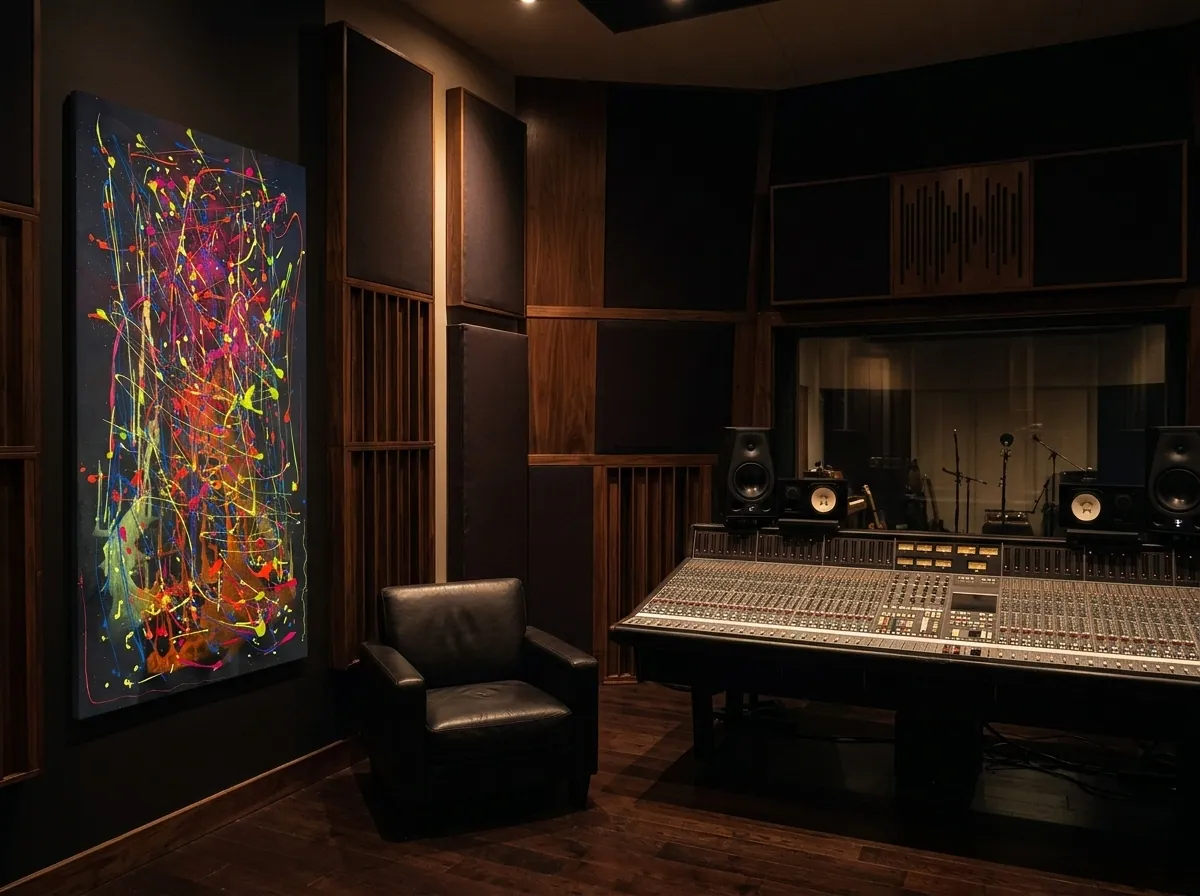
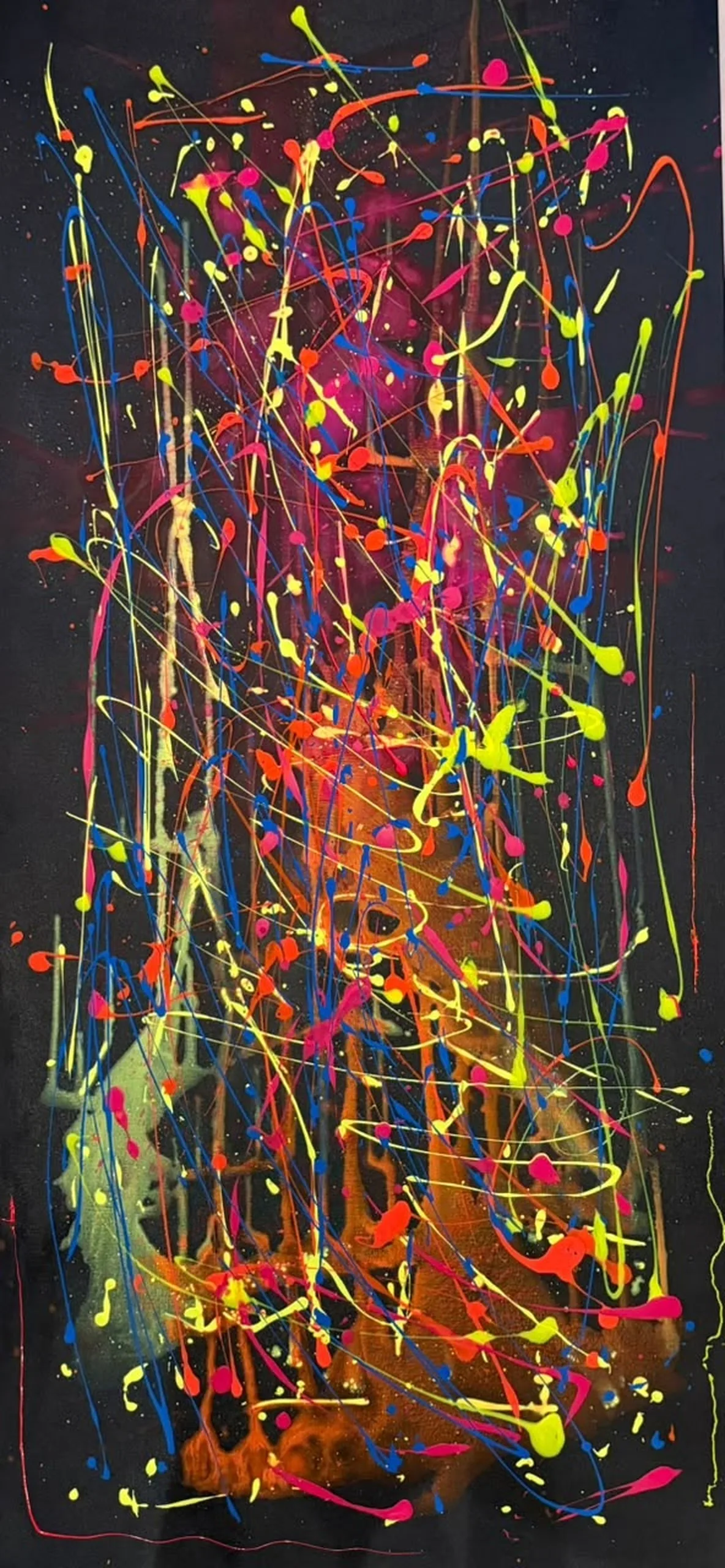
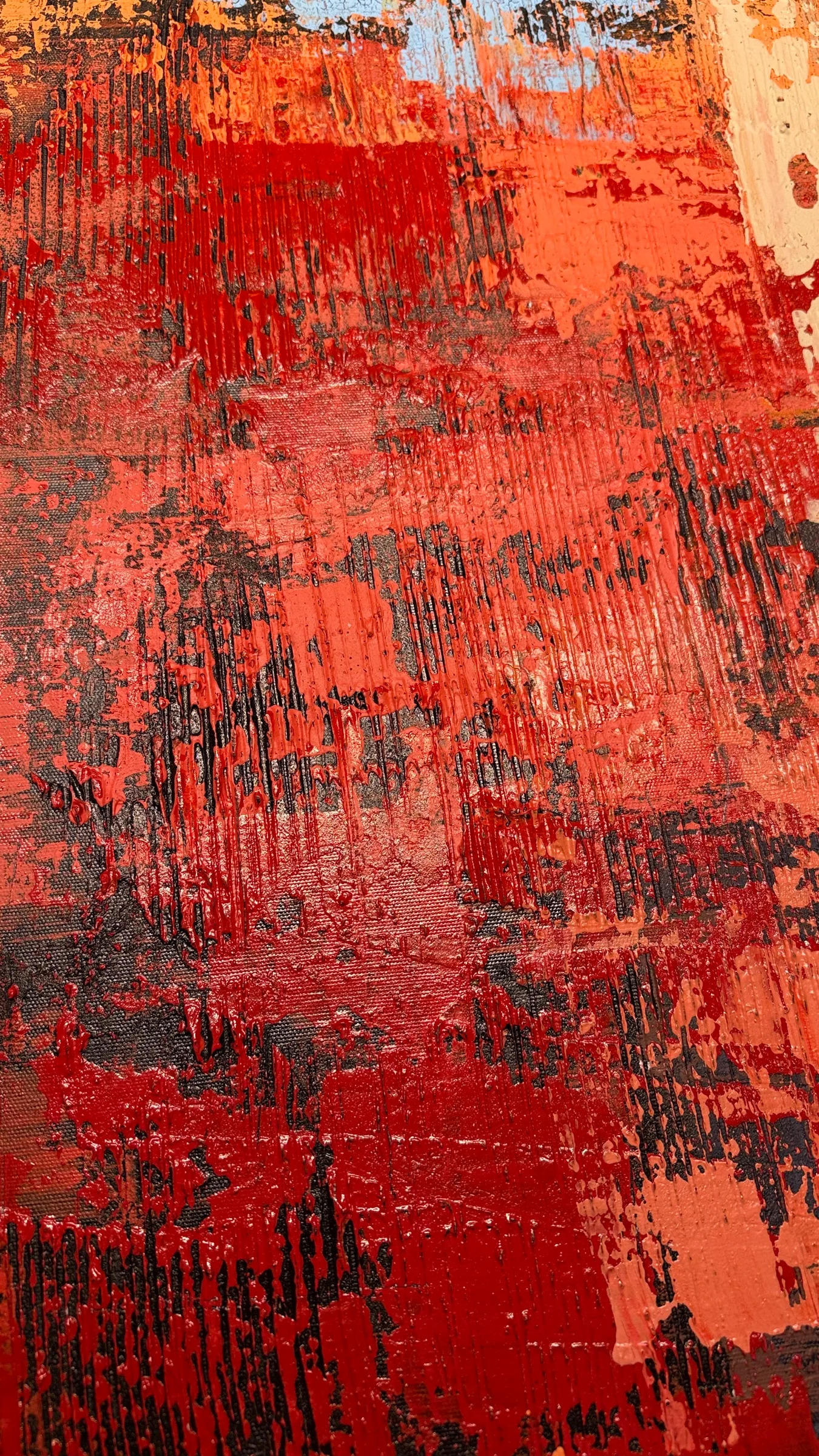
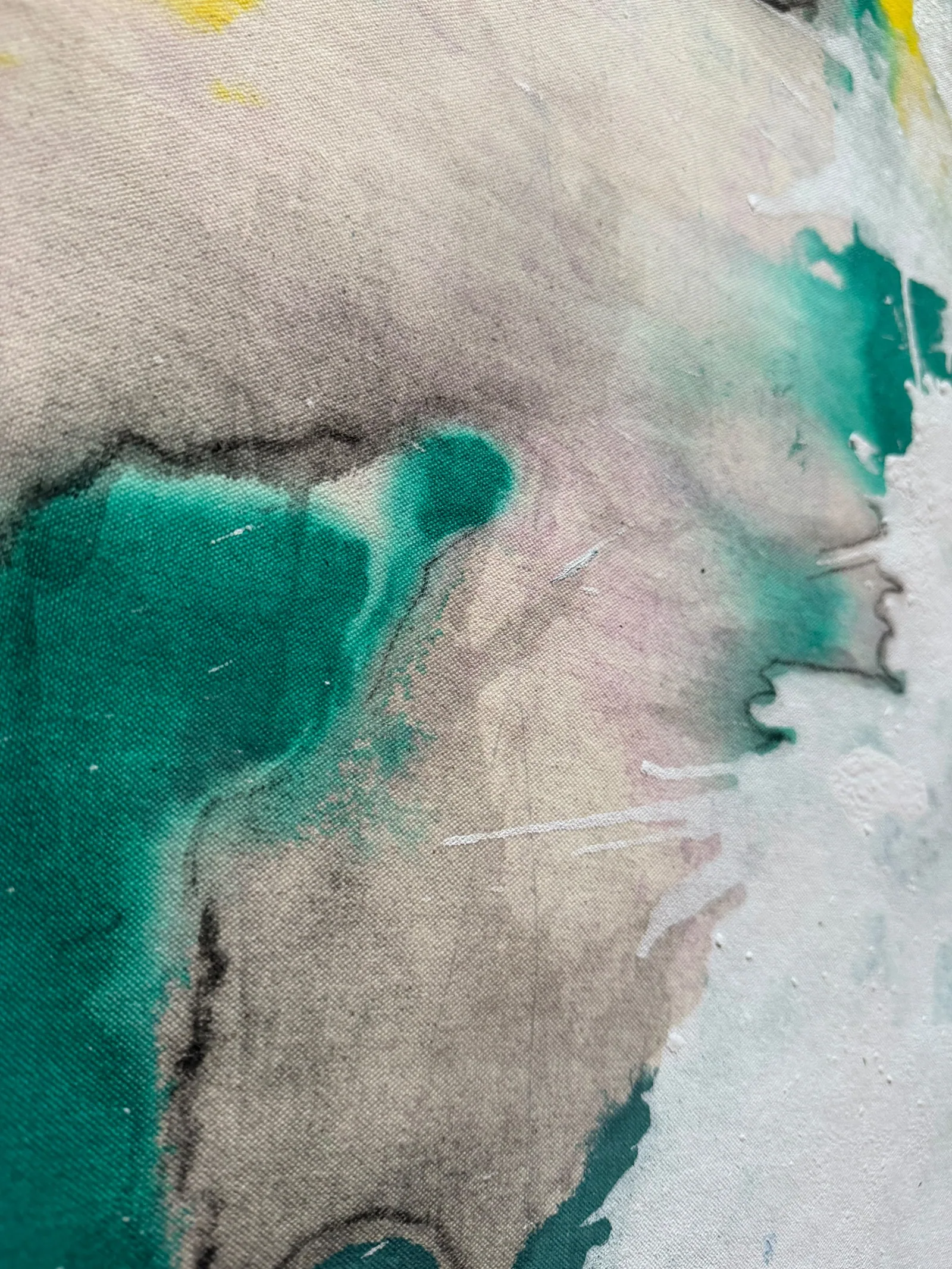
Electric Nocturne is acrylic on canvas, 80 × 170 cm, painted in 2026: yellow, pink, orange and blue drips laid over a dark ground. A canvas like this sits on wooden stretcher bars, and the room it hangs in sets the moisture that cloth and wood take in.
The US Environmental Protection Agency, in its guide to mold and moisture at home, tells homeowners to keep indoor relative humidity below 60 percent, ideally between 30 and 50 percent. The EPA writes this as advice for the health of the house. It is not a museum conservation standard, and it does not single out basements. It is still the clearest public number a homeowner can measure against, and a basement used as a family room should meet it the same way an upstairs bedroom does.
Which wall to choose, and which to skip
The EPA lists condensation on windows, walls or pipes as a sign that humidity is too high, and says to dry the surface and deal with the source. In a basement, that gives you a simple test. Any wall where you have seen beading water, a damp patch or a tide line is the wall to leave bare.
Look up as well. The same guide says to cover cold surfaces such as cold water pipes with insulation, because they collect condensation. A painting hung under an uninsulated pipe run can be dripped on. A partition wall that sits inside the heated space, away from the pipes and the sump, is the safer choice. Our page on hanging a painting on a cold exterior wall covers the colder walls in more detail.
Should you run a dehumidifier for the painting?
Run it for the room. The EPA guide says to use air conditioners or dehumidifiers when needed, and that relative humidity can be measured with an inexpensive meter sold at many hardware stores. Put the meter on the wall you plan to use and read it through a full summer before you hang anything you care about.
If the reading stays inside the EPA range with the dehumidifier on its normal setting, the room is behaving like the rest of the house. If it climbs above 60 percent on humid days, fix the room first. Our guide to choosing a hygrometer for art at home explains what to buy and where to place it.

If water gets in
Basements flood, and a washer hose or water heater can fail. The EPA says water-damaged areas and items should be dried within 24 to 48 hours to prevent mold growth. For a painting, that means taking it off the wall, keeping it face up on a clean, dry surface and calling a conservator before you wipe the front. The steps are set out in our page on what to do if a painting gets wet.
No room setting can guarantee a canvas will never grow mold. Good readings on the meter and a dry wall lower the odds, and a quick look at the back of the canvas each season shows trouble early.
For those acquiring
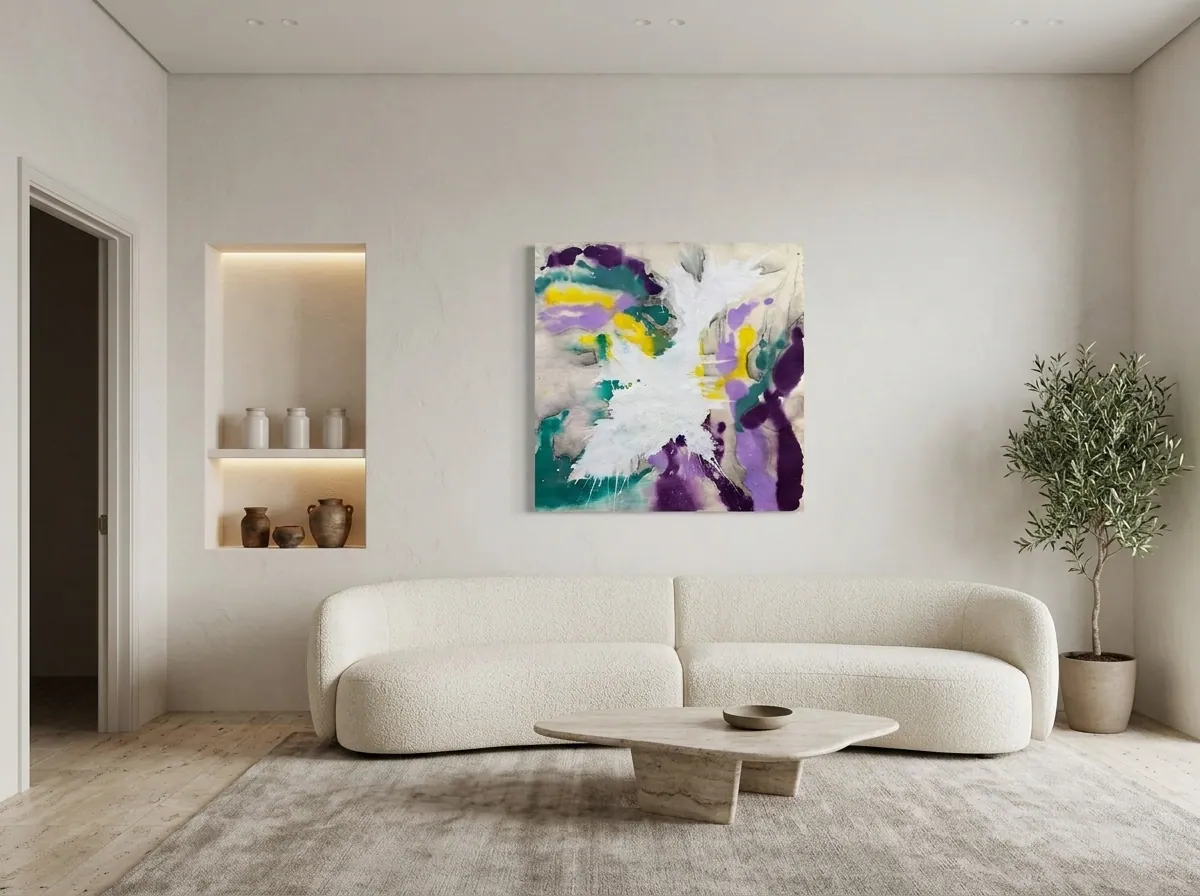
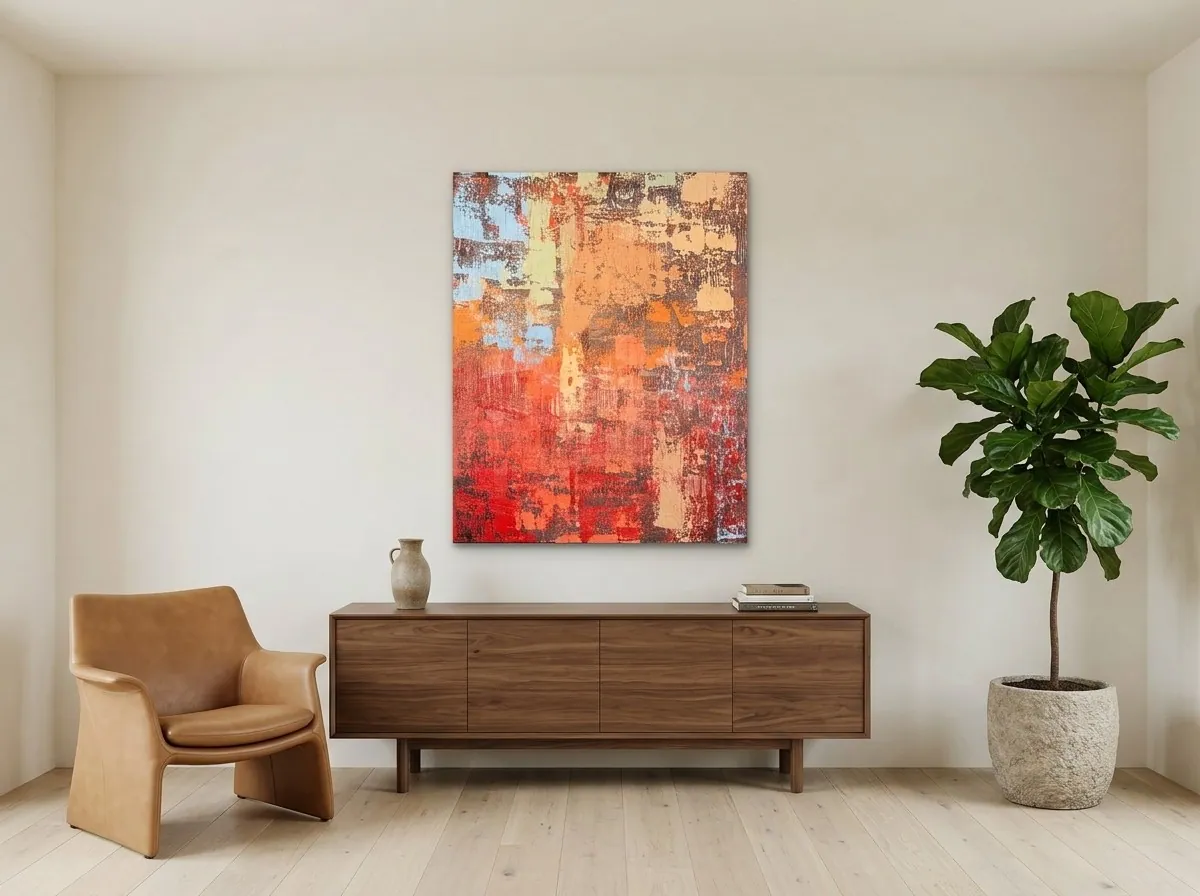
Measure the ceiling before you choose. At 170 cm tall, Electric Nocturne needs a wall with room above and below the canvas. Violet Tempest, acrylic on canvas, 100 × 100 cm, fits over a sofa or a media console. Terracotta Weft, acrylic on canvas, 80 × 100 cm, suits a narrower partition wall. A room with no window gets only the light you install, so plan a lamp or track light aimed at the wall.
Every acquisition is direct from the artist and comes with a signed Certificate of Authenticity with the full technical record and Archive ID, a fiscal invoice or official receipt, an Artwork Acquisition Agreement, and conservation and care guidance (acquisition). The studio ships within Brazil and internationally; shipping is quoted per destination and paid by the buyer, as are any import duties, and transit insurance is available (shipping). For weight and hanging hardware, ask the studio for the work's details.
Available works
-
 Electric Nocturne
80 x 170 cm (31.5 x 66.9 in) · R$ 5.200
-
 Electric Nocturne
80 x 170 cm (31.5 x 66.9 in) · R$ 5.200
-
 Violet Tempest
100 x 100 cm (39.4 x 39.4 in) · R$ 5.500
-
 Violet Tempest
100 x 100 cm (39.4 x 39.4 in) · R$ 5.500
-
 Terracotta Weft
80 x 100 cm (31.5 x 39.4 in) · R$ 4.200
-
 Terracotta Weft
80 x 100 cm (31.5 x 39.4 in) · R$ 4.200
From the studio
From the studio
All three works on this page are acrylic on canvas. In Electric Nocturne the paint sits on top of the dark ground in raised drips, and at the lower edge the canvas weave shows between them. That bare cloth and the wooden stretcher behind it are the parts to check when you take the painting down. Look at the back once a season, along the stretcher bars and in the corners.
Frequently asked
Is a basement too humid for a painting?
It depends on the basement. The EPA advises keeping indoor relative humidity below 60 percent, ideally 30 to 50 percent. Measure the room with a humidity meter before you hang anything. If it stays in that range and the walls show no condensation, it can be treated like any other room in the house.
What humidity should a finished basement stay at?
The EPA guide to mold and moisture at home says below 60 percent relative humidity, ideally between 30 and 50 percent. This is home-health guidance and not a conservation standard, but it is the public figure most homeowners can check with an inexpensive meter.
Which basement wall is the worst for art?
Any wall where you have seen condensation, damp patches or water marks, and any spot under cold water pipes. The EPA names condensation on walls and pipes as a sign of high humidity. An inside partition wall away from pipes and the sump is the better choice.
Should I run a dehumidifier for the painting?
Run it for the room. The EPA says to use air conditioners or dehumidifiers when needed. Read a humidity meter on the wall you plan to use, and if it goes above 60 percent on humid days, sort out the room before you hang the painting.
A painting for the room downstairs
Each work comes with a signed certificate, Archive ID and acquisition agreement. Send the studio your city and postcode for a shipping quote.
Sources
- US Environmental Protection Agency — 2026-11-26
- Perfeito Studio — 2026-11-26
- Perfeito Studio — 2026-11-26
- Perfeito Studio — 2026-11-26
Published on
Edited and reviewed by: Alyne Perfeito, architect and visual artist · CAU A1023098
Alyne Perfeito is a trained architect and visual artist with a studio in Brasília, Brazil. She edits and reviews the Journal from her painting practice. See Alyne's works →