Does a canvas painting need a backing board? What conservators say it protects against
Yes, as a rule. The Canadian Conservation Institute (CCI) states that all paintings should have backing boards as a preventive conservation measure. A board screwed to the back of the stretcher protects the canvas from punctures and tears, keeps debris out, slows humidity swings, reduces vibration in transit and blocks airborne pollutants.


An open back and what the CCI says about it
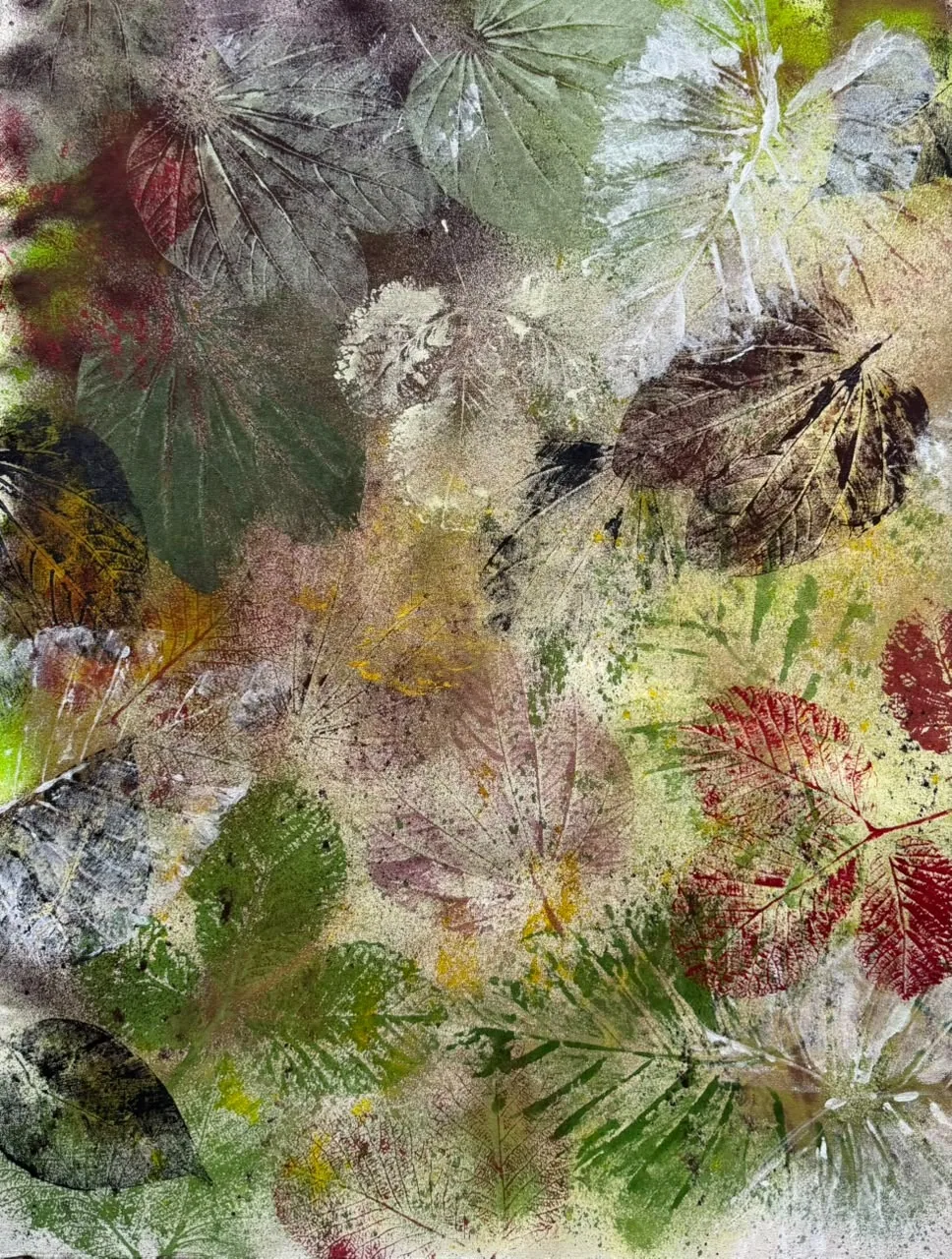
Crossing Currents (2025) is acrylic and texture paste on an 80 × 120 cm canvas. On the front the paste stands in ridges. Turn a stretched canvas like this around and, unless someone has closed it, the fabric is open between the bars of its stretcher, which conservators call the auxiliary support.
The Canadian Conservation Institute covers that open back in CCI Notes 10/10, Backing Boards for Paintings on Canvas, written by Debra Daly Hartin and revised in 2016. Its first recommendation is general: all paintings should have backing boards as a preventive conservation measure. The note makes no exception for size: a large canvas changes how the board is built, and the board is still recommended.

What a backing board protects against
The CCI note lists the jobs a backing board does. It protects the canvas from mechanical damage from behind, such as a puncture or a tear. It keeps debris from falling into the gap between the stretcher and the canvas. By enclosing the back, it buffers fluctuations in relative humidity. In transit it reduces the shock response and the vibration of the canvas. It also blocks airborne pollutants and discourages people from labelling or writing on the back of the canvas.
Most of these risks come from behind or from handling, so they matter when a painting is moved, stored or hung where people pass close to it. If the canvas has already been damaged, the guide on what to do if a canvas painting is torn or punctured covers the next steps.

Which materials the note accepts
The CCI names three kinds of board. Corrugated twinwall polyethylene, sold as Coroplast or Hi-Core, can be lined with 4-ply matboard for extra buffering. A clear acrylic sheet works too, and it leaves any labels, inscriptions or other marks on the back of the painting visible. Tempered hardboard at least 3 mm thick is strong, rigid and hygroscopic, but the note calls it heavy, which rules it out for large paintings.
One material is excluded: chipboard should not be used, because its components may emit vapours that can degrade some materials. For large paintings the note cuts the board into sections, with plastic sections following the cross bars. Where damp conditions last a long time, it suggests a plastic board with ventilation holes to lower the average relative humidity in the enclosed space.
Who should fit it
The board is screwed to the back of the stretcher. The CCI note specifies corrosion-resistant screws and washers (brass, stainless steel, zinc or chrome plated), keeps each screw at least 1 cm from the edges of the stretcher and warns never to drill holes into the auxiliary support itself. Those tolerances are small, and the screwdriver works a few centimetres from the canvas.
For an original painting, hand the job to a picture framer who works with canvases or to a paintings conservator, and bring the CCI note with you. If you need to find one, see how to find a qualified painting conservator. Ask which board they propose for the size of the work and whether the back carries labels or writing that should stay visible.

For those acquiring a work
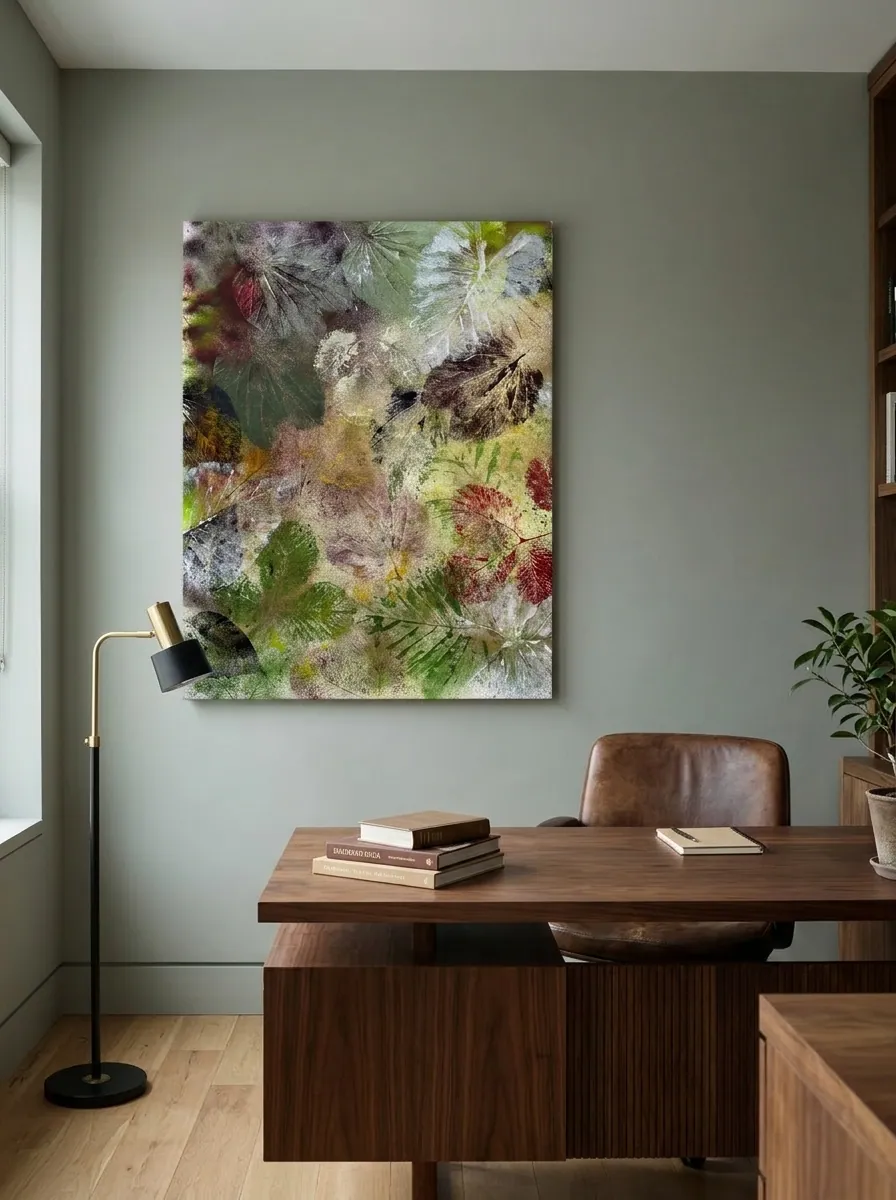
Ask the studio whether the work you are considering leaves with a backing board, and get the details of that work before you plan its wall. A board can also be fitted by a framer after the painting arrives. For scale, Vibrant Awakening (100 × 150 cm, R$ 5,900) needs a long sofa or sideboard beneath it; Crossing Currents (80 × 120 cm, R$ 4,400) and Moss Herbarium (78 × 100 cm, R$ 4,000) sit well above a desk or console. Mark the size on the wall with masking tape, check the light at different hours and note where you will see it from. Any conversion from BRL is approximate.
Every acquisition comes directly from the artist with a signed Certificate of Authenticity carrying the Archive ID, a fiscal invoice or receipt, an Artwork Acquisition Agreement, an artist dossier and conservation and care guidance. Shipping is quoted per destination and paid by the buyer; professional packaging is included and transit insurance is available. See shipping and acquisition.

Available works
-
 Crossing Currents
80 x 120 cm (31 x 47 in) · R$ 4.400
-
 Crossing Currents
80 x 120 cm (31 x 47 in) · R$ 4.400
-
 Vibrant Awakening
100 x 150 cm (39 x 59 in) · R$ 5.900
-
 Vibrant Awakening
100 x 150 cm (39 x 59 in) · R$ 5.900
-
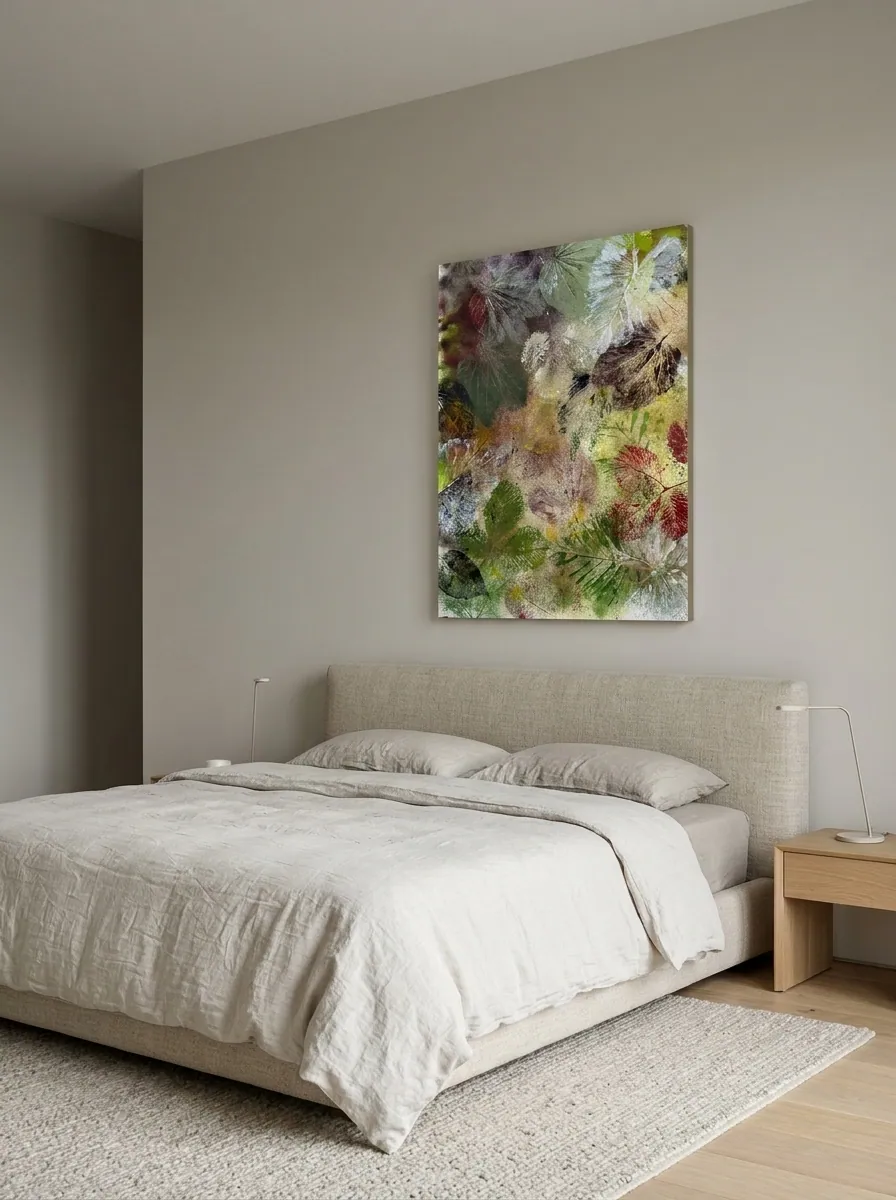 Moss Herbarium
78 x 100 cm (30.7 x 39.4 in) · R$ 4.000
-
 Moss Herbarium
78 x 100 cm (30.7 x 39.4 in) · R$ 4.000
From the studio
From the studio
Alyne Perfeito is a Brazilian visual artist, trained as an architect, based in Brasília. Crossing Currents (AP-TAE-2025-002), Vibrant Awakening (AP-LMR-2025-003) and Moss Herbarium (AP-TAE-2026-009) are painted on stretched canvas. Write to the studio with the work you have in mind and the wall it will hang on, and ask about the back of that canvas.
Frequently asked
Should every canvas painting have a backing board?
The Canadian Conservation Institute says yes: in CCI Notes 10/10 it states that all paintings should have backing boards as a preventive conservation measure.
What does a backing board protect against?
According to the CCI, it protects the canvas from punctures and tears from behind, keeps debris from falling between the stretcher and the canvas, buffers fluctuations in relative humidity, reduces shock and canvas vibration in transit, blocks airborne pollutants and discourages writing or labels on the back of the canvas.
What material should a backing board be made of?
The CCI accepts corrugated twinwall polyethylene such as Coroplast or Hi-Core, optionally lined with 4-ply matboard, a clear acrylic sheet, or tempered hardboard at least 3 mm thick. It says hardboard is too heavy for large paintings and that chipboard should not be used, because it may emit vapours that degrade some materials.
Can I screw a board onto the stretcher myself?
The CCI note describes corrosion-resistant screws and washers, at least 1 cm from the stretcher edges, and warns never to drill holes into the stretcher itself. For an original painting, ask a picture framer who works with canvases or a paintings conservator to fit it.
Ask about the back of the canvas
Write to the studio about Crossing Currents, Vibrant Awakening or Moss Herbarium, the wall you have in mind and a shipping quote to your address.
Sources
- Canadian Conservation Institute, Government of Canada — 2026-11-27
- Perfeito Studio — 2026-11-27
- Perfeito Studio — 2026-11-27
- Perfeito Studio (src/data/obras.json and studio-facts.json) — 2026-11-27
Published on
Edited and reviewed by: Alyne Perfeito, architect and visual artist · CAU A1023098
Alyne Perfeito is a trained architect and visual artist with a studio in Brasília, Brazil. She edits and reviews the Journal from her painting practice. See Alyne's works →