Does WELL certification require art in the office? What feature M02 Nature and Place actually asks for
Yes, in every space except dwelling units, the design has to address art. In WELL v2, feature M02 Nature and Place is a precondition, which IWBI makes mandatory for certification, and its Part 2 asks the design to address four items, one of them “integration of art”. The feature text does not require the art to be original or by a local artist.


M02 is a precondition, and art sits in Part 2
The WELL Building Standard version 2 is published by the International WELL Building Institute (IWBI). Its features are either preconditions or optimizations, and the introduction of the Q2 2025 edition states that all preconditions, including all parts within them, are mandatory for certification. Optimizations are optional pathways that a project selects.
M02 Nature and Place, in the Mind concept, is marked “P” on page 203 of that edition. It has two parts. Part 1, Provide connection to nature, asks for natural materials, patterns, shapes, images or sounds throughout the space, plus at least one of plants, water or nature views. Part 2, Provide connection to place, is where art appears. A painting alone cannot complete Part 1, because item b asks for plants, water or a view.
The four items in Part 2
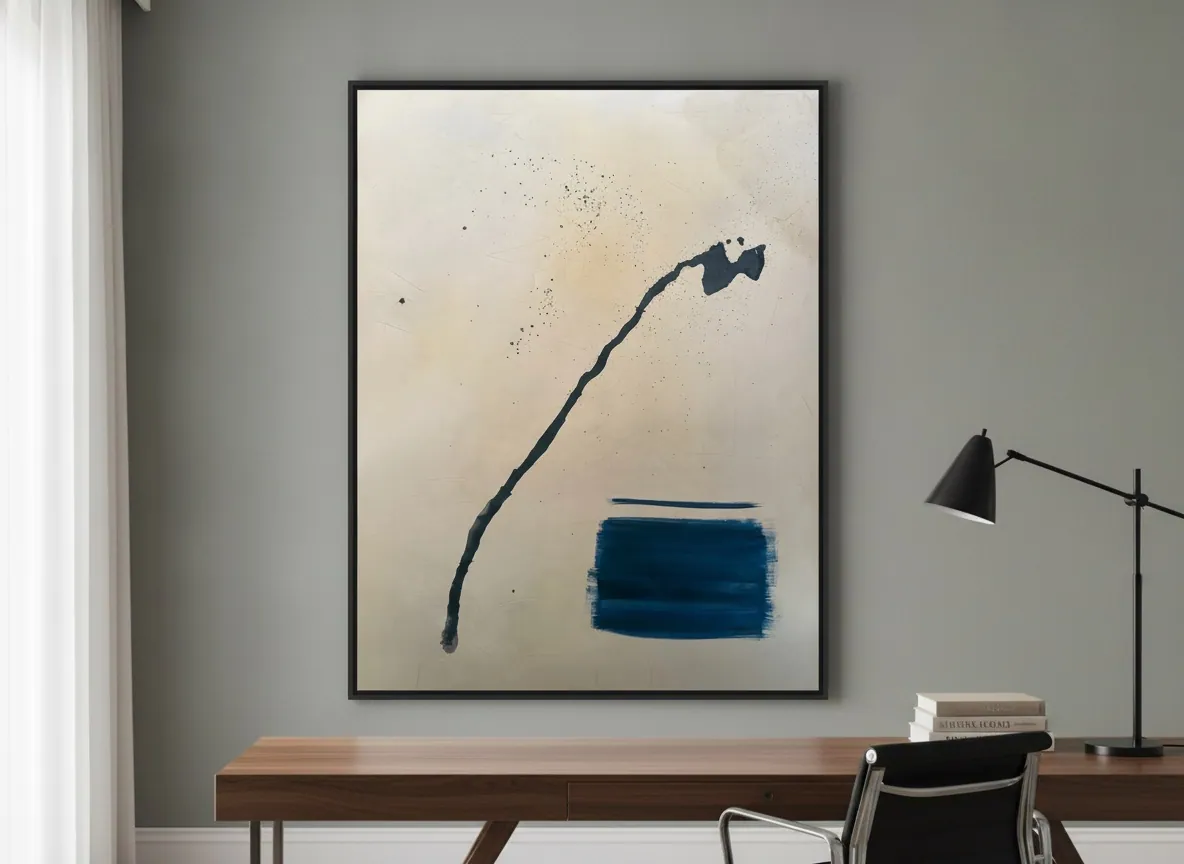
Part 2 applies to all spaces except dwelling units. The wording is short: the project integrates design elements that address a. celebration of culture (of occupants, the workplace or the surrounding community), b. celebration of place (local architecture, materials, flora, artists), c. integration of art, and d. human delight.
Read closely, the text names “artists” as one example of celebrating place, and lists “integration of art” as its own item. It gives no definition of medium, size, edition or origin. The Solutions paragraph of the same feature says local culture, materials and art can help celebrate a project’s identity. For an office team, that means a plan for art belongs in the design documentation for M02, and the choice of work is left to the project.
Two optional features also name artwork
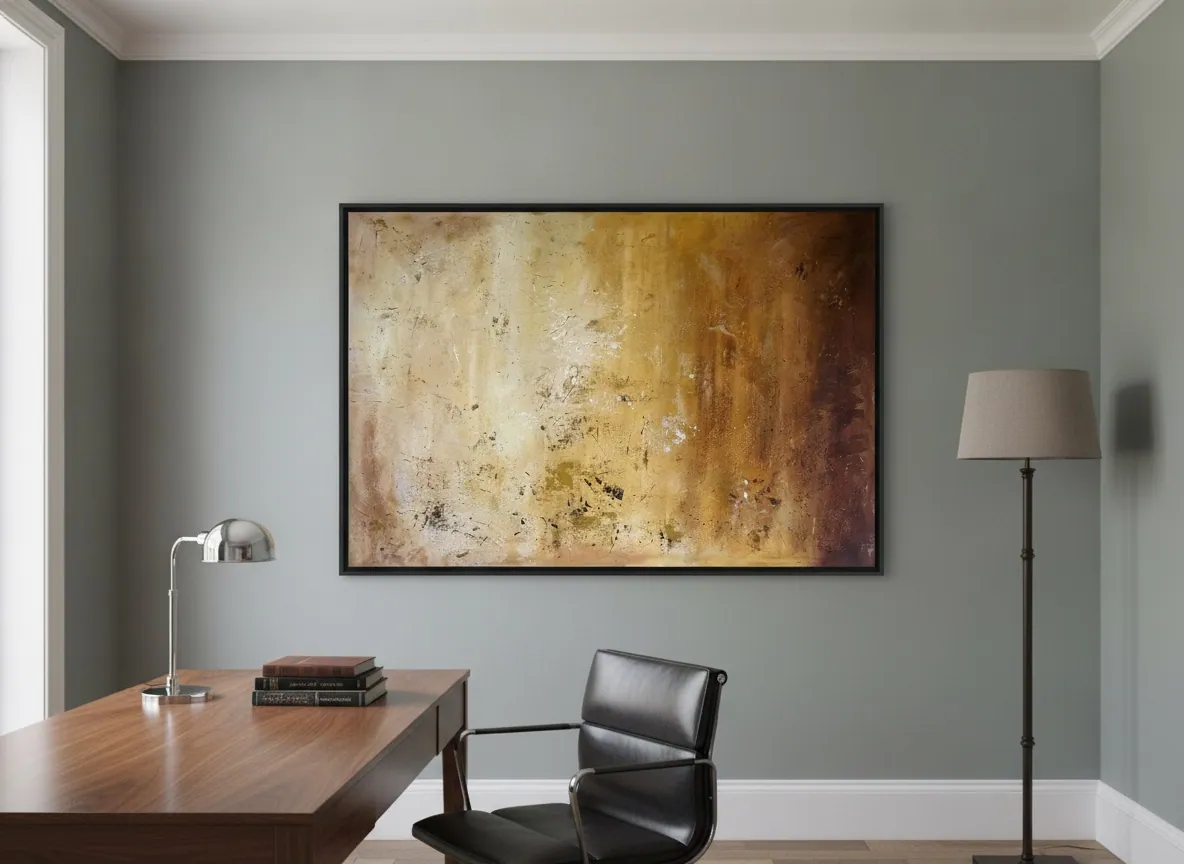
Art turns up twice more in the same PDF, both times inside optimizations. V03 Circulation Network, Part 1 Design aesthetic staircases, asks for a staircase open to regular occupants with at least two strategies from a list on each floor; “artwork” is item b, next to music, light levels, daylight, natural elements and gamification. C13 Accessibility and Universal Design, Part 2 Support inclusive interior navigation, lists artwork among possible landmarks on primary circulation routes, placed at points of decision such as intersections, elevators and stairways, and physically prominent through shape, colour or size.
A large canvas on a column where two corridors meet is the kind of placement C13 describes. If the painting will project into a corridor, our guide to the ADA 4-inch protrusion rule covers the US accessibility side.
What the text leaves to the project
The M02 text leaves three questions open. It does not say whether a print counts, whether the work must be original, or whether it must come from a local artist. Whether a given work satisfies Part 2 is settled in the project’s own WELL review, so no seller can promise that a painting “earns” M02. This guide reads the Q2 2025 edition, so check the current version with your WELL AP before you document.
If the team does commission or acquire an original, the paperwork helps the design record: medium, dimensions, year and an Archive ID on a signed certificate. Whether a company may show a painting it bought in its offices is covered in can a business display a painting it bought.

For those acquiring a work
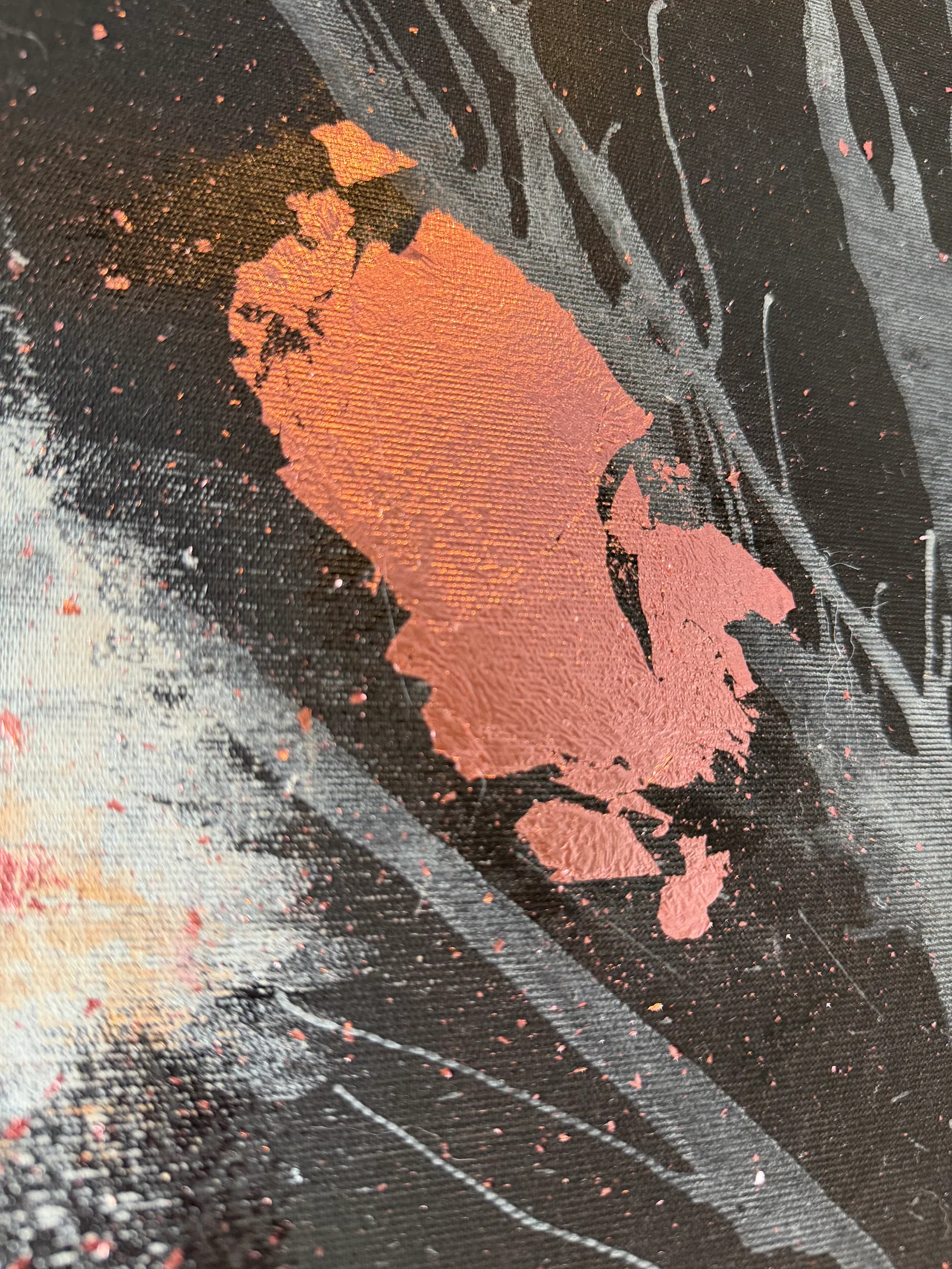
Genesis of Flame (Heart of Chaos, 2025) is acrylic, metallic pigment and high-gloss and matte finishes on a 120 × 200 cm canvas, R$ 8,800; it has no fixed top or bottom. Silent Interval (Matter & Silence, 2026), 120 × 160 cm, is R$ 7,900, and Amber Strata (Terra & Ether, 2026), 150 × 100 cm, is R$ 6,700. Any conversion from BRL is approximate. A 200 cm canvas needs a column or reception wall with room to step back; a 150 cm horizontal fits above a desk or credenza.
Each work comes directly from the artist with a signed Certificate of Authenticity, a fiscal invoice or receipt, an Artwork Acquisition Agreement, an artist dossier and care guidance. Shipping is quoted per destination and paid by the buyer; see acquisition and shipping.
Available works
-
 Genesis of Flame
120 x 200 cm (47 x 79 in) · R$ 8.800
-
 Genesis of Flame
120 x 200 cm (47 x 79 in) · R$ 8.800
-
 Silent Interval
120 x 160 cm (47.2 x 63 in) · R$ 7.900
-
 Silent Interval
120 x 160 cm (47.2 x 63 in) · R$ 7.900
-
 Amber Strata
150 x 100 cm (59.1 x 39.4 in) · R$ 6.700
-
 Amber Strata
150 x 100 cm (59.1 x 39.4 in) · R$ 6.700
From the studio
From the studio
Alyne Perfeito is a Brazilian visual artist, trained as an architect, based in Brasília. In the studio’s experience, the high-gloss and matte passages on Genesis of Flame read differently under office ceiling lights, so look at the chosen wall during working hours before deciding.
Frequently asked
Is art mandatory for WELL v2 certification?
M02 Nature and Place is a precondition, and IWBI says all preconditions and all their parts are mandatory for certification. Part 2 of M02 asks the design to address integration of art, among three other items. Dwelling units are outside Part 2.
Which WELL feature mentions art?
M02 Nature and Place, Part 2, item c, integration of art. Artwork also appears in two optimizations: V03 Circulation Network (aesthetic staircases) and C13 Accessibility and Universal Design (landmarks on circulation routes).
Does a print count, or does it need to be original art?
The M02 text does not define the medium or require originality. Whether a specific work satisfies the part is decided in the project's WELL review, so confirm the approach with your WELL AP.
Does it apply to residential units?
Both parts of M02 are written for all spaces except dwelling units, so the art item does not apply inside a dwelling unit. Common areas of a residential building are a separate question for the project team.
Planning the art for a WELL project?
Send the studio the wall dimensions and a photo of the space, and ask for the technical record of the work you have in mind.
Sources
- International WELL Building Institute — 2026-11-27
- International WELL Building Institute — 2026-11-27
- International WELL Building Institute — 2026-11-27
Published on
Edited and reviewed by: Alyne Perfeito, architect and visual artist · CAU A1023098
Alyne Perfeito is a trained architect and visual artist with a studio in Brasília, Brazil. She edits and reviews the Journal from her painting practice. See Alyne's works →