What if the artist changes direction or stops painting? The long-term question buyers skip
If an emerging artist changes direction or stops painting, the work you own does not change; the context around it does. No one can say how a shift would affect later demand, so the sound response is not prediction but documentation: a certificate, an Archive ID, an invoice and a record of the work as it was made.
What changes when an artist changes course, and what does not
A painting is a finished object. Nothing an artist does afterwards alters its canvas, its pigments or the year it was made. What can shift is the frame around it: how the work is read within a body of work, how easily it is described to a future buyer, and how much attention it receives.
Whether that shift helps, hurts or does nothing is not something anyone can state in advance. A change of direction can make earlier work look like the start of a clear path, or like a different chapter. A pause can pass unnoticed. This page does not claim that a work gains or loses value in any of these cases, because no reliable rule says so. The honest position is uncertainty, and the useful question is what you can control: the quality of the record that travels with the work.
Three situations buyers tend to worry about
A change of style. Artists develop, and many working lives include several distinct periods. For the buyer, the practical consequence is that the work in your home belongs to a stated period. That is why the year, the series and the technique should be written down, not remembered.
A long pause. Artists stop producing for stretches for many ordinary reasons. A pause is not a verdict on earlier work, and it is not a prediction of what comes next.
Stopping altogether. This is the case buyers fear most and discuss least. If an artist stops, the body of work becomes fixed in size. What that means for any single painting depends on factors outside a seller's knowledge or control, so no responsible seller can promise an outcome in either direction. What remains in the buyer's hands is provenance: who made the work, when, how, and who sold it to whom.
Is a consistent series safer?
A coherent series is easier to read. It gives a buyer a clear answer to "what is this part of?", and it makes a work easier to describe to anyone who sees it later. That is a real advantage for documentation and for living with the work.
It is not a safeguard against a change of direction, and it says nothing about price. Treat consistency as a clarity signal, not as protection. The same applies in reverse: a changing practice is not a warning sign in itself. For the broader question of what an early-career price can and cannot tell you, see the real risk of buying work by an emerging artist.
How to document a purchase so it stands on its own
The aim is a file that lets someone who has never met the artist understand exactly what the work is. At Perfeito Studio, every acquisition is direct from the artist and includes a signed Certificate of Authenticity with the technical record and the internal Archive ID, a fiscal invoice or official receipt, an Artwork Acquisition Agreement covering transfer of ownership, copyright and image use, an artist dossier, and care guidance. The certificate carries a QR code linking to the work's official page.
On your side, keep the following together in one place:
- the certificate, invoice and agreement, plus digital copies stored somewhere separate;
- the work's title, year, series, medium and dimensions exactly as listed at the time of purchase;
- your own photographs of the work on arrival, including the signature and a close view of the surface;
- the correspondence with the seller about the work.
For what an Archive ID is and why collectors ask for it, see what an archive ID is.
Can I still resell?
Whether the artist changes course or not, resale depends on the market at the time you sell, not on the artist's plans at the time you buy, and it is never guaranteed. For the general picture of resale, see the real risk of buying work by an emerging artist. The studio does not set or quote secondary-market values. What documentation does is make a future sale or valuation easier to attempt: a buyer or adviser reading the file can verify what the work is without relying on anyone's memory. Whether a buyer exists, and at what price, remains an open question for any work by an artist early in a career. The right expectation is to buy because you want to live with the painting.
From the studio
From the studio: a record made while the work is fresh
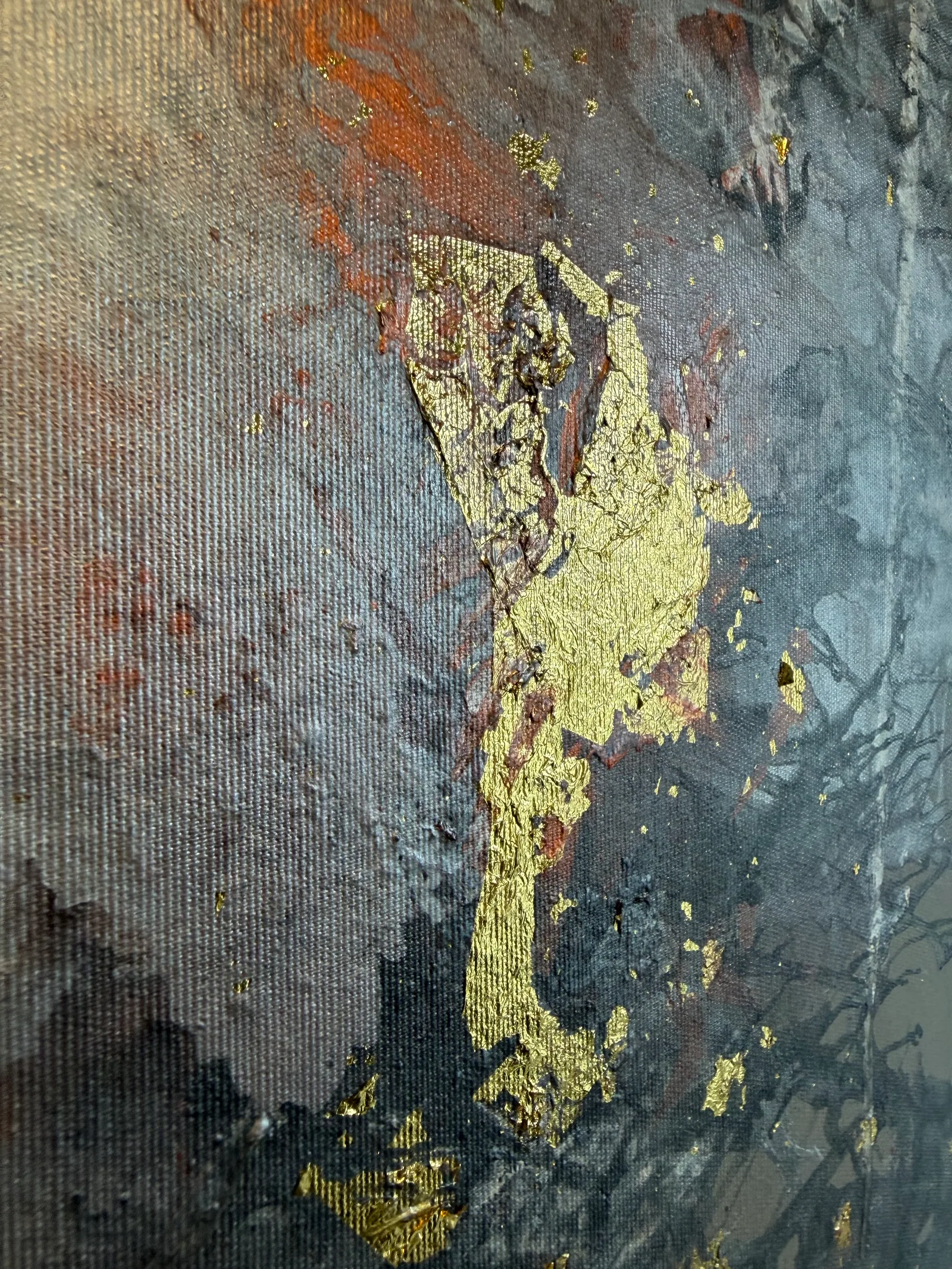
In the studio's records, every painting is unique, signed, catalogued under an Archive ID and photographed in detail before it leaves. Origin of Light is catalogued as AP-HOC-2025-002: a 2025 work in the Heart of Chaos series, 60 x 80 cm, mixed media with acrylic and imitation gold leaf on canvas, listed at R$ 3,300. A layered surface like the one in the detail on this page is the kind of evidence a photograph can hold: the sequence of decisions that built the painting, fixed at a given moment.
That is the practical idea behind the record. The current body of work was painted between 2025 and 2026, and what the studio can offer a buyer today is a precise description of what each work is. You can see the piece on its own page, or browse the full gallery.
Frequently asked
What happens to my painting if the artist stops working?
The painting itself is unaffected: it remains the same object, with the same materials, year and signature. What is uncertain is how the market and critics later read the artist's body of work, and no seller can predict that. The only part a buyer can control is the record: a certificate, an invoice, an Archive ID and photographs that describe exactly what you own and where it came from.
Does a change in style affect the value of earlier work?
There is no reliable rule. A change of style can make earlier work read as a clear first chapter, or as a separate period, and the effect on demand varies from case to case. This page does not claim that earlier work gains or loses value. What helps is a record that states the year, series and technique, so the work is always described as belonging to a specific period.
How do I document my purchase?
Keep the signed Certificate of Authenticity, the invoice or receipt, the acquisition agreement and the artist dossier together, with digital copies stored separately. Add your own photographs of the work on arrival, the title, year, series, medium and dimensions as listed at purchase, and your correspondence with the seller. The Archive ID on the certificate is the thread that connects all of it.
Is a consistent series safer?
A consistent series is easier to read and to describe, which helps documentation and helps you place the work in context. It is not a safeguard against a change of direction and it does not make a price more reliable. Treat consistency as a signal of clarity about what the work is, not as protection for its financial outcome, and not as a prediction about the artist's future.
Can I still resell?
Resale is possible in principle, but it is never guaranteed and depends on the market at the time you sell. The studio does not set or quote secondary-market values. A complete file, with certificate, Archive ID, invoice and photographs, makes a future sale or valuation easier to attempt because the work can be verified without relying on memory. It cannot ensure that a buyer exists or at what price.
Ask the studio about documentation
Every work leaves Perfeito Studio with a signed Certificate of Authenticity, an Archive ID and a dossier. Ask what the file for a specific work contains before you decide.
Published on · Updated on