Famous female Brazilian painters: from Anita Malfatti and Tarsila do Amaral to Beatriz Milhazes
Famous female Brazilian painters with a verifiable institutional record include Anita Malfatti, Tarsila do Amaral, Tomie Ohtake and Beatriz Milhazes, alongside Djanira and Maria Auxiliadora da Silva. Each is documented here by Itaú Cultural, MASP, the Tate or the Met. This is a sourced selection, not a ranking.
How this list was chosen, and what it leaves out
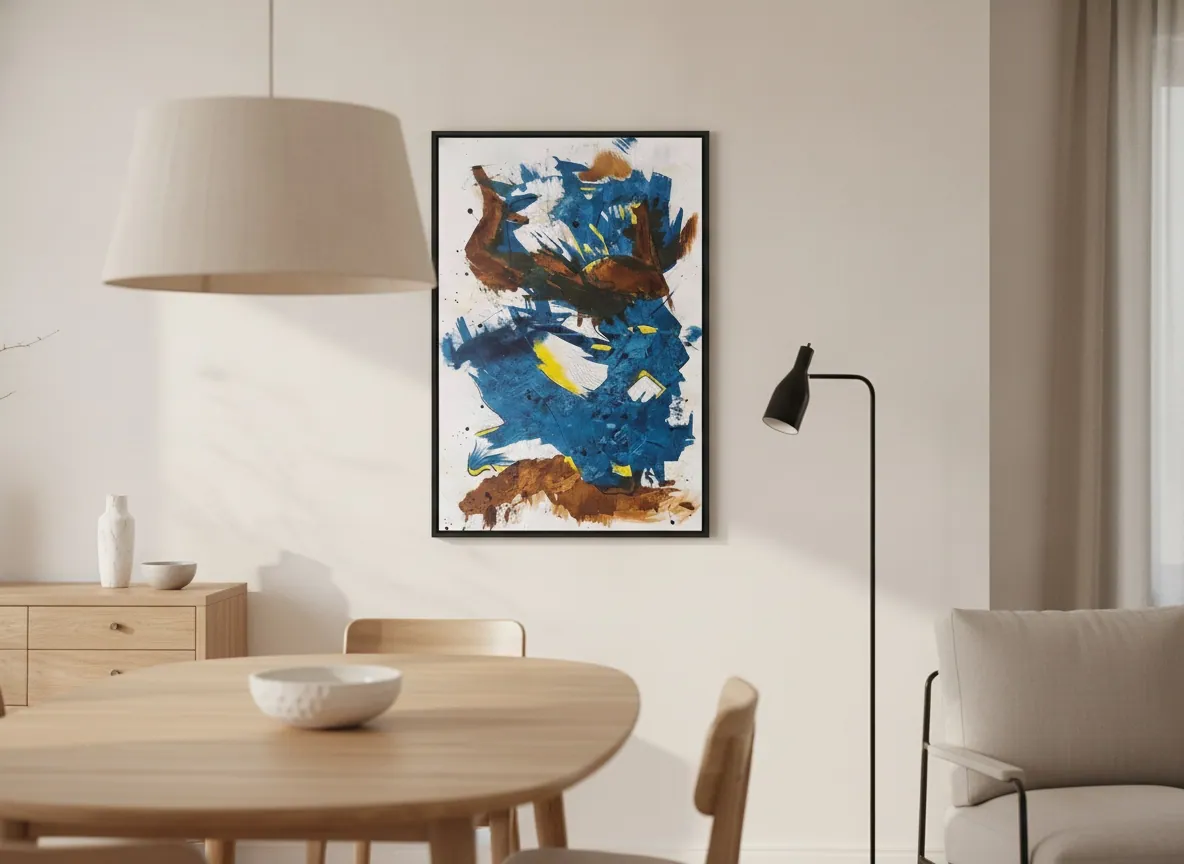
Crossing Currents is built on canvas in acrylic and texture paste, 80 x 120 cm: white paste raised in ridges beside fields of deep blue and flat strokes of yellow. Painting made by women in Brazil has a record far longer than any one wall, and it is easier to read in sequence. This page follows it from 1917 to the present.
The rule is the one used for the other painter pages of this Journal: a painter is named only if a published institutional source documents her, such as the Enciclopédia Itaú Cultural, a museum record or a museum exhibition text. The order is chronological, not a ranking, and the list is not complete. Women painters of Brazilian abstraction such as Mira Schendel, Judith Lauand, Lygia Pape and Maria Leontina are covered in the guide to Brazilian women abstract painters in history, and the wider field in famous Brazilian painters.


1910s to 1920s: Anita Malfatti and Tarsila do Amaral
Anita Malfatti (São Paulo, 1889 – São Paulo, 1964) began her training with her mother, the painter Bety Malfatti. The Enciclopédia Itaú Cultural records that she went to Germany in 1910, entered the Berlin Academy and stayed until 1914, then lived in New York in 1915 and 1916 and studied at the Independent School of Art. Her December 1917 exhibition in São Paulo, which gathered works from those years, drew a violent reaction from critics, according to the same entry, and also brought her closer to the artists and writers who later staged the Modern Art Week. The Itaú Cultural entry describes her role in introducing modernist aesthetics to Brazil as decisive. More detail is in who was Anita Malfatti.
Tarsila do Amaral (Capivari, 1886 – São Paulo, 1973) went to Paris in 1920 and enrolled at the Académie Julian. Itaú Cultural records that she returned to Brazil in June 1922, after the Modern Art Week, and with Malfatti, Mário de Andrade, Oswald de Andrade and Menotti del Picchia formed the Grupo dos Cinco. Her Pau-Brasil painting dates from 1924. In 1928 she gave Oswald de Andrade Abaporu, which the Itaú entry calls her most famous painting and which prompted him to found the anthropophagic movement. Abaporu is oil on canvas, 85 x 73 cm, and is in the collection of MALBA in Buenos Aires. MASP, in São Paulo, holds her Autorretrato com vestido laranja (1921), oil on canvas, 50 x 41 cm, on loan from the Banco Central. In 2019 MASP staged Tarsila Popular, with 92 of her works. See who was Tarsila do Amaral.
Abstraction and the popular: Tomie Ohtake, Djanira and Maria Auxiliadora da Silva
Tomie Ohtake was born in Kyoto in 1913 and died in São Paulo in 2015. Itaú Cultural records that she came to Brazil in 1936 to visit a brother and was kept from returning to Japan by the Pacific War. She began to paint in 1952, joined the Grupo Seibi in 1953 and moved into abstraction; between 1959 and 1962 she made her "blind" paintings with her eyes covered, one of which won the Isenção de Júri prize at the 1960 Salão Nacional de Arte Moderna. The Tate holds Untitled (from the series Blind Paintings), 1962. The Metropolitan Museum of Art holds an untitled acrylic on canvas of 1988, 149.9 x 149.9 cm, a gift of Claudia Cisneros in 2017, and lists her as Brazilian, born in Japan. The Instituto Tomie Ohtake was created in 2000. Her story is told at greater length in who was Tomie Ohtake.
Djanira da Motta e Silva (Avaré, 1914 – Rio de Janeiro, 1979) began to draw in 1937, in a sanatorium where she was being treated for tuberculosis; Itaú Cultural describes the coexistence of religiosity and the diversity of Brazilian scenes in her work. Maria Auxiliadora da Silva (Campo Belo, 1935 – São Paulo, 1974) was self-taught and is known, per the same source, for pure, vibrant colour and for reliefs made with acrylic paste and strands of hair. Both are discussed in famous Brazilian painters.
A living painter: Beatriz Milhazes, and what this page cannot verify
The Tate's press release gives Beatriz Milhazes as born in Rio de Janeiro in 1960 and living and working there. It records that she developed monotransfer in 1989: she paints motifs on plastic sheeting and then transfers them to the canvas. The Tate says her work is held in collections in New York, San Francisco, Rio de Janeiro, São Paulo, Tokyo, Basel, Madrid, Paris and London, naming cities rather than museums. Tate St Ives showed Beatriz Milhazes: Maresias from 25 May to 29 September 2024, after Turner Contemporary in Margate.
In São Paulo, MASP and Itaú Cultural jointly presented Beatriz Milhazes: Avenida Paulista, from December 2020 to mid-2021, with more than 170 works made since 1989. MASP's exhibition text lists Tarsila do Amaral among her references, together with Sonia Delaunay, Bridget Riley and Ione Saldanha. For the procedure in more detail, see Brazilian artists similar to Beatriz Milhazes.
This page names one living painter because it verified only one. Other Brazilian women painters are shown by museums today; to find them, read the current programme of the institution rather than a list.
Outside Brazil: where the record places them
The sources read for this page place work or exhibitions by these painters in several countries. MALBA, in Buenos Aires, holds Tarsila's Abaporu. MoMA, in New York, presented Tarsila do Amaral: Inventing Modern Art in Brazil from 11 February to 3 June 2018. The Metropolitan Museum of Art holds Tomie Ohtake's 1988 painting, and the Tate holds her 1962 Blind Painting. Tate St Ives showed Milhazes in 2024. Whether a given work is on display at any moment is for each museum to say; this page does not state it.
For those acquiring: originals from the studio, and how a work reaches you
A reader who comes to this page to understand the lineage may be looking for a living painter's original. Perfeito Studio sells paintings direct from the artist, Alyne Perfeito, a Brazilian visual artist and trained architect based in Brasília, whose current body of work was painted between 2025 and 2026. She is not on the list above, which is limited to painters with an institutional record. Three of her works are named below only for how each is made, not as a comparison with any painter on this page: Crossing Currents, 80 x 120 cm, 2025, acrylic and texture paste on canvas, R$ 4.400; Vegetal Dawn, 80 x 120 cm, 2026, acrylic and imitation gold leaf (metallic leaf) on canvas, R$ 4.900; and Celestial Drift, 70 x 100 cm, 2025, acrylic on canvas, R$ 3.700.
Scale and light. The visualisation below places Vegetal Dawn, 80 x 120 cm, above a walnut sideboard in a study, with a desk and a leather chair to the left, to show scale; it is illustrative only. In the atelier's experience, the fragments of metallic leaf in this work catch the light at different points as the day moves, and the leaf is sealed with a spray sealant. Detail photographs and video of a specific work are sent on request.
Documents and shipping. Every acquisition includes the original, unique painting; a signed Certificate of Authenticity with the technical record and Archive ID; a fiscal invoice or official receipt; an Artwork Acquisition Agreement; an artist dossier; care guidance; and professional packaging. The studio ships within Brazil and internationally. Shipping is quoted per destination and paid by the buyer, as are any import duties or taxes in the destination country, and transit insurance is available. See the shipping page.

From the studio
From the atelier: procedure before comparison
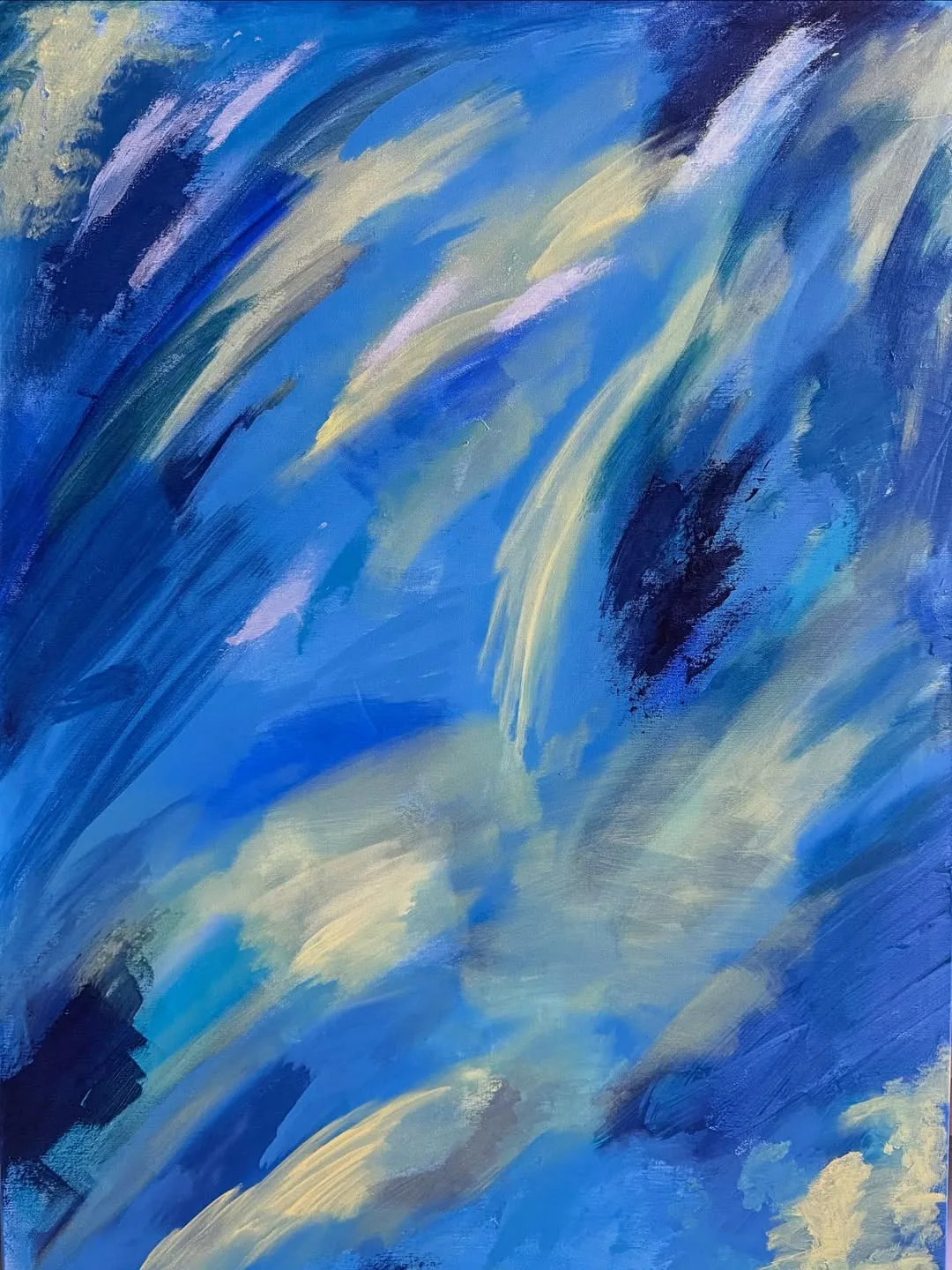
I trained as an architect, so I look at how a picture is built before I look at what it resembles. Milhazes paints motifs on plastic and transfers them; in Crossing Currents the surface is made on the canvas itself, in acrylic and texture paste, with the paste standing in ridges that catch raking light. Vegetal Dawn is a field of greens with small fragments of metallic leaf, and Celestial Drift is acrylic on canvas in blue, ivory and indigo. These are different procedures from the ones named above, and the studio offers them as a fact of how each work is made, not as a claim of place beside the painters on this page.
Frequently asked
Who are the most famous female Brazilian painters?
There is no official ranking. Painters with a documented institutional record include Anita Malfatti and Tarsila do Amaral from the modernist generation, Tomie Ohtake in abstraction, Djanira and Maria Auxiliadora da Silva, and Beatriz Milhazes among painters shown by museums in recent years. Each is sourced on this page to Itaú Cultural, MASP, the Tate or the Met.
Who was Anita Malfatti?
Anita Malfatti (São Paulo, 1889 – 1964) was a Brazilian painter who trained in Berlin and New York. Itaú Cultural records that her December 1917 exhibition provoked a violent reaction and brought her closer to the group that later staged the Modern Art Week. The same entry describes her role in introducing modernist aesthetics to Brazil as decisive.
Why is Tarsila do Amaral so well known?
Largely because of Abaporu, the 1928 painting she gave Oswald de Andrade, which Itaú Cultural calls her most famous work and which led him to found the anthropophagic movement. It is oil on canvas, 85 x 73 cm, in the collection of MALBA in Buenos Aires. MoMA also devoted an exhibition to her in 2018, and MASP showed 92 of her works in 2019.
Which living Brazilian women painters do museums show?
This page verified one: Beatriz Milhazes, born in Rio de Janeiro in 1960. Tate St Ives showed her in Maresias from 25 May to 29 September 2024, and MASP and Itaú Cultural presented Avenida Paulista, with more than 170 works, from December 2020. For others, check the current programme of the institution.
Where can their work be seen outside Brazil?
According to the sources read here: Abaporu is at MALBA in Buenos Aires; the Met holds a 1988 painting by Tomie Ohtake and the Tate holds her 1962 Blind Painting; MoMA staged a Tarsila exhibition in 2018 and Tate St Ives a Milhazes exhibition in 2024. Whether a work is on view now is for each museum to confirm.
Ask about a work by a living Brazilian painter
Message Alyne on WhatsApp with the work you have in mind and your delivery city. Detail photographs and video are available on request, and shipping is quoted per destination.
Sources
- Enciclopédia Itaú Cultural — 2026-10-24
- Enciclopédia Itaú Cultural — 2026-10-24
- The Brooklyn Rail — 2026-10-24
- MASP — 2026-10-24
- Enciclopédia Itaú Cultural — 2026-10-24
- Tate — 2026-10-24
- The Metropolitan Museum of Art — 2026-10-24
- Enciclopédia Itaú Cultural — 2026-10-24
- Enciclopédia Itaú Cultural — 2026-10-24
- Tate — 2026-10-24
- MASP — 2026-10-24
Published on